HUNGARY FOR MORE
In Budapest, President Herzog’s Voice of the People dialogue initiative closes its first chapter
Members of the group’s inaugural council pitch the Israeli president, their colleagues on programs to address the Jewish People’s gravest challenges
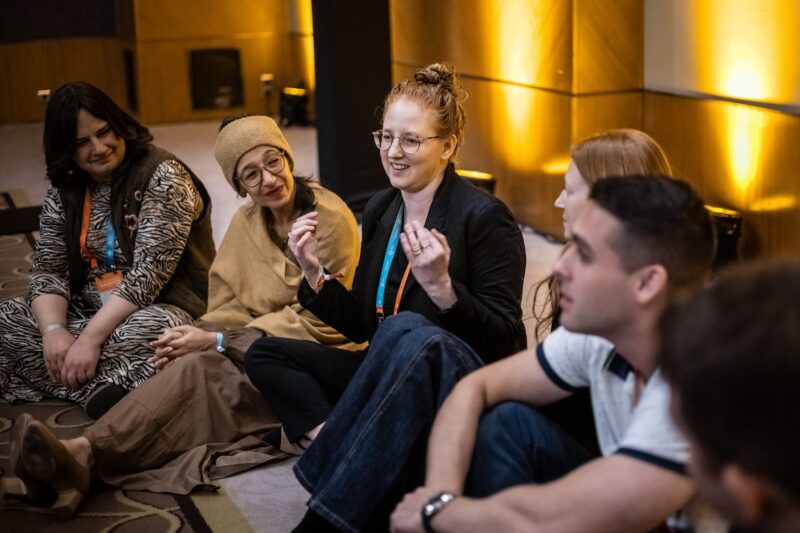
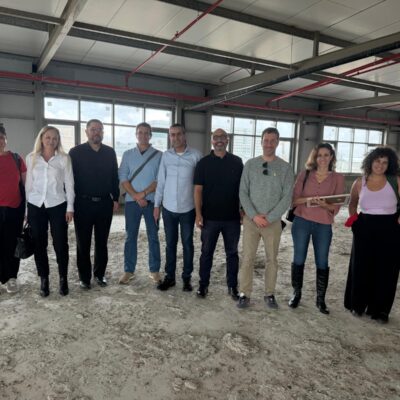
courtesy/Voice of the People
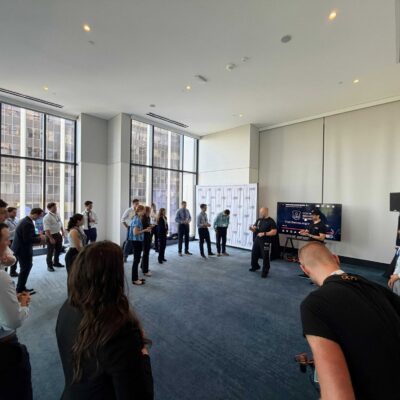
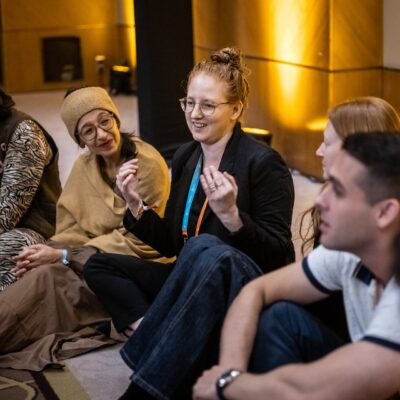
Members of the inaugural Voice of the People cohort meet in Budapest, Hungary, on Oct. 20, 2026.


 Add EJP on Google
BUDAPEST, Hungary — In a hotel along the Danube River, members of the inaugural cohort of Voice of the People — President Isaac Herzog’s global Jewish dialogue initiative — met in person this week for one last time, debating the challenges facing the Jewish People and discussing their efforts to address them.
Over the initiative’s ambitious inaugural run, the council’s working groups attempted to tackle some of the biggest issues shaping the Jewish world and beyond, including antisemitism, polarization, identity and heritage, Israel-Diaspora ties and relations between Jews and non-Jews. Council members were split into groups that, after two years, produced more than 39 projects, 21 of which were given seed grants of up to $20,000 from the initiative to bring them to life.
Herzog arrived at the conference on Tuesday afternoon, as he also made a diplomatic visit to Budapest, meeting with Hungarian Prime Minister Péter Magyar, as well as President András Baka. Herzog praised the Voice of the People’s council members, telling reporters in a press conference that the council members “exemplify the immense diversity of the Jewish People.”
The initiative is run jointly by the Office of the President, the World Zionist Organization and the Jewish Agency for Israel, with funding from the Azrieli Foundation, the Wilf Family Foundations and the Patrick and Lina Drahi Foundation. Patrick Drahi, the French-Israeli philanthropist who also owns i24 News, sat beside Herzog at Tuesday evening’s gala.
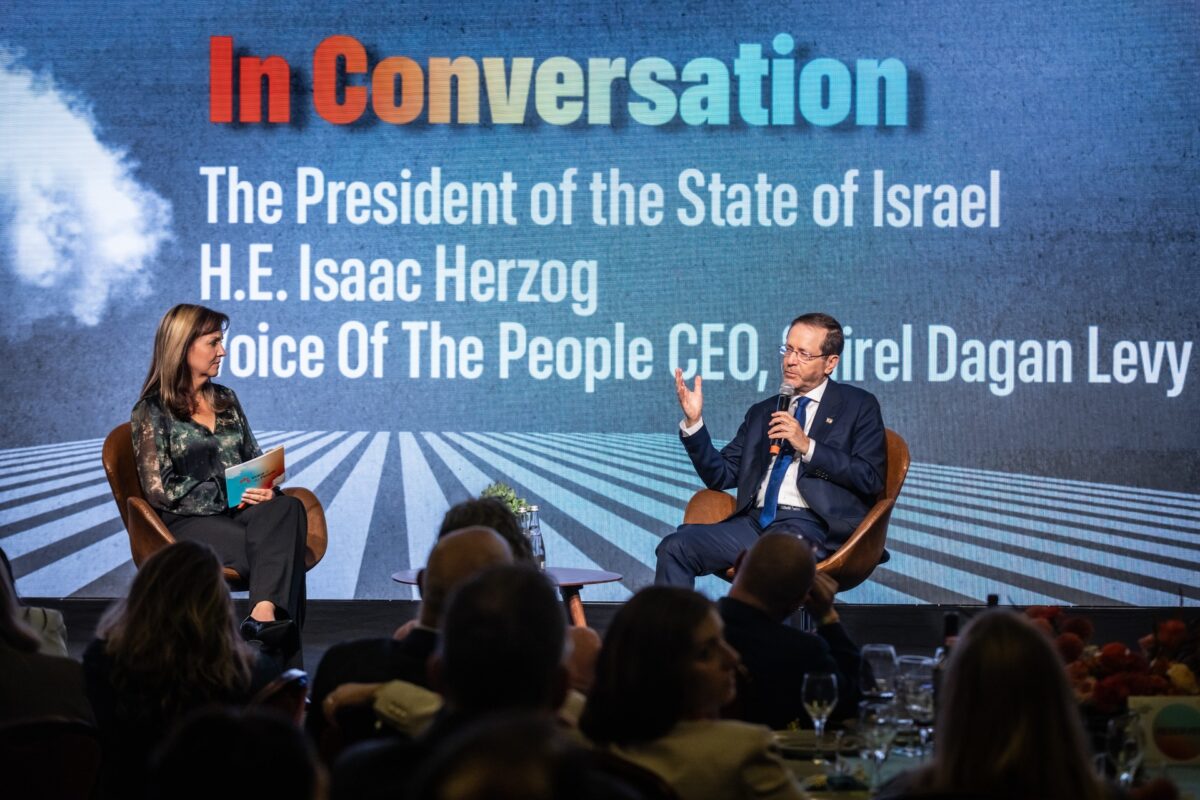
Speaking with eJewishPhilanthropy on the sidelines of the convening, Voice of the People CEO Shirel Dagan Levy said the Budapest gathering closes the council’s first chapter, calling the initiative’s first cohort “early adopters” who are now helping design — and playing a role in selecting — the next cohort. More than 9,000 individuals completed the initial form expressing interest in applying, with 2,500 submitting the extensive applications to join the next cohort of the Voice of the People Council.
Following criticism from Voice of the People council members over the initiative’s handling of heated debates over Israel and regarding its larger purpose, eJP has learned that the initiative has set up a task force to address both concerns and to improve the next cohort’s experience.
“Some things were OK, and some were not, and we’re changing,” she said, reflecting on the inaugural cohort of Voice of the People.
Of the 150 council members who signed on for the inaugural two-year term — one-third from Israel, one-third from the United States and one-third from the rest of the world — 89 council members attended the final convening.
Throughout the conference, participants reunited with peers they first met some 18 months ago but have since connected with monthly and sometimes weekly virtually. “It’s amazing to see the magic that happens when they see each other,” Dagan Levy said, describing members who greet one another “like family — hugs and crying.”
The goal of the conference, Dagan Levy said, is to deepen trust within the network and prepare it for its next phase, which will bring current council members and the incoming cohort together for the first time. “Trust is built when we look at each other’s eyes,” Dagan Levy said. “Assuming good intent is the beginning of everything, especially when we disagree. It’s fine to disagree.”
The organizers first eyed Paris, home to Europe’s largest Jewish community, to host the final convening of this cohort of Voice of the People, before security advisors pointed them to Budapest as the safest option. Dagan Levy also cited the Hungarian capital’s thriving Jewish life and the Jewish Agency’s close ties with both the local community and the government.
On Monday evening, the convening kicked off in a sea of fellow council members from around the world reuniting with one another. On the main stage at the opening session, Zoltan Tarr, Hungary’s minister of social relations and culture addressed the room and said, “We stand with the people of Israel in their struggle with terrorism. I would also like to tell you that we understand that there is no easy way to peace and reconciliation. It doesn’t come just as a gift. We have to work for it.”
Later Monday evening, Rachel Goldberg-Polin, whose son, Hersh, was taken captive in the Oct. 7 terror attacks and executed while in captivity, took the main stage for mostly off-the-record remarks, reflecting on the need for greater understanding between Jewish communities and the challenge of engaging across deep disagreements. “This is what really being human is about: grappling, struggling and wrestling with how we do this,” she said. “How do we see the godliness in the person across from us who’s saying things that we digest as hateful? How does that work?”
One council member who was present for her remarks told eJP: “The vibe was amazing; you could hear a pin drop. Rachel is an example of resilience and strength. It’s interesting, however, that Voice of the People chose to showcase her and not other hostage families who chose to transform their personal tragedy into political activism.”
“Her message was spiritual, not political — and that’s a choice. A legitimate one, but a choice,” the council member said.
On Tuesday, the focus turned from speeches to projects, as council members pitched their ideas to Herzog and the rest of the council members. Raphael Bijaoui, Brittany Levy and Yotam Schleyer of the polarization working group presented an initiative called Kivun, which uses artificial intelligence to chart a community’s common ground and to pair members with opposing views. Joshua Buchalter of the Israel and global Jewry working group pitched a platform called OneBayit, which pairs visiting Israelis with Jewish families abroad for Shabbat and holiday meals. Alycia Fridkin of the identity and heritage working group introduced a retreat series called Jewish Third Space, which mixes Jewish learning with movement, mindfulness and creative practice, starting with a pilot in Vancouver.
After hearing the pitches, Herzog told reporters on the sidelines of the conference that Israel must listen more closely to Jews abroad. Asked about the impact that Israeli politicians and their policies have on Jewish communities, he said: “We in Israel care for you, and we ought to improve our listening capabilities to all of you, because we know, and I know, that whatever we do or say in Israel affects Jews around the world. We should take it into account.”
Related News
EXCLUSIVE
Detroit-based philanthropists Nancy, James Grosfeld donate $8M to renovate JDC’s Israel campus
PRESIDENTIAL REBUKE
Israel’s Herzog: Mamdani ‘makes no effort’ to hide disdain for Israel, Jews must fight back

MAGICAL EXPERIENCE
Shefa launches psychedelics retreat for Jewish professionals suffering burnout
ADVANCING A VISION
N.Y. federation donates $1M toward building shared-society center named for peace activist killed on 10/7

MAJOR GIFTS
Center for Jewish History celebrates 25 years with a $25M matching grant