EXIT INTERVIEW
Elizabeth Sokolsky, longtime EVP of Birthright Israel, to retire next year
Sokolsky worked for over 40 years as a Jewish communal professional, the bulk of which was spent at Birthright, which she joined in 1999
COURTESY
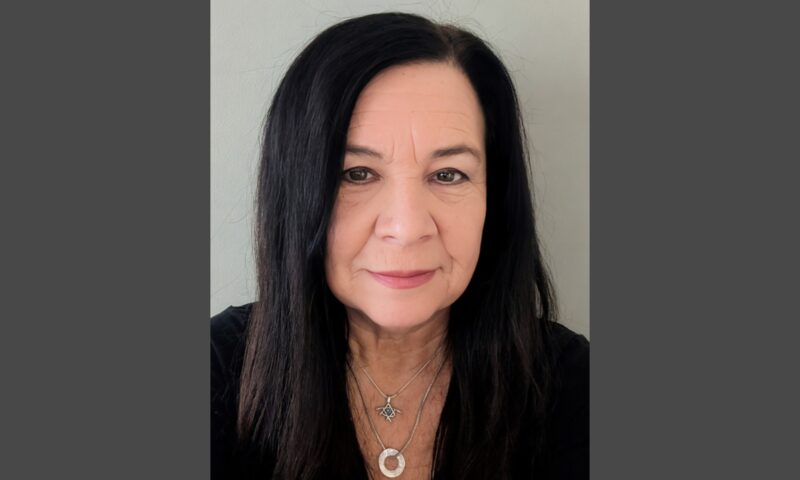
Elizabeth Sokolsky, the longtime executive vice president of Birthright Israel, who is retiring next year after 27 years with the group.




 Add EJP on Google
A month ago, at a gala in Manhattan, Birthright Israel marked 25 years of the 10-day trip that has brought over 900,000 young Jewish adults to Israel. Elizabeth Sokolsky, Birthright Israel’s executive vice president, has been with the organization since its launch. Next year, she plans to retire.
Sokolsky, a veteran Jewish communal professional, has spent four decades shaping Jewish education and engagement. She began at BBYO in Montreal and held leadership roles at the Ottawa and Toronto Jewish Community Centers before serving as national director of BBYO Canada and national executive director of the Canada Israel Experience. In 1999, she joined Birthright Israel as its vice president of education and operations for North America, where she helped expand the organization’s reach and impact.
Last week, she spoke to eJewishPhilanthropy about her career, the organization’s history and post-Gaza war approach to engagement, and what comes next for her.
The interview has been lightly edited for clarity.
Nira Dayanim: You’ve been a Jewish communal professional for some 40 years, with Birthright Israel for 26 of them. Why have you decided to retire now?
Liz Sokolsky: I’m ready for the next chapter in my life. I’ve been with Birthright for 26 years, and I want to spend more time with my family, with life. Maybe I’ll still do something in the Jewish community, but not full-time. After 26 years, it just kind of feels like it’s time for my next chapter, and for the organization to have new leadership come in with new and exciting vision. The world has changed a lot, especially in the last five years and in the last two years, certainly. So sometimes you just know it’s time.
ND: What happens between now and a year from now?
LS: We’ll hire a new EVP in North America, and we have a search company that’s looking for somebody. I will spend some time trying to download 26 years of institutional memory and help set them up for success in any way that I can. And whatever projects Birthright wants to give me within the next year, that’s great. At the same time, I’ll start thinking about what my next steps are, what my next chapter looks like.
ND: So on that note, you’ve been with Birthright since Day 1. Can you tell me about some of the turning points when you realized the program was becoming something bigger than a pilot project?
LS: Originally, our funding was for the first five years, and so we were all working towards doing that five years. I don’t think anybody, anybody, imagined that there would be as much of a desire as there was. We had waiting lists right away, even within the first five years, and when we understood that we were going to be able to fund this program, and the realization of the impact. We hoped that the impact would be what it was. Those of us who were in the formal Israel education world knew that Israel was a great way to instill identity and connection to Israel. But before that, programs were six weeks, eight weeks. Short programs were four weeks. So when we first came up with this concept of 10 days, a lot of people thought that there was no way we were going to be able to create the type of impact an eight-week program was going to have in 10 days. And then we learned that we actually were.
Right away from Day 1, we said: “We’re going to research this. We’re not just going to do it, we’re going to be data-driven. We’re going to base this on research so that we can adjust accordingly.” And the results were so overwhelming. When we saw the results, and then when we saw the appetite of the donors and the stakeholders wanting to continue this, that was very, very exciting. And then we knew.
Many years later, with Gidi Mark, our CEO, I remember one day sitting around a boardroom table, and we were talking about a strategic vision and where we’re going to go. And he said, “We have to reach 51,000 participants, because if there are 100,000 participants in each age cohort in the world that are turning 18, we want to hit more than 50% of that.” And we all looked at each other around the table and said, “He’s out of his mind, right? Fifty-one thousand!” At that point we were at like 16,000 or maybe 20,000. The year we hit 48,000 was pretty amazing.
ND: So at this point, you’ve overseen programming for some 900,000 young adults. Looking back, what, if anything, stands out to you about how participants are relating to Israel today versus in the early 2000s when things started?
LS: When participants come on the program, they don’t necessarily know what they’re going to leave with, of course. And the hope is that they’re going to fall in love with Israel. See it for what it really is. I think the biggest impact is just leaving knowing that you’re part of something bigger than yourself. When you go to Israel, it’s basically like a catalyst for their identity, their Jewish identity, their personal identity, giving a sense of connection and belonging. It becomes a space to explore who they are and what being Jewish means to them. That doesn’t change. That shared experience, shared history, that hasn’t changed in 26 years. Obviously, Israel has changed in 26 years, and perceptions of Israel have changed, but being able to come and ask the questions — regardless of what’s going on — and not necessarily being given the answers, but the ability to discover it for themselves, whether it’s through questions and discussions that they’re having with the staff on the trip or more so with their Israeli peers and by meeting Israelis and hearing firsthand.
Young people can smell if something is not authentic, and I think that the experience is a very authentic [one] for them. So they may not come back with all the answers. They may even come home with more questions. But they’re real, and it gives them an opportunity to delve in deeper as you know, as time goes on, should they choose to. And many do. Most do.
ND: In the wake of the Gaza war, some young Jews today express hesitation about traveling to Israel. How has Birthright adapted to that, and where do you see the organization needing to go next?
LS: Look, it’s not that Birthright Israel is going to fix everybody’s perceptions about Israel. That’s why coming on Birthright is so important. And we’ve done some studies and research as to why, in the last two years, people have decided not to come. The biggest reason is safety and security, whether it’s the individual themselves who’s nervous about coming during wartime, or they want to come, but their parents don’t want them to. So you have that group of people, that’s the biggest deterrence.
And then you have the people who are concerned about agenda or bias. Like, “Am I going to be brainwashed? Is this hasbara?” But we don’t run advocacy trips. This isn’t about turning them all into these super advocates. We just want them to fall in love with both the people and the country. So the best way to deal with those people is their friends going and coming back and telling them about the experience that they had. That it’s not about [brainwashing], and that this is something where you go and you come up with your own conclusions and understanding. And then there’s that third group of people who are now the anti-Israel, anti-Zionist people. We’re not really concentrating on that group right now. That’s for the Jewish world to fix.
ND: Over your career, are there any behind-the-scenes stories that have stuck with you?
LS: You know, there’s not just one. And there’s not 10. It’s a ripple. You know, it’s this, it’s this ripple effect over time. I can’t say that there were one or two or three specific things over 26 years. It’s about the impact, like I said, on the participants and seeing what this program does to them. I mean, it really is transformational for them, and witnessing that transformation with thousands and thousands and thousands of people. That’s the most meaningful. That’s the biggest piece. Watching that evolution, year after year for thousands and thousands of participants. It’s been a joy and a privilege.
ND: What comes next?
LS: My grandchildren. Whatever work I may continue to do, not full-time, is going to have to have meaning. I’ve been privileged for 26 years to wake up every single day feeling lucky to be able to be a part of this and contribute to this in any way that I can. So it would have to be a project that also has a lot of meaning for me. I’ve always worked with young people, since the first job I ever had, which was with BBYO, when I was like 23 years old, right out of university. So with young people, connected to Israel, for sure, and something that’s inspiring, where I can be helpful towards its success, but that’s going to be fun also. I love having fun at work and good colleagues and good partners are also really important. So that’s what I would look for.
Related News

MAGICAL EXPERIENCE
Shefa launches psychedelics retreat for Jewish professionals suffering burnout
ADVANCING A VISION
N.Y. federation donates $1M toward building shared-society center named for peace activist killed on 10/7
HIGHER EDUCATION
As Jewish donors reconsider academia, Jan Koum doubles down, endowing Israel studies at Stanford
CLOSING WORDS
In AZM address, Cosgrove links communal ‘orthodoxy’ on Israel to rising anti-Zionism among young Jews
EXCLUSIVE
Detroit-based philanthropists Nancy, James Grosfeld donate $8M to renovate JDC’s Israel campus