Opinion
SHALOM SHINSHINIM
Bringing Israel to the classrooms of our youngest learners




 Add EJP on Google
In Short
The partnerships that brought a Shinshinim program tailored specifically for preschool settings to the Bay Area offer a powerful model for cultural connection and immersive learning.
Participants in the Jewish Agency for Israel’s Shinshinim program bring a unique combination of youthful energy, creativity and lived Israeli experience to Jewish educational settings in communities across the U.S. The Israeli high school graduates, who dedicate a year to service before beginning their military commitment, bring modern Israeli culture into preschool, elementary, middle and high school classrooms, lead youth groups and holiday celebrations in synagogues and run dynamic educational programming throughout local JCCs and community organizations. At a moment when it’s challenging to recruit educators who are confident in teaching about Israel, the shinshinim are a significant “value add” to these settings.
While shinshinim programs have long existed in broader contexts, in our Bay Area Jewish community we saw the potential of bringing them to more young learners and families: how they could directly impact the earliest stages of Jewish education, making preschool classrooms more vibrant and more deeply rooted in Israeli culture.
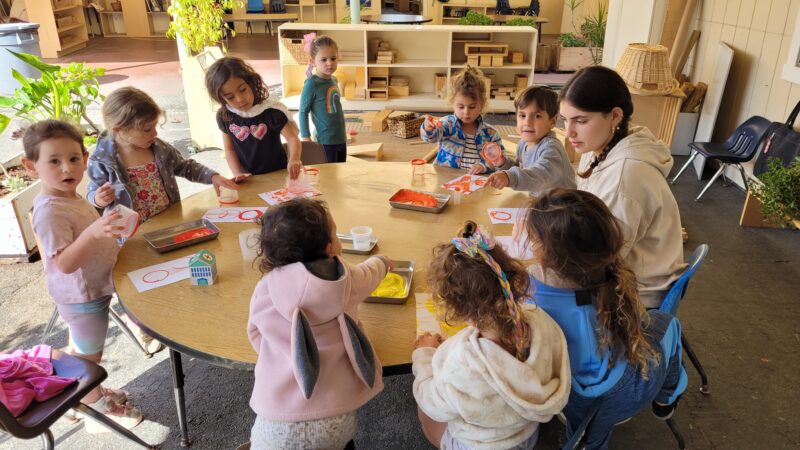
Courtesy/Shinshinim
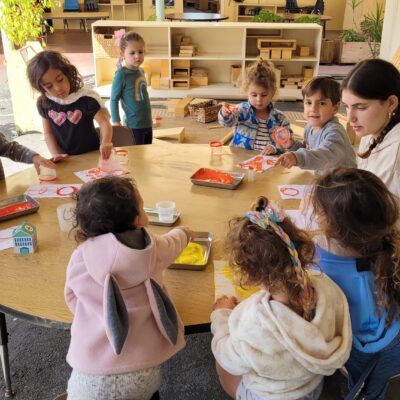
A participant in the Jewish Agency for Israel's Shinshinim program leads an art project in a preschool classroom in California's Bay Area.
Amid hyperpolarization around Israel, this program is especially timely. Research by Sivan Zakai shows it’s never too early to introduce young learners to Israel in age-appropriate ways. In this regard, within the classroom, Shinshinim serve as collaborators and bridges to Israeli culture. They introduce Hebrew through songs and play, bring Israeli holidays and traditions to life and model values like kindness, curiosity and community. Their presence enhances the work of educators, adding depth and authenticity to the Jewish learning experience.
That is why EarlyJ partnered with the Jewish Agency for Israel to create a pilot program that placed four shinshinim in eight Bay Area preschools, with each shinshin dedicated exclusively to working in early childhood settings. Their sole focus during their year of service is supporting preschool classrooms and extracurricular programming. Not only that, but EarlyJ took on the full financial responsibility of the program, funding the Jewish Agency’s support as well, and removing any cost burden from participating preschools. EarlyJ initially invested $250,000 and committed an additional $250,000 for next year; this strategic investment reflects our shared commitment to expanding access to high-quality Jewish early education while ensuring that preschools can participate without financial barriers.
By supporting the Jewish Agency, we have the opportunity to shape the program specifically for Jewish early childhood education and create a model that can be replicated and adapted by other communities in the future. As with any pilot, we’ve learned important lessons in this first year that can inform future implementation and maximize impact.
First, it’s important that a community has someone shaping the program to suit local needs. After we identified the opportunity, we structured the Shinshinim placement process and convened participating preschools as a cohort.
Second, the Shinshinim and the preschools must be set up for success before the school year is underway. Through partnerships with the Jewish Agency and Oranim College, Shinshinim participants received specialized training in early childhood education, child development and age-appropriate engagement strategies, preparing them to contribute meaningfully from day one. Throughout the year, we also brought directors and educators together to share experiences and challenges encountered, reflect on best practices and strengthen how Shinshinim are integrated into classrooms.
Third, in the hopes that others consider this model, know that you don’t need to reinvent the wheel. Key steps along the way toward implementation include:
- Securing the right resources. Identify and develop funding streams and practical supports that make it easy and affordable for preschools to integrate Shinshinim into their programs.
- Assessing your community’s connection to Israel and the Jewish people. Take a close look at how families and educators currently engage with Israel and where there are gaps or opportunities for deeper connection.
- Evaluating educator readiness and knowledge. Many early childhood educators are not Jewish and don’t have a personal connection to Israel. Bringing in Shinshinim can be transformative in building authenticity and connection in the classroom.
- Leveraging what already exists. The model we piloted works. Communities don’t need to start from scratch. They can adapt and implement this proven approach, with guidance and support along the way.
According to a survey evaluation we conducted with preschool directors and parents, the results of the program were immediate and meaningful. By embedding Shinshinim directly into these environments, children experienced Israeli culture as a daily, joyful presence. Hebrew language, music, traditions and stories became part of the rhythm of the school day. Educators gained creative partners, and classrooms became spaces where connections to Israel felt personal, tangible and alive.
Widening our gaze
Each year we survey and collect data from nearly 120 preschools. Those preschool directors tell us that finding educators who can teach about Jewish life and Israel is a major and common challenge. The work is demanding and the pay is low. Without these educators, our preschools lose Jewish and Israel engagement and learning. To reverse this, we decided as an organization to prioritize funds for this initiative. We want to bring more vibrant Jewish life into preschools and to create a blueprint for other communities to replicate.
As such, we will soon enter the second year of the Shinshinim program, with plans to continue and expand this work. As part of this next phase, a new cohort of Shinshinim will be joining eight Bay Area preschools for the 2026-2027 school year, and we want to further expand our efforts by helping create a pathway for other communities to bring Shinshinim into Jewish early childhood settings in similarly impactful ways. Preschools have an opportunity to be part of a fully-supported, dynamic program that enriches classrooms and deepens connections to Israel in meaningful, lasting ways.
At a time when resources are stretched, this is an opportunity to invest in a proven, high-impact initiative that is shaping the future of Jewish early childhood education and Jewish communities. It’s our responsibility to plant the seeds for the future of the Jewish People and its connection to Israel and Jewish life. With just a little foresight and planning, this model, developed in partnership with the Jewish Agency, can be adapted to other communities.
Sharona Israeli Roth is the president and executive director of EarlyJ.