Opinion
A DIFFERENT APPROACH
Why should anyone love Judaism?


 Add EJP on Google
In Short
In a crowded marketplace of ideas, Jewish life has so much more to offer than identity, obligation and institutional continuity.
Several weeks ago, Rabbi Ari Perten argued in these pages that presenting “Jewish joy” as the foundation of Jewish life is an incomplete picture. Judaism also contains discipline, grief, contemplation, obligation — the full range of human experience. He goes on to claim that “our task [as Jewish professionals] is not merely to make Judaism joyful enough to attract people. It is to help people encounter a Judaism broad and deep enough to love.”
He’s absolutely right, and there are profound implications to his argument. An emphasis on Jewish joy may be a corrective to Jewish identity based on guilt, trauma or nostalgia. But while we do need a “Judaism broad and deep enough to love,” we also need a Judaism that inspires love.
In the words of Ma’alot HaMidot, a 13th-century ethical treatise by the Roman Jewish scholar and poet Rabbi Yechiel ben Yekutiel Anav, “Hahana’a mevia liyedei ahava” — benefit brings a person to love. In a very crowded marketplace of ideas and practices, what benefit does Judaism bring people? Why should people love Judaism? Can it actually bring depth, meaning and wholeness to their lives?
It’s not just that, as Perten argues, Judaism contains discipline, grief, contemplation, obligation and, yes, joy; it’s that Judaism contains profound and powerful practices to help people navigate the full range of human experiences.
Many Jews practice yoga regularly, not because they have some commitment to Hindu or Indian “identity,” but because it makes their life better. It settles their minds and stretches the capacity of their body; it brings them tremendous benefit. So too with therapy: many of us pay our therapists out of pocket not out of guilt or obligation but because they improve our lives.
Globally, people spend an estimated $50 billion a year for tools to improve their lives, while we Jewish professionals often tie ourselves in knots begging donors for resources so we can give Judaism away. Jewish professionals should learn from the broader marketplace of ideas and present Judaism as a resource that can make one’s life better, deeper and more meaningful.
This is not a new idea. The major thinkers of the Jewish tradition overwhelmingly understand Judaism to be a resource for helping Jews become better people. According to the Rambam, a pious person is one who has shaped and improved their character; for the Ramchal, the very purpose of Torah is to bring us back to the right and good way.
Judaism has copious resources to help people improve their character and way of living, as the authors of this article can attest. Brent draws directly from the Jewish framework of havruta to help dozens of couples each year to prepare for their marriages, enabling them to navigate relational tension in ways that bring them closer to each other. Despite charging more than most synagogue memberships, the demand for this type of service means he is only able to serve a fraction of the couples who are interested. And the people who engage in this framework are not doing it to make their mother happy, stick it to Hitler or any of the more or less stereotypical or joking explanations people give for engaging Jewishly. They do it because, in one couple’s words, the work gives them “new perspective and tools to help us connect with each other and strengthen our relationship.” In short, there is a clear personal benefit.
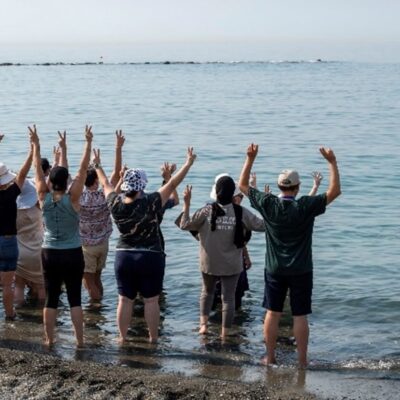
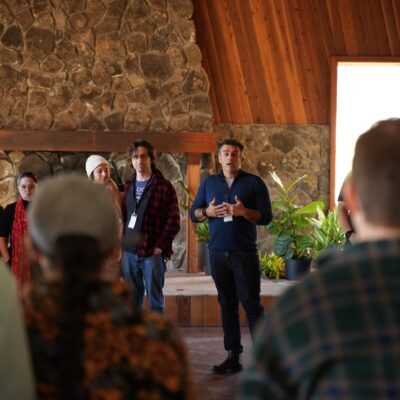
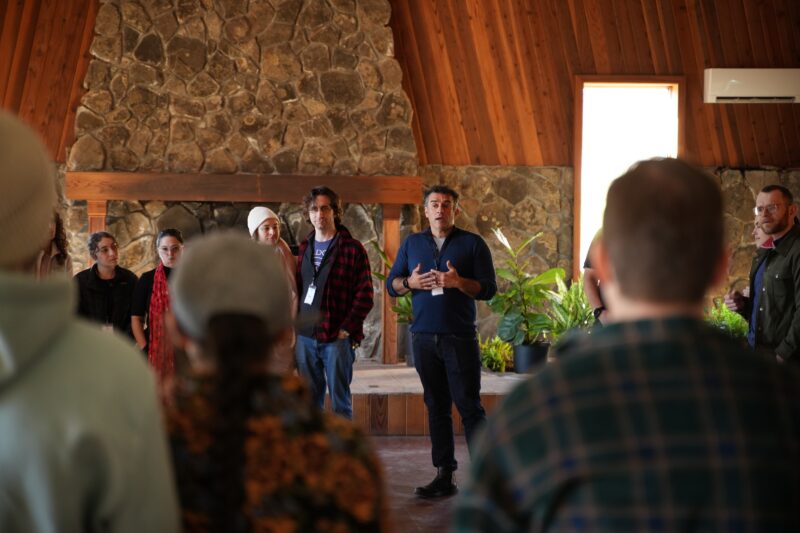
Jason, together with his wife Devora, leads a series of retreats under the title of “Radical Rest and Renewal” that invite people to put down their phones and experience the freedom of connecting with community and the natural world. This is not Shabbat as an ancient requirement or an identity badge to polish: it is stepping out of modern life’s frenzy and into a slower rhythm of candlelight, song, nature, conversation, play and repose. And again, they pay to do it not because someone has guilted them about Jewish continuity but because this ancient Jewish practice gives them something for which they are hungry: Presence. Connection. Rest.
To be clear, we’re not saying that every synagogue should become a therapy practice or every Shabbat a wellness retreat. Judaism is far more than a self-help program. We’re saying that, in a crowded marketplace of ideas, we must emphasize that Judaism’s wisdom is not just old and rich but also usable. Jewish texts and practices can teach people how to repair relationships, endure grief, discipline their attention, build community and become the people they hope to be. In this manner, Judaism stops being an inheritance we guilt people into preserving or a product we beg them to consume. It becomes a resource they reach for because it works.
We’ve known since at least the 13th century that benefit brings love. If we want people to love Judaism, we should stop asking them to keep it alive for “us” and start helping them experience how Judaism can positively impact their lives.
Rabbi Jason Kimelman-Block works at the intersections of Judaism, social justice and leadership. In addition to the Radical Rest and Renewal retreats, he leads the Or Chadash Fellowship in Jewish Transformational Leadership, a program of the Jewish Social Justice Roundtable.
Rabbi Brent Chaim Spodek works extensively with couples preparing for marriage, serves as rabbinic advisor to Togethering Retreats and is a member of the faculty at Pardes North America. He is also developing a program for men’s spiritual growth based on the Exodus narrative.