EMERGENCY PREPAREDNESS
Through United Hatzalah partnership, Community Security Service to train volunteers in first aid
CSS will launch online training modules for its nationwide volunteer corps before the year’s end, with in-person instruction from Israeli medics to follow in 2027
CSS/Facebook
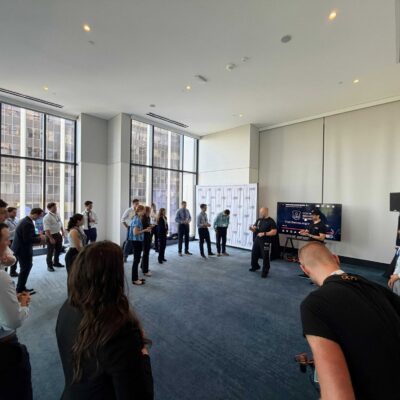
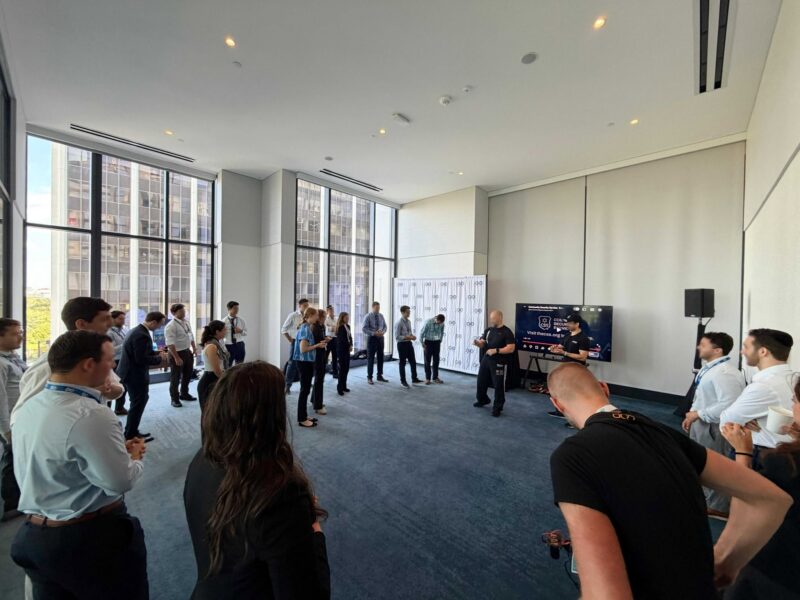
Illustrative. The Community Security Service provides training to the Jewish Grad Organization in September 2026.


 Add EJP on Google
The Community Security Service, which trains Jewish volunteers to protect synagogues, schools and events, is partnering with United Hatzalah of Israel to bring emergency medical first-response training to its volunteers nationwide, the organizations shared exclusively with eJewishPhilanthropy on Thursday.
The agreement comes two months after CSS announced a separate partnership with American Friends of Magen David Adom in August to bring MDA’s “First 7 Minutes” mass-casualty training to its volunteers. This initiative, said Richard Priem, CEO of CSS, aims to meet a different kind of need, providing volunteers with the skills needed to handle everyday medical emergencies rather than the aftermath of an attack.
“Almost every week, there is some kind of medical situation in the synagogue, at an event, in the community, where people look at CSS volunteers to be those first responders,” Priem told eJP.
No specific incident prompted the move, Priem told eJP, though volunteers have been requesting this kind of training for some time.
Specifically, United Hatzalah is creating materials for CSS volunteers that will become part of the curriculum every volunteer completes, and is planning in-person medical instruction, including at the CSS Academy, where volunteers train for security leadership roles.
The partnership also stemmed from existing overlap between the two organizations. CSS had already provided security at United Hatzalah events in the U.S, and Dan Sommer, an education-technology entrepreneur, acts as both vice chair of CSS and treasurer of Friends of United Hatzalah.
After Oct. 7, Sommer launched Krav Kesher, pairing Krav Maga training with d’var Torahs and pizza at campus Hillels and Chabads. The program merged into CSS in 2024, then starting self-defense training on about 20 campuses. It now operates on more than 50.
“Let’s not reinvent the wheel,” Sommer said. “Let’s take the best of what United Hatzalah does in training, the best of what CSS does in standing and training its volunteers, and bring those two concepts together.”
According to Priem, the curriculum will combine “online self-paced learning modules” with in-person sessions led by United Hatzalah instructors from Israel, though some CSS volunteers may eventually be authorized to teach the material as well, Priem told eJP. According to Priem, volunteers will begin to be able to access the first modules before the end of the year, while in-person sessions are scheduled for 2027. Volunteers will not receive EMT or other medical certification through the training, he noted, but added that “the sky is the limit” for future pathways.
As part of the arrangement, CSS, which has already guarded United Hatzalah events in the U.S., will extend and formalize the partnership, with leaders of the two organizations meeting quarterly.
“The American Jewish community has been an extraordinary partner in the lifesaving work United Hatzalah volunteers do in Israel every day,” said Eli Beer, United Hatzalah’s founder and president, in a statement.
Related News
ADVANCING A VISION
N.Y. federation donates $1M toward building shared-society center named for peace activist killed on 10/7

MAGICAL EXPERIENCE
Shefa launches psychedelics retreat for Jewish professionals suffering burnout
EXCLUSIVE
Detroit-based philanthropists Nancy, James Grosfeld donate $8M to renovate JDC’s Israel campus
EXIT INTERVIEW
Elizabeth Sokolsky, longtime EVP of Birthright Israel, to retire next year

MAJOR GIFTS
Center for Jewish History celebrates 25 years with a $25M matching grant