Opinion
CAMPUS SCENE
‘It’s harder to dehumanize Israelis when there’s an Israeli in the room,’ and other lessons from 5 years on campus


 Add EJP on Google
In Short
Israeli Policy Fellowship participants don't do "hasbara"; they bring diverse Israeli voices and life experiences, in all their complexity, into the conversation.
Three years after the Oct. 7 attacks, American campuses have quieted down. The encampments are gone; the protests are fewer and smaller. It would be tempting to read this as a sign that things have improved.
They have not.

Getty Images
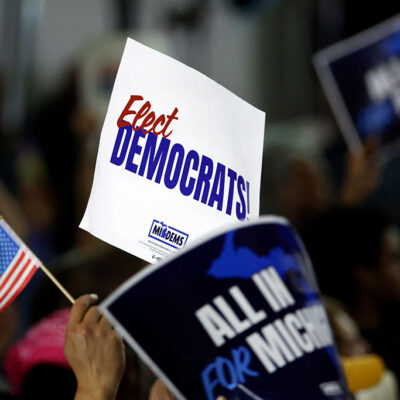
The protests faded in part because the views they promoted no longer need defending. Those views have become normalized, and anti-Israel and antisemitic positions that once had to be shouted on the quad are now part of the mainstream.
Poll after poll in recent months tells the same story. Israel’s standing with the American public has fallen to historic lows, across parties, and the decline is steepest among young Americans. Campuses are only one part of this picture, but an important one: They are where many of the country’s future leaders form their views. Among the students on these campuses are tomorrow’s diplomats, congressional staffers, State Department officials and leaders of international organizations, many of them trained at graduate schools of public policy and international affairs. The views they form in the classroom will follow them into the rooms where decisions about Israel are made.
That is why, since 2021, the Israeli Policy Fellowship has been bringing outstanding Israelis to these schools — to Harvard, Columbia, Georgetown, Princeton, Yale and Johns Hopkins — and supporting them as leaders on campus throughout their studies.
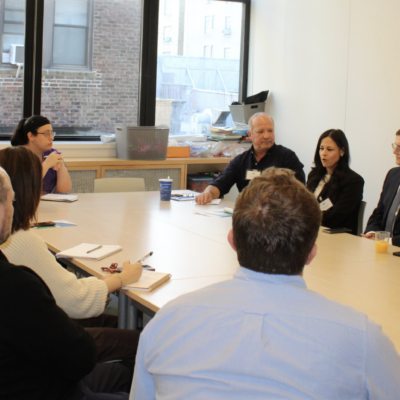
While on campus, IPF fellows establish and lead student clubs, initiate events and programs and build relationships with classmates and faculty. They don’t do hasbara; they bring diverse Israeli voices and life experiences, in all their complexity, into the conversation. And when they graduate, these fellows return to Israel with the tools, knowledge, international network and global perspective they gained, ready to lead and make an impact at home.
Here are five lessons we have learned over the years from the IPF fellows’ experience on campus.
‘It’s harder to dehumanize Israelis when there’s an Israeli in the room.’
That is how one of the IPF fellows put it. When an Israeli is your classmate, it becomes much harder to reduce them to a stereotype. Even one Israeli can change the dynamic of a classroom by bringing a missing perspective and making those around them think twice before speaking. And when students meet Israelis from different backgrounds, people who don’t fit a single image of Israel, generalizations become even harder to hold onto.
IPF fellows come from across Israeli society: left and right, Jewish and non-Jewish, secular and religious, veterans and peace activists (and sometimes both at once). They reflect many of the faces of Israeli society. And many of them describe a similar reaction from classmates: confusion. In many cases, the Israelis they meet don’t match the image of Israel they arrived with. A Bedouin fellow at Columbia was struck by how few people at her school knew that some two million of Israel’s citizens are Arab. Another fellow is a peace activist who served for years in the IDF, including in the reserves during the war, and who has deeply mixed feelings about it. He grew up in an Orthodox family and today leads his school’s LGBTQ student group. Again and again, he says, classmates were confused by his identity. They simply didn’t know someone like him could exist.
Trust is what makes real conversation possible.
When perceptions of Israel start from such a low point, it is impossible to jump straight into deep, meaningful conversations about the situation. Sometimes there is no conversation at all, because many students simply won’t talk to Israelis or Zionists. Trust is the key, and it is built slowly, through personal conversations, daily interactions and small gatherings.
When your classmate is an Israeli you see every day, with hobbies, friends and complex opinions, trust grows. And once a student sees the person in front of them as someone they respect, everything shifts.
One of the IPF fellows at Harvard became close with a classmate, a progressive politician who held radical views on Israel’s right to exist. At one point, the classmate told him: “It doesn’t make sense that I appreciate you so much, that I share your values on everything, that I respect your opinion, and yet…” He was struggling to reconcile his simplified picture of Israel with someone he trusted so deeply. That personal respect and trust opened the door to real dialogue, which eventually led him to visit Israel.
Once there is trust, people become willing to ask questions they wouldn’t ask in public and to reexamine what they thought they knew. Personal stories about life in Israel, family or military service can finally be heard, with all the pain, dilemmas and complexity they carry.
Empathy doesn’t always require agreement.
On campus today, the conflict is often treated as a zero-sum game; recognizing the pain of one side is seen as betraying the other. Trust breaks that pattern. When people know each other, they can recognize each other’s experiences and pain without abandoning their own views. IPF fellows don’t ask their classmates to agree with them, and they don’t hide their own convictions. But again and again, we have seen that disagreement and empathy can coexist in the same relationship, and that when they do, people find ways to support one another and even act together toward change.
From coffee chats to packed auditoriums, each interaction plays a different role.
It starts in the classroom. Where many students won’t even talk to Israelis, IPF fellows speak up with respect and nuance, often through their own stories, and classmates quietly think: “Wait, that actually makes sense.” That presence opens the door to one-on-one coffees, evening drinks and Shabbat dinners, which fellows consistently describe as their most effective tool. These settings build the trust everything else depends on, and they are where participants for larger initiatives are found.
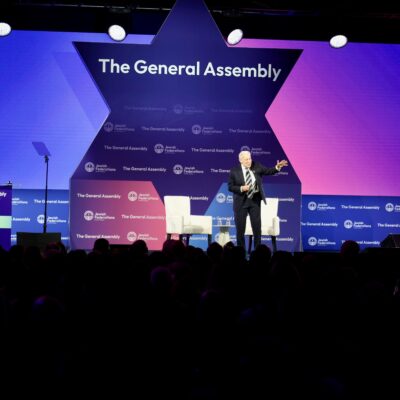
Large events do something different. They bring reach, and they often feature outside speakers, such as historians, policy experts, journalists or survivors, who bring voices and expertise that a fellow can’t always offer on their own, or doesn’t want to be the one to offer. Students come because they know and respect the fellow who invited them. That kind of turnout wouldn’t be possible without the trust built beforehand. For example, at Harvard Kennedy School, IPF fellows invited a Holocaust survivor to share her testimony. More than 300 people attended in person, and over 1,000 joined online. For many of them, it was the first time they had ever heard a survivor speak.
Trips to Israel take everything a step further. What classmates heard in conversations and events on campus, they now see for themselves, and they often return as the ones telling the stories.
Relationships with faculty and administration create a different kind of impact.
Here too, everything rests on trust and respect. IPF fellows bring intellectual depth, curiosity and warmth to the classroom and to their conversations with professors. When professors come to appreciate them, some begin to seek their perspectives and become more open to views they hadn’t encountered before.
These relationships matter in other ways, too. They often become a source of support, a place for fellows both to process what they are going through and to get things done on campus. On two of our campuses, where the IPF fellow was the only Israeli at the school, they turned to professors for advice after facing antisemitic remarks. When they wanted to host an information session for a student trip to Israel (iTrek) and met resistance from the administration, it was those same professors who helped. Relationships with school leadership also make it possible to raise serious antisemitic and anti-Israel incidents with people willing to listen and act. When leadership trusts and values IPF fellows, change follows. In more than one case, fellows who encountered antisemitism in their program’s curriculum brought it to the administration, and the curriculum was changed.
The divides are only between us and others, but among ourselves as well.
The divides around Israel don’t only run between Jews and non-Jews. They also run through the Jewish community itself. “Some of my most challenging conversations on campus were with other Jews,” one of the IPF fellows noted.
On campus, Jewish students hold a wide range of views on Israel, and many are deeply critical of it or feel distant from it. We have learned that the same things that open conversations with others open them within the community, too: personal relationships, trust, and an Israeli who brings complexity rather than slogans. Over Shabbat dinners, holidays and long conversations, Jewish students with very different views come to know Israelis as people, and build a sense of Jewish Peoplehood that holds even when they disagree.
In five or 10 years, today’s policy school students will sit in the rooms where decisions about Israel are made. Some will still have an Israeli friend. Others will remember an Israeli they studied with: a conversation that surprised them, a dinner, a story that complicated what they thought they knew. That memory won’t necessarily make them agree with every Israeli policy. But it may help them understand that the situation is far more complicated than the headlines suggest, and make them pause and ask questions before making decisions about Israel. At the same time, IPF fellows will bring what they learned about how the world sees Israel back home, into the places where Israel’s own policies are shaped. With every year and every cohort, these connections grow. It is slow work, but its impact will be felt for decades.
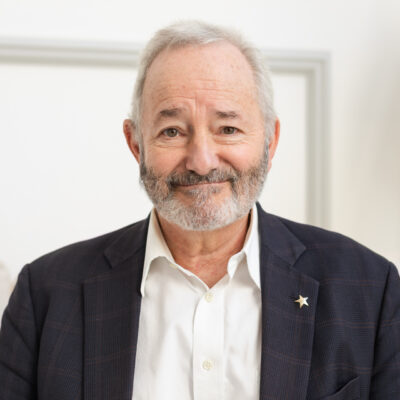
Dana Ginzburg is the executive director of the Israeli Policy Fellowship, which enables exceptional Israelis to study and lead at top U.S. schools of public policy and international affairs where future global decision-makers form their views.