CRITICAL MASS
Foundation for Jewish Camp invests $45 million in Massachusetts camping access and excellence
The pilot program aims to launch in other states in years to come
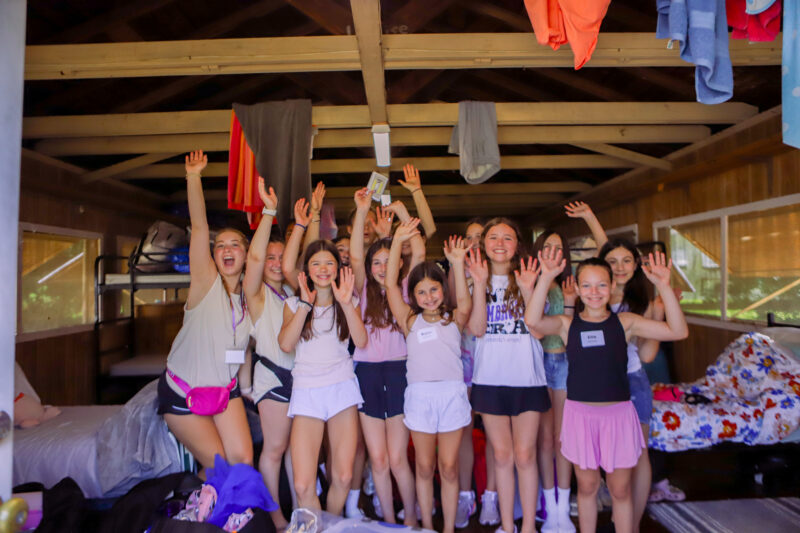
Courtesy/FJC
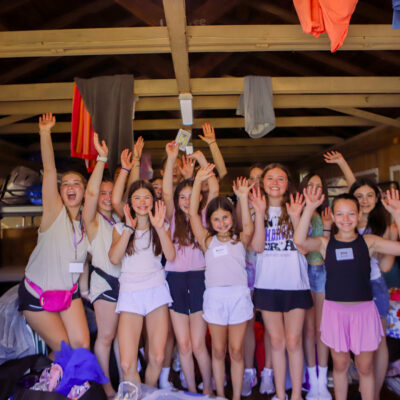
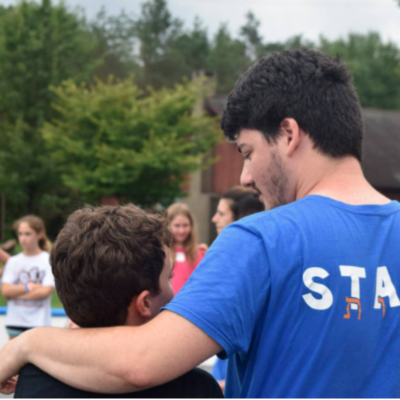
Campers and counselors at Camp Pembroke in Pembroke, MA


 Add EJP on Google
With enrollment in Jewish summer camps surging in recent years, Foundation for Jewish Camp is pouring $45 million over five years into Jewish overnight camps in New England— the bulk of it going toward tuition assistance for financially strapped families.
Titled “Access & Excellence,” the pilot program, which the foundation announced on Thursday, will run from 2027 to 2031 at 11 New England camps with the goal of expanding to other states in future years.
The initiative — backed by an array of funders — will devote $27 million towards tuition support and $5.5 million towards capital grants to ensure that the camps can accommodate an increase in campers; the remainder of funding will go toward coaching, consulting and professional development tailored to each camp’s needs, including to improve leadership, staffing, technology and facilities planning.
“If we’re going to drive enrollment to these camps through these great affordability programs, we want to make sure that they’re the best camps,” Jamie Simon, CEO of FJC, told eJewishPhilanthropy.
Through the scholarship portion of the initiative — titled “Road to Camp” — FJC will provide 6,000 tuition assistance grants over the five years, with grants available to both new and returning campers. Households earning less than $200,000 annually will receive 40% off camp tuition and families earning between $200,000 and $300,000 will receive 30% off. Campers are eligible to receive assistance year after year for as long as they qualify.
Grants will be offered based on trust, which is “the best practice,” Simon said. “We believe that if families really need it, they’ll ask for it, and if families don’t need it, they won’t. We want to make this as accessible and easy to apply for as possible.”
In addition, the grants can be layered on top of other financial incentives, including individual camp’s financial assistance and FJC’s One Happy Camper grants, which has provided grants to over 150,000 first-time campers.
A recent FJC study of One Happy Camper showed that 86% of first-time campers who received an OHC grant returned the following summer, but in subsequent years, return rates varied depending on household income. By offering this new incentive, FJC hopes to support families for as long as they need it.
The 11 camps involved in the initiative are Camp Avoda, Camp Bauercrest, Camp JORI, Camp Pembroke, Camp Ramah in New England, Camp Tel Noar, Camp Tevya, Camp Yavneh, Camp YJ, URJ Crane Lake Camp and URJ Eisner Camp. In all, the camps served over 4,500 campers last year, making up 80% of families who send their children to Jewish camps in the state.
Massachusetts was chosen as the pilot state because it has a strong camping culture, with options serving multiple denominations, Simon said. FJC also has a New England Regional Center located in Boston and has established partners throughout the region.
The state is also a prime launching pad because it’s suffering an affordability crisis, Debby Shriber, executive director of URJ Eisner and Crane Lake Camps, told eJP. An August Smart Asset study showed that in Massachusetts a family of four requires a yearly income of $329,555 to live comfortably, compared to the majority of other states where they require $200,000.
“That’s a huge pinch for Jewish families,” Shriber said. “Often families can earn too much to qualify for assistance and still struggle to afford camp alongside housing and childcare and saving for the future and day school if they choose to go there.”
Every year, URJ Eisner Camp and URJ Crane Lake Camp disperse over $500,000 in scholarships. “The price of camp sometimes stands in the way for people coming to camp, and we know that it can not only affect getting into camp but it can affect their ability to return to camp,” Shriber said.
Road to Camp won’t “reduce our scholarship spend[ing],” she said. “This is to widen the scholarship pipeline.” Both camps aim to add more beds to accommodate an increase in campers who can now attend because of the additional funding, Shriber.
“We’re going to take part in every training because we know that there’s always something new to learn,” Shriber said.
FJC will perform a study on the initiative after the program’s third year with the goal of launching similar programs in other states. “We’re excited for what we can learn,” Shriber said. “We’re excited for what we can share, and we’re excited for how we can grow.”
Because of the scholarships, camps will fill up quickly, Simon said. Directors can use capital grants to improve camper bunks, staff housing, dining halls and program spaces. The program aims to increase camps’ physical capacity so that they can serve over 200 additional campers each year.
The initiative is supported by The Endowment for an American Jewish Future, the Michael & Susan Dell Foundation, the Jim Joseph Foundation and Charles and Lynn Schusterman Family Philanthropies.
FJC is one of Jim Joseph Foundation’s longest-term grantees, Barry Finestone, the foundation’s president and CEO, told eJP, “and certainly one of the highest in dollars.” The initiative was attractive to him because it will lead to research that can support the entire field, he said.
Some donors fall in love with solutions to problems and then double down on them even if they don’t work, Finestone said, but the Jim Joseph Foundation fell “in love with the problem” of making quality Jewish camp accessible to everyone, which is why Jim Joseph is continuously looking for new ways of targeting the problem.
Jim Joseph was also attracted to the initiative because it is funded through a donor collective, Finestone said. “We are working with three or four other partners on this, each bringing their own skills to the table, each bringing their own idiosyncrasies to the table, but we are all in [for] the greater good for Jewish summer camping.”
Investing in camp “is a little bit of a twofer,” Finestone said because donations impact more than just the campers. “There’s the kids themselves that go to summer camp, and then there’s the madrich, the counselor, who works at the summer camp, and so you’re getting a little bit of a two-for-one.”
Related News
CLOSING WORDS
In AZM address, Cosgrove links communal ‘orthodoxy’ on Israel to rising anti-Zionism among young Jews

MAJOR GIFTS
Center for Jewish History celebrates 25 years with a $25M matching grant
ADVANCING A VISION
N.Y. federation donates $1M toward building shared-society center named for peace activist killed on 10/7
EXIT INTERVIEW
Elizabeth Sokolsky, longtime EVP of Birthright Israel, to retire next year

MAGICAL EXPERIENCE
Shefa launches psychedelics retreat for Jewish professionals suffering burnout