TEACH YOUR CHILDREN WELL
‘Where the government isn’t’: Yad Hanadiv bets on East Jerusalem daycares
Seeing a dearth in early childhood education centers in the Israeli capital’s Arab neighborhoods, MATI Jerusalem steps in to help create them
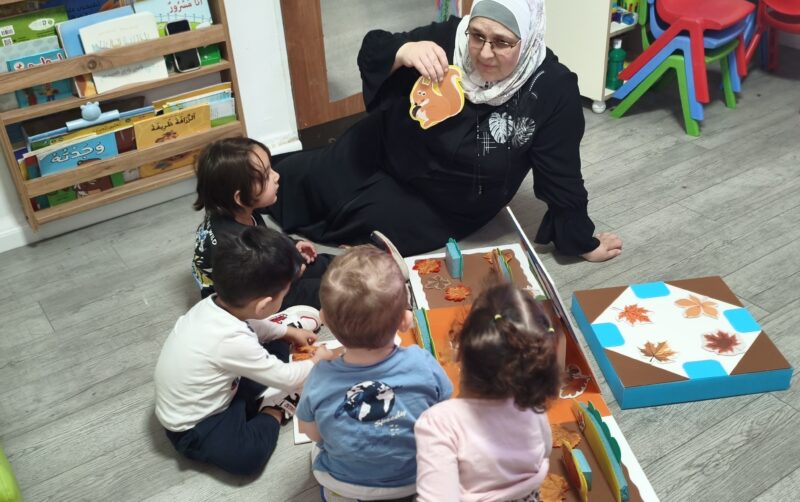
Judith Sudilovsky/eJewishPhilanthropy
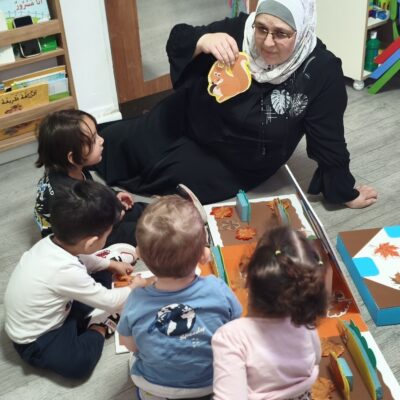
An early childhood educator plays with children at a daycare in East Jerusalem, in August 2026.


 Add EJP on Google
Four years ago, Hifa’a Khshan was struggling to find a way to meet all the regulations for official certification of her new daycare center in East Jerusalem.
Her meeting with May Omari, the educational director of MATI Jerusalem, a nonprofit that helps support the economy of the city’s eastern neighborhoods, about the newly established Tifli program to advance high-quality, regulated early childhood education for the city’s Arab residents in East Jerusalem, changed her life.
She felt as if a weight had been lifted from her shoulders after she spoke to Omari, Khshan told eJewishPhilanthropy, sitting in a brightly lit room of her daycare center with bookshelves lining the walls and baskets of toys strategically placed around the room.
Today, she is the director and owner of the well-regarded Rose’s Kids Daycare Center in East Jerusalem’s Shuafat neighborhood.
“I wanted the daycare center to be legal from the beginning, according to the regulations of the Ministry of Education, according to the municipality’s regulations. My friends and family told me to leave it be, that it was too complicated, and I didn’t need all those problems,” Khshan said.
But she was adamant about adhering to the requirements. After seeing an advertisement for MATI Jerusalem’s newly launched Tifli program, she made an appointment and went with her husband to meet Omari in MATI’s East Jerusalem office. Omari assured her that it was possible to make her dream a reality while meeting all the regulations, Khshan said.
“Everything changed for me in that minute when I spoke to May. I went out with everything [I needed to know],” Khshan said. She still faces obstacles, including concerns about maintaining the property rental lease and fluctuating monthly enrollment, which makes budgeting difficult, but she is proud that her efforts are recognized by parents as well as the municipality, she added.
Rose’s Kids is one of 24 East Jerusalem daycare centers for which the Tifli program has assisted in obtaining operating permits since the program’s inception in 2020, with another 40 currently undergoing the process, Riham Jaber, MATI Jerusalem’s branch director, told eJP.
MATI Jerusalem promotes economic and social development in Jerusalem, including support for small businesses, vocational training and Hebrew language classes in East Jerusalem, where it has been active since 2016.
Until recently, its programs did not include early childhood education, but in 2020, the nonprofit developed Tifli, which means “My Child” in Arabic, following discussions with Yad Hanadiv, the philanthropic foundation of the British branch of the Rothschild family. Initially, MATI Jerusalem had requested funding to provide Hebrew courses for entrepreneurs and business owners in East Jerusalem, said Jaber. When Yad Hanadiv proposed instead to create a program focused on early childhood education — one of the foundation’s five focus issues — MATI Jerusalem adapted its proposal while still incorporating its commitment to women’s employment, she said.
The partnership between Yad Hanadiv and MATI Jerusalem was a win-win situation for both organizations.
“We know that we want to be in places where the government isn’t necessarily there,” said Eda Lee Frumer, Yad Hanadiv early childhood program officer. She described the field of early childhood philanthropy in general as “sparse” and “barren.”
“We know that in early childhood in general… the government isn’t necessarily there. The municipality of Jerusalem can’t [easily bring programs] into East Jerusalem… because there is a lot of animosity.”
Civil rights organizations and East Jerusalem residents maintain that unequal distribution of resources in East Jerusalem creates a shortage of public services and infrastructure, with a lack of a master plan for the neighborhoods leading to a scarcity of municipal building permits and a subsequent disproportionate number of home demolitions. Court-ordered evictions in favor of settler organizations also add to a tense relationship between residents and governmental authorities. (https://www.english.acri.org.il/east-jerusalem).
This situation has produced a shortage of appropriate spaces available for daycare centers, which is one of the biggest obstacles in qualifying for certification in East Jerusalem, Omari said.
Omari noted that traditionally early childhood care in East Jerusalem has been “very, very weak” and as recently as six years ago early childhood caregivers had no certification. Yet daycare center owners have hesitated in applying for the certification due to a distrust of government and municipal ministries, she said.
MATI Jerusalem, with a trusted and established presence in East Jerusalem, was the perfect partner to establish an early childhood initiative in that area, Frumer said. In fact, she said, the Tifli program exceeded their expectations, and through their partnership they realized they could expand their initiatives in other areas by also working with organizations that do not share the same early childhood education focus as Yad Hanadiv.
“In order for children to succeed, they need to have a good education, and that starts from having a proper environment which can provide them with everything they need in order to develop. MATI Jerusalem has done things that were new in general to the Arab-speaking society in terms of basic knowledge about early childhood, language development, social development,” said Frumer.
Tifli has also empowered women caregivers, improved their job status and integrated them into the work market, said Jaber. Because of the low salary (NIS 2,500-3,500 [$757-$1,060] a month), the profession is often considered less attractive than a cleaner despite its importance, she said.
She coordinated a business plan that encompasses women’s employment, vocational training, and guidance in applying for permits and subsidies.
Yad Hanadiv approved NIS 4 million ($1.2 million) for the first five-year cycle from 2020-2025 and has renewed the five-year partnership for another NIS 5 million ($1.5 million) until 2030. MATI Jerusalem still needs to match those funds and is looking to raise $650,000 to continue with their programming.
Noting that ages 0-3 are considered crucial years in a child’s development, Jaber noted that about 125,000-150,00 children up to the age of 3 in East Jerusalem were attending unofficial daycare centers or staying home with mothers or family members until the establishment of Tifli. In 2020, only about 18% of Arab women in East Jerusalem were employed; by 2023, the number had reached 27%, she said, attributing the increase to the growing availability of quality daycare.
“There was a time when people thought caring for a child was cleaning him, feeding him, sitting him down and keeping him safe. But the child is with [a caregiver] more than eight hours a day. It is really important that the caregiver gives him education in addition to the care,” Jaber said.
To date, more than 750 childcare workers have participated in professional development courses, conferences and community gatherings, said Jaber, and Tifli has delivered seven courses, reaching 180 childcare workers from East Jerusalem through the professional qualification program funded by the Ministry of Education through an academic colleges tender, which requires childcare workers to complete 220 hours of training in order to continue working in the field.
MATI Jerusalem developed Tifli as a holistic ecosystem involving caregivers, parents, pedagogical mentors, connections with universities, and efforts to connect with West Jerusalem and government ministries, she said. Tifli developed educational content in Arabic and built a professional community with active WhatsApp groups and online resources including webinars on topics such as age-appropriate story reading and breastfeeding, videos, books and other materials — with plans for an online library. Included in the initiative is a professional training course that trains pedagogical instructors in cooperation with the Hebrew University of Jerusalem and Al-Qasemi Academic College for participants with academic degrees; a professional development course for daycare directors and caregivers on pedagogy, child development, and activities such as music, games and toilet training. Hebrew classes available for the caregivers also enable them to be employed in West Jerusalem, where the pay is higher.
On the business side, the program provides business consulting on income tax registration, financial management and customer relations and offers interest-free loans to establish and renovate daycare centers and home-based childcare facilities. Since 2020, 150 of 180 loan applications have been approved, said Jaber.
The partnerships they have formed with various organizations and institutions are the backbone of the program, said project manager Inas Siam.
“We are a comprehensive support program. It’s like a chain, with each link being important. We all work together within the framework of the municipality and the Ministry of Education,” said Siam.
In an August tour of some of the daycare centers, MATI Jerusalem celebrated the doubling of the number of licensed daycare centers in East Jerusalem over the past three years, attributing it to this wide-reaching partnership with Israel’s Ministry of Education, the Jerusalem Municipality, the Yad Hanadiv Foundation and JDC-Ashalim.
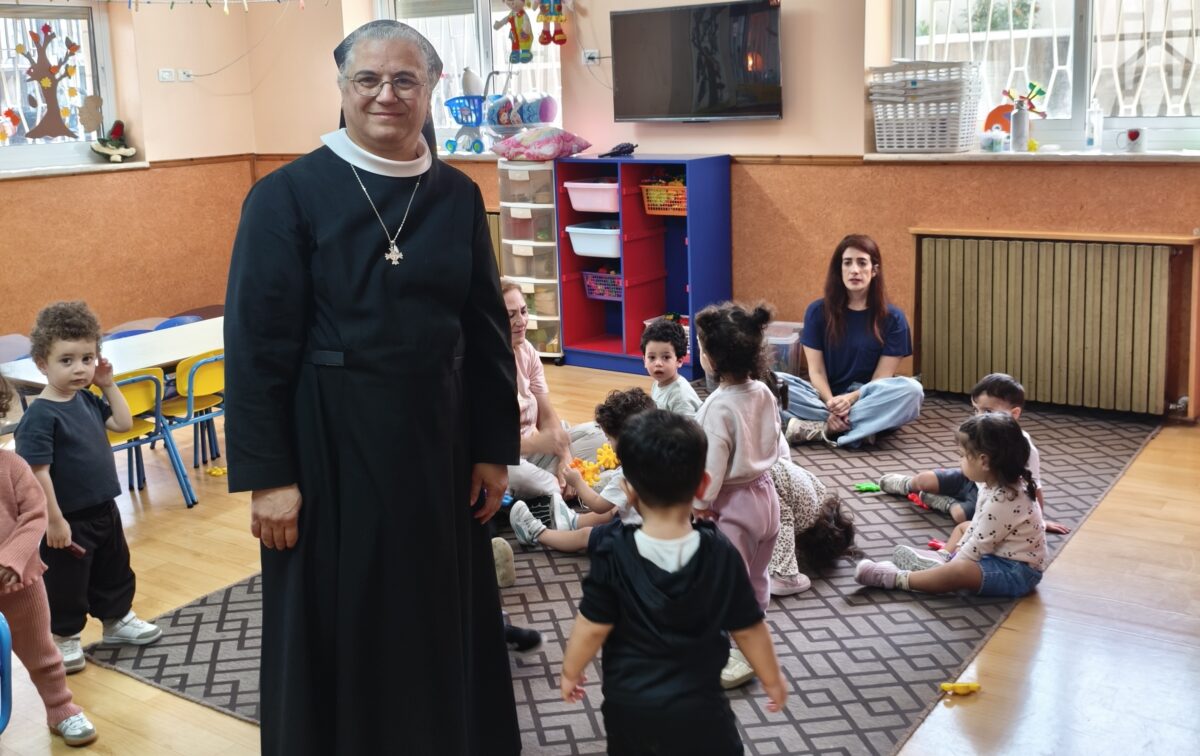
“The number of licensed centers has doubled,” Orna Paz, head of the Ministry of Education’s Early Childhood Division, said in a MATI Jerusalem press release following the tour. “The partnership between MATI, Yad Hanadiv, the Ministry of Education, the Municipality, and the Joint is not something to take for granted — what we’re seeing here is real initiative, real progress, and genuine collaboration.”
Until the first Day Care Supervision Law was passed by the Knesset in 2018, there were no governmental regulations in place for the early childhood education system in general, but in 2021, another law was passed to enforce the original law. The additions stipulate the maximum number of children permitted in a daycare, the ratio between the number of staff and the number of children, staff training and the required size of the space of the daycare.
Adhering to the new regulations requires money, and the livelihood of a private daycare owner working within a weaker socioeconomic community will drop to almost nothing without any government assistance, MATI Jerusalem CEO Zvia Shelly noted.
“[This is where] MATI enters, as much as possible to help people, to develop, to do the things that will make them legal, to help with finances so that they can do it, that’s our strength,” Shelly said. “I hope that one day there will be a government that understands the importance of investing money in this field.”
In the Greek Catholic Al-Liqa Kindergarten & Daycare in Beit Hanina, which is administered by the Salvatorian Sisters of Our Lady of Annunciation, director Sister Kholoud Sweidan is helping children with their backpacks and greeting parents as the day winds down to an end. Although the daycare was founded in 1986, two years ago the center began working with Tifli intensively, she said. They have benefited by learning important concepts in early childhood care, such as helping young children build independence and communication skills, she said, as well as the importance of communication with the caregivers.
“That leaves us for the future a mature person who knows how to make decisions. It means making modifications of how we view our work; it means learning how to set up the story corner, how we use the kitchen, how we use games, how the times should be organized, the study plan or the annual plan,” she said. “Everything you learn, you benefit from, and even if you don’t use it now, I always say there’s a shelf. You take, you learn, and you put it on that shelf for use later.”
Related News
CLOSING WORDS
In AZM address, Cosgrove links communal ‘orthodoxy’ on Israel to rising anti-Zionism among young Jews

PRESIDENTIAL REBUKE
Israel’s Herzog: Mamdani ‘makes no effort’ to hide disdain for Israel, Jews must fight back
ADVANCING A VISION
N.Y. federation donates $1M toward building shared-society center named for peace activist killed on 10/7

EXCLUSIVE
Detroit-based philanthropists Nancy, James Grosfeld donate $8M to renovate JDC’s Israel campus
HIGHER EDUCATION
As Jewish donors reconsider academia, Jan Koum doubles down, endowing Israel studies at Stanford