TRAVEL PLANS
Summer Israel trips still up in the air, but after 2025 war delay, Maccabiah ‘100%’ plans to proceed
Organizers are now having to decide whether or not they will go forward with their trips, as the cancellation window closes, but most participants appear to be hanging in, IETA's Anna Langer says
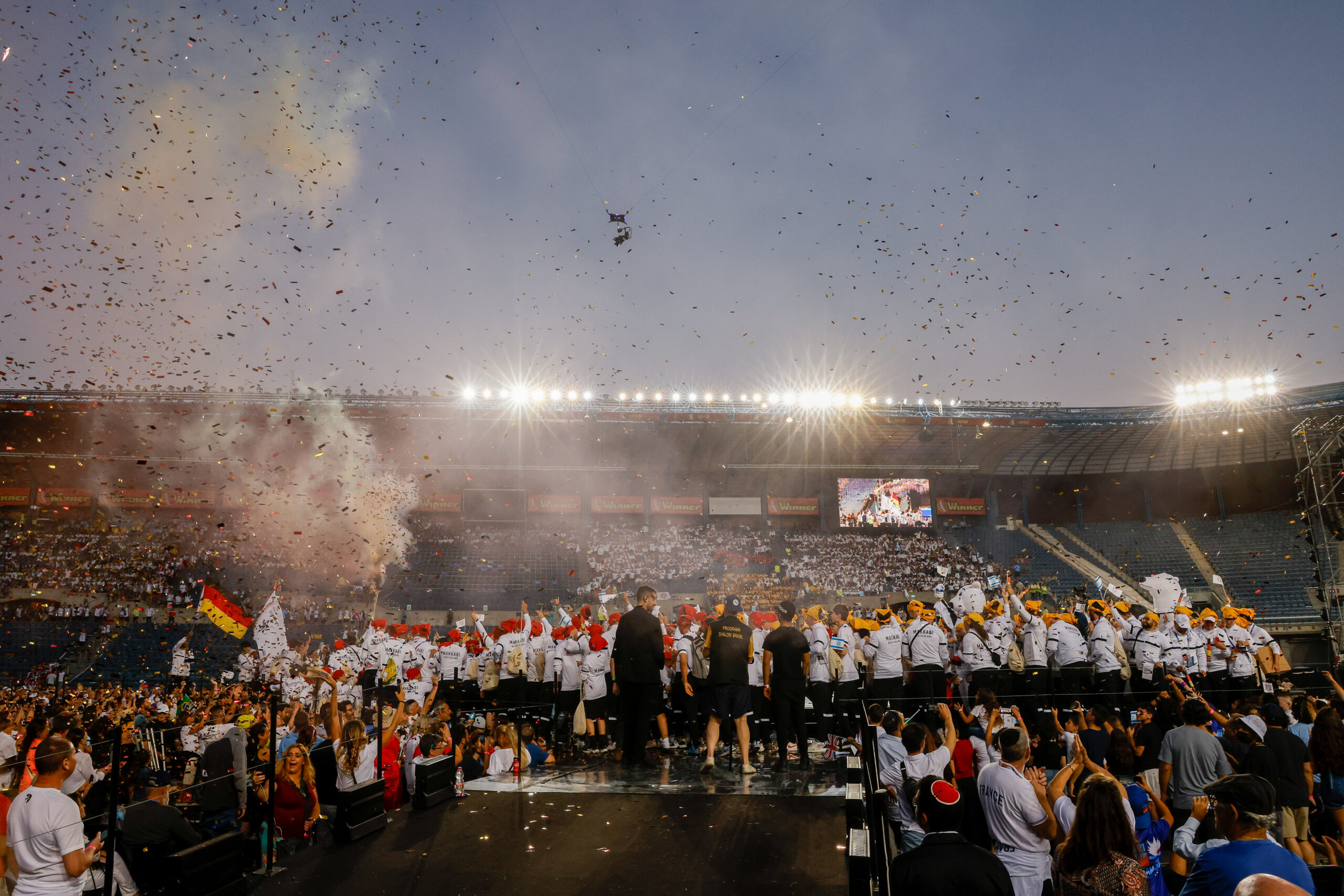
Olivier Fitoussi/Flash90
The opening ceremony of the Maccabiah Games in Jerusalem on July 14, 2022.




 Add EJP on Google
Even as the wars against Iran and Hezbollah grind on and Israeli airspace remains largely closed due to ongoing ballistic missile attacks, in the coming days, Israel trip providers will have to decide whether or not they will be going ahead with their plans for this summer.
“The window to be able to cancel with the opportunity for a complete refund is closing for most trips that happen early in the summer — let’s say beginning around June — which is many of them,” Anna Langer, Jewish Federations of North America’s vice president of North America Israel strategy and the acting executive director of the Israel Educational Travel Alliance, told eJewishPhilanthropy recently. “That question is upon us right now, and that is why we are offering day-to-day, one-on-one support to organizations, for them to think about these decisions and for us to help to guide them through thinking about those processes, as well as community spaces for folks to hear from others.”
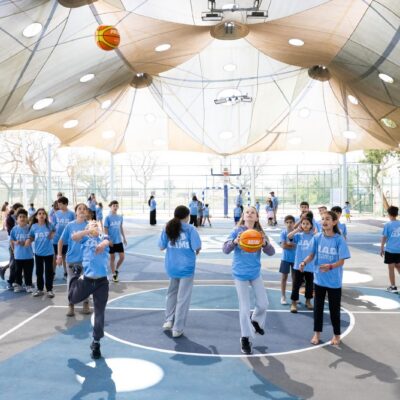
One of the largest trips this summer will be the Maccabiah Games, which were scheduled to take place last year but were postponed because of that summer’s war between Israel and Iran. While organizers of the event told eJP that they do have a few more weeks before having to make a final decision, they are currently operating under the assumption that the games will open on June 30 as planned.
“After Passover… we’re going to have to assess alternatives, but our 100% belief at this moment is the games will take place this summer,” Mike Siegal, president of the Maccabi World Union, told eJP, noting that the games were “already on Plan B,” after being postponed last summer.
“It’s our job to encourage everybody to not do anything other than believe that the games are going to take place and that they’re going to be phenomenal and that they’re going to be inspirational,” he said. “The job is to be optimistic, and so we are.”
Siegal said that, so far, while parents and participating organizations have expressed concern about the ongoing security situation in Israel, they have not had mass cancellations or calls to reschedule or relocate the games. Last summer’s games were slated to be the largest yet, with some 10,000 athletes from 80 countries due to compete.
Roy Hessing, CEO of the Maccabi World Union, told eJP that more than 8,000 athletes are expected to participate in this summer’s games, with roughly 6,000 of them coming from abroad. Hessing noted that this figure does not include the adults who will be accompanying the athletes.
Siegal, a former board chair of the Jewish Agency, said that the games hold immense symbolic significance, demonstrating the connection between Diaspora Jews and Israelis.
“[I am most looking forward to] having the opportunity to show the people of Israel that the Diaspora is not only talking about solidarity, but we’re going to show up in solidarity,” Siegal said. “That’s probably the best thing that we can do: show up in solidarity for the people who have had to live under these awful conditions. It’s just good to have something normal.”
Eyal Ostrinsky, chair of Keren Kayemeth LeIsrael-Jewish National Fund, told eJP last week that his organization agreed with the need for the games and had therefore doubled its financial support for them. “We are assisting with an additional NIS 4 million [$1.3 million]. It was NIS 4 million, and we increased to NIS 8 million [$2.6 million]. There’s nothing close to it, in terms of importance,” he said.
According to Langer, not only have there not been mass cancellations for the Maccabiah Games, but additional athletes have registered to participate in them since the war broke out.
“The U.S. delegation to the Maccabiah Games had seen an increase in the number of participants signed up at the onset of the war, actually. Very soon after, there was sort of a spike in participation, and that’s a really good indicator of where things are,” Langer said, noting that the same was true with other programs as well.
“The interest from the participants to go is still there, right? And the desire to not only have these opportunities that bring Jewish communities together, but… wanting to be specifically [in Israel] is a really heartwarming and really important trend that we’re seeing now,” she said.
Langer said that her organization, IETA, is holding weekly meetings with Israel travel providers, who, in turn, are in regular communication with their participants. She noted that those trip operators have grown savvier over the past two-plus years since the Oct. 7 terror attacks. In particular, she said, these trip providers have started relying on Israeli airlines for travel, making it less likely that their flights will be canceled. Indeed, many international carriers have already canceled their Israel route through June.
“We’re going to be encouraging everyone to do what we always encourage them to do — more than encouraging them to do since Oct. 7 — which is go with the Israeli carriers,” Langer said. “They are the only carriers who continue to function as conditions continue to change, and the cooperation that they have with the Israeli government is so intense that it is an important indicator of safety for your groups. Suffice it to say, you likely won’t have a flight if you choose another carrier.”
Speaking more broadly about Israel travel programs, Langer noted that since the current war with Iran broke out, the overwhelming majority of participants in existing long-term programs have opted to remain in Israel. Though she added that nearly all of those participating in short-term programs have left the country.
“The participants in longer-term programs are also really seeing themselves as integrating into Israeli society and are there to more deeply understand what it is like and to experience feeling what it’s like to live there,” she said, “Those participants, by and large, have elected to stay. We had about 5,500 participants on the ground at the onset of the war, about 5,000 of those participants have stayed, and that 500-number difference basically accounts for participants in short-term programs and some who had immediate health care needs or maybe were under 18 and were asked by parents to depart.”
Related News

MAJOR GIFTS
Center for Jewish History celebrates 25 years with a $25M matching grant
Shefa launches psychedelics retreat for Jewish professionals suffering burnout
EXCLUSIVE
Detroit-based philanthropists Nancy, James Grosfeld donate $8M to renovate JDC’s Israel campus
CLOSING WORDS
In AZM address, Cosgrove links communal ‘orthodoxy’ on Israel to rising anti-Zionism among young Jews
ADVANCING A VISION
N.Y. federation donates $1M toward building shared-society center named for peace activist killed on 10/7