SUMMER BLUES
Jewish camp world rocked as major player in for-profit Jewish camping declares bankruptcy
As the holding company that controls dozens of overnight and day camps goes under, the camps themselves stress that the summer is going ahead as planned
Courtesy
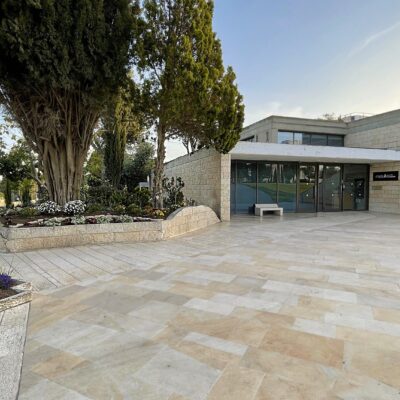
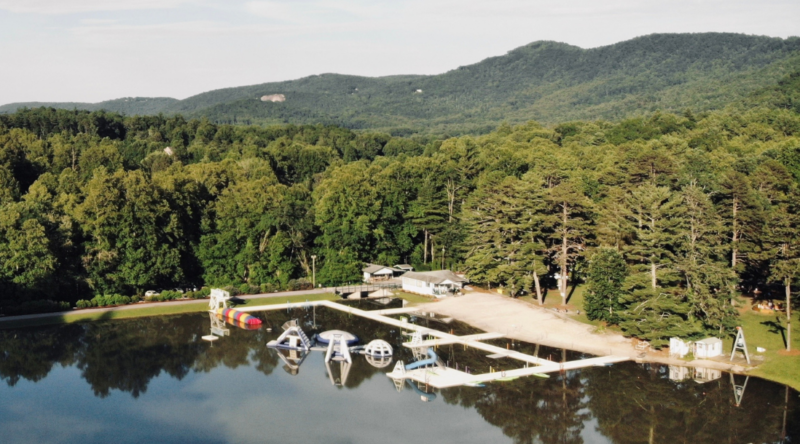
Blue Star Camps in Hendersonville, N.C.




 Add EJP on Google
A major player in Jewish American camping declared bankruptcy last week, a move that could affect thousands of Jewish campers just as the summer season is getting underway.
New York-based real estate owners Michael and David Shabsels declared Chapter 11 bankruptcy in New Jersey last Thursday, both personally and under their umbrella group, Simad Holdings. Since declaring bankruptcy, the brothers and their firm have refused to speak to the press.
The brothers, who entered the for-profit camp business in 2006, own 22 overnight camps and eight day camps across the Northeast, predominantly in New York, Pennsylvania, New Jersey and Maine.
Many of their camps have Jewish programming or are primarily attended by Jews. The average cost to attend one of the Shabsels brothers’ camps is $8,000-$10,000 per season, with some topping $17,000.
Under Chapter 11 bankruptcy, businesses can remain open, and the collection of debt is paused, but the bankrupt company must develop a reorganization plan that includes how it will restructure debt and pay creditors. The brothers have until Oct. 2 to do so.
While representatives of the for-profit camps involved have assured eJewishPhilanthropy that they will run this summer, camp insiders say their long-term futures could be vulnerable if the brothers are forced to sell off the camp properties.
“I really don’t know anything,” a representative from Camp Achim, a Jewish camp in Catskill, N.Y., told eJP yesterday. “I just know camp is moving forward as planned.”
Jewish camps that could be affected by the bankruptcy include Blue Star Camps in Western North Carolina, Camp Lavi in Pennsylvania and the SHMA Camps in New York.
Unlike the majority of Jewish camps in America, the Simad Holdings camps are not directly affiliated with any Jewish denomination or the Jewish Community Center movement. As for-profit enterprises, they also don’t fall under the Foundation for Jewish Camp’s umbrella, which includes over 345 nonprofit Jewish camps across North America, but this could change if the Shabsels’ camps become nonprofits, an option that could be attractive if the land that the camps sit on is put up for sale as part of the debt restructuring.
Jamie Simon, CEO of Foundation of Jewish Camp, told eJP that she was not able to speak about the Shabsels-owned camps or their future due to their privately owned status.
“There is a lot we don’t know about the camps affected, but what we do hope for is a positive resolution so campers and families aren’t impacted, since we know camp is so influential,” she said. “Our hearts are with everyone affected — and what we’re focused on this summer is making sure campers can experience the joy, friendship, belonging and Jewish community that camp provides.”
Demand for camp is higher than ever, with last year’s FJC census showing that nearly 200,000 young people attended Jewish camp at an FJC-affiliated camp last summer, a record.
Court documents show that the Shabsels brothers listed over $500 million in liabilities. Last December, their camp properties were appraised to be worth $466 million with a projected annual return of 10.5% for 2025.
That same month, the brothers, through Simad Holdings, which is based in the British Virgin Islands, completed a $195 million bond offering in Israel, with the bonds backed by 13 camp properties. But late last month, Simad informed the Tel Aviv Stock Exchange that it had defaulted on a payment to bondholders. Also, the company reviewed its first-quarter financial statements and found that $34 million was missing. The funds had been transferred to the brothers’ other companies.
Originally, Simad claimed the transfer was an error, but after the company’s audit committee asked the brothers to return the funds — plus the 7% interest rate of the bonds — the brothers said they were unable to do so. Quickly, after news of the missing funds broke last week, several Simad board members resigned, later deciding to stay on temporarily to attempt to recover the money.
Bondholders had first lien on the camps, but according to the Israeli financial newspaper Globes, which broke the news of the bankruptcy, many insiders accused the brothers of double pledging assets, with one insider telling the newspaper: “It seems that this is a case of a company owner who came here to raise debt by lying.”
The brothers, who are now facing a criminal probe, have found themselves facing multiple lawsuits over the past decade, including a 2025 case alleging breach of contract and two lawsuits — one by the co-owners of Kiwi Country Day Camp in Carmel, N.Y., and another by a co-owner of Camp Lavco in Lakewood, Pa. — that accuse the brothers of refinancing co-owned property and taking proceeds only for themselves, then refusing to share financial documents with their co-owners.
According to Globes, many involved in the situation in Israel blame the underwriter who brought Simad to the Tel Aviv Stock Exchange, the Israel Securities Authority and the ratings agency Midroog, which assessed the bonds with an investment-grade rating.
After news of the missing funds broke, the Tel Aviv Stock Exchange suspended trading of the company’s bonds as the price fell to junk level. In addition, Israeli securities investigators launched an investigation into Simad over possible securities legal violations.
Despite the developments with the holding company, the camps themselves stress that all is well going into this summer.
“Everything is good,” a Blue Star Camps employee assured eJP, saying the camp is running as normal this summer and is “absolutely financially healthy.”
In addition to their camp holdings, the brothers own office buildings and retail properties. They are connected to numerous Jewish nonprofits, with David Shabsels listed on Orthodox Union’s Benefactor Circle, and Michael Shabsels and his wife listed as members of United Hatzalah’s U.S. National Board. In July 2023, Michael Shabsels and his wife hosted an event for United Hatzalah, and in July 2024, the brothers hosted an event for Nevut Lone Soldier Veteran, an organization that supports IDF lone soldiers.
“I think to be successful in any business, anyone who is a business owner must always have the mindset that they are never going to fail and that they’re never going to give up, no matter how bad business gets,” Michael Shabsels said in a 2020 YouTube presentation for Olami Professional Circles, which connects young Jews with “the best business minds in the industry.” “The only thing worse than the business being bad is if you throw in the towel.”
Related News
CLOSING WORDS
In AZM address, Cosgrove links communal ‘orthodoxy’ on Israel to rising anti-Zionism among young Jews
ADVANCING A VISION
N.Y. federation donates $1M toward building shared-society center named for peace activist killed on 10/7

MAJOR GIFTS
Center for Jewish History celebrates 25 years with a $25M matching grant
PRESIDENTIAL REBUKE
Israel’s Herzog: Mamdani ‘makes no effort’ to hide disdain for Israel, Jews must fight back
EXIT INTERVIEW
Elizabeth Sokolsky, longtime EVP of Birthright Israel, to retire next year