Opinion
SMART DESIGN
The community we build next




 Add EJP on Google
In Short
As we approach three years of ongoing response since the Oct. 7 attacks, Jewish communities face the task of building on everything we are learning — deliberately, courageously and together.
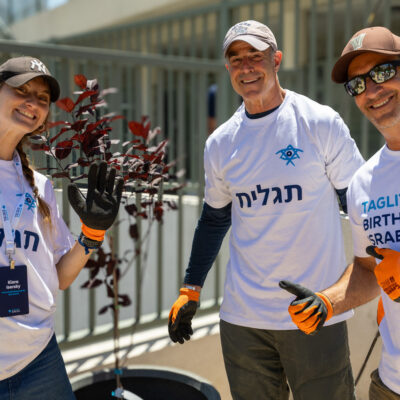
Every day, we mobilize for Israel. We confront rising antisemitism. We raise resources. We strengthen security. We support Jewish students. We show up for one another through grief, uncertainty and resolve. Our institutions demonstrate resilience. Professionals and volunteers step forward. Communities act with speed, generosity and purpose.
All this can serve to remind us of something that we should never take for granted: that beneath our differences lies a profound sense of shared responsibility.

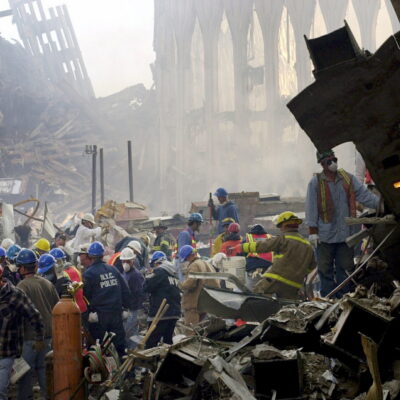
filo/Getty Images
But crisis not only reveals character; it also reveals architecture — how our communities are built.
The past three years have done more than test our institutions. They showed us where we are strong, where we are vulnerable and where the assumptions that have long guided Jewish communal life no longer fully align with today’s realities and the future ahead.
One of the most important lessons this period has revealed is about interconnectedness.
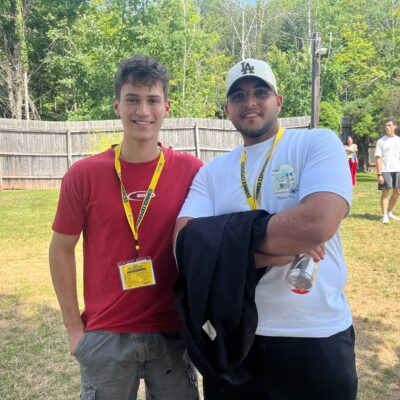
A young person’s relationship with Jewish life, Israel and the Jewish People, as well as their willingness to lead or act, is not shaped by a single institution. It develops over years through education, relationships, meaningful experiences — the cultivation of a genuine sense of belonging.
Leadership does not begin when someone joins a board. It begins when people believe they have a place in shaping Jewish life.
Long-term philanthropy does not begin with a campaign. It grows from trust, relevance and communities and institutions that inspire people to invest in a shared future.
The strength of our response to antisemitism depends not only on security and advocacy, but also on confident Jewish identity, informed engagement with Israel and strong relationships with allies.
None of these exists in isolation. They are interconnected outcomes. Yet we often assign them to separate organizations without joint touchpoints. I am not arguing that organizations should lose their distinct identities and missions. What they need are intentional opportunities to step outside their priorities and work together on the challenges no single institution can solve alone and the outcomes no single organization or program can achieve in isolation.
Communities need places where federations, synagogues, schools, camps, JCCs, Israel organizations, service agencies, youth organizations, philanthropists and lay leaders can ask bigger questions. Where are we succeeding together? Where are we falling short? Who is missing from our community? What investments today will matter ten years from now?
That, to me, is community architecture. Not a new program, not another initiative, but the intentional design of how a community thinks together, plans together, learns together and builds together.
This architecture requires both local and national hands, each doing what only it can do. Local communities must lead the on-the-ground work, because every community has its own history, demographics, strengths and aspirations, and its answers must grow from its own soil. National umbrella organizations, such as Jewish Federations of North America, can identify the strategic challenges communities share, developing practical frameworks, surfacing successful strategic and implementation models, convening learning across communities and equipping leaders with tools they can adapt to their own realities. By aligning communities around common priorities, advocating for shared communal interests and setting standards for outcomes, evaluation data, accountability and continuous learning, national organizations can weave local efforts into collective strength.
This cannot be a single occasion. Community architecture is not an event but a practice, one that depends on intentionality and continuity. Each community should decide for itself how these spaces work, how often they convene, and who guides them, though in my view, federations are well positioned to convene them. What matters is the commitment itself: creating regular, structured spaces where every organization has a voice and a genuine part in the larger conversation.
Jewish history teaches us that our greatest periods of renewal came when we built new structures capable of carrying timeless values into changing realities. After the destruction of the Second Temple, Jewish life endured not because leaders recreated what had been lost, but because they reimagined how learning, leadership and community could flourish in a different world. Adaptation did not weaken continuity — it ensured it.
That same challenge now stands before us.
History rarely announces the beginning of a new chapter while we are living through it. More often, it becomes clear only in hindsight that a generation chose to build differently. This may be one of those moments.
If we have the courage to think beyond institutional boundaries, invest in shared purpose and design communities that are as interconnected as the challenges we face, then the years following Oct. 7, 2023, can be remembered for more than crisis. They will be remembered as the moment the Jewish community chose not simply to respond to history, but to shape it.
Ultimately, the community we become will be defined not only by what we preserve, but by what we choose to build together for the next generations .
Orit Mizner is the outgoing COO of Momentum and will join the Jewish Federations of North America in August as associate vice president of Community Success, a newly created role. Mizner previously held senior roles at itrek, the Israeli American Council and the Israel Innovation Institute, and she served three times as a Jewish Agency shlicha (emissary).