CENTRIST APPROACH
JCC Association restructures to increase offerings, collaboration and staff
The umbrella organization will be based around three centers: the Center for Jewish Peoplehood, Center for Talent Development and the Center for Innovation and Impact
Courtesy/JCC Association of North America
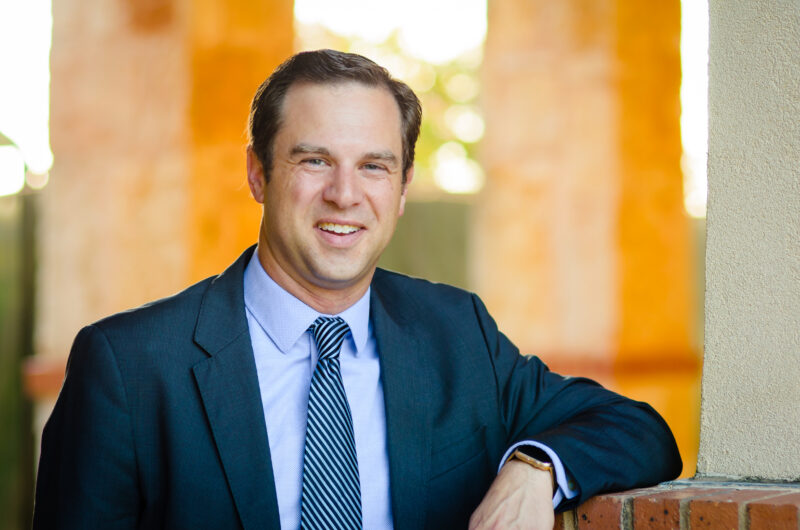
Rabbi Daniel Septimus




 Add EJP on Google
Having served Jewish communities across the United States, Rabbi Daniel Septimus knows a great many Jewish people from all walks of life. Jewish people from every sect, with roots embedded throughout the globe. Jewish people who speak with a drawl, who bring in Shabbat over rice and beans and who have wicked good Purim costumes.
“Regardless of what background you come from Jewishly, regardless if you have come to Judaism later in life as someone who’s converted, you’re all a part of this people that’s connected,” Septimus told eJewishPhilanthropy. “Judaism is what grounds us; the Torah is what grounds us, the traditions, the cultures, but at the end of the day, we’re all part of the people, and we’re all bound to each other. And the JCC is that place, that square, where people can come together to talk through these things.”
At the end of November, the JCC Association of North America announced that Septimus will serve as the organization’s first executive director of the Center for Jewish Peoplehood, beginning July 1, as part of a complete restructuring that Barak Hermann, the JCC Association’s president and CEO, hopes will increase staff by 40%.
Hermann joined the JCC Association in July — after over three decades holding leadership roles in the JCC movement, most recently as CEO of the Jewish Community Center of Greater Baltimore — with the goal of shaking up the organization, which was founded more than a century ago.
The restructuring divides the organization into three “Centers of Excellence”: the Center for Talent Development, the Center for Jewish Peoplehood and the Center for Innovation and Impact.
“Almost everybody’s getting new job descriptions in a very dynamic, exciting way,” Hermann told eJP.
Working out of Austin, Texas, Septimus will travel to JCCs across the country, managing a multimillion-dollar budget and overseeing the JCC Maccabi Games, the Center for Israel Engagement, the Mandel Center for Jewish Education, JCC Camps of North America and JWB Jewish Chaplains Council, which advocates for Jewish military personnel.
Every JCC “has its own identity, but there are a lot of things that are very similar,” Septimus said, “so our goal is to better connect JCCs and other entities that want to connect to each other that have similar needs, similar challenges.”
For instance, if a JCC sets a goal of increasing Israel conversations under its roof, its leadership would talk with Septimus about how to do so, and he’d share what other JCCs are doing to accomplish that task, with data to back everything up. Possibly, the JCC would decide to run its own Z3 (Zionism 3.0) Conference, mirroring the annual event held at the Oshman Family Jewish Community Center in Palo Alto, Calif., and Septimus would ensure that it has the guidance and tools to do so.
Septimus plans to specifically focus on camps affiliated with JCCs, planning to launch a listening campaign to ensure each camp is getting the resources it needs to thrive, providing consultants to target each camp’s specific needs and leveraging grants from the Foundation for Jewish Camp.
“We haven’t had someone who is out there just supporting the camps,” Septimus said. “The JCC movement has more residential camps than any other movement in North American life: 25 overnight camps. That’s a huge network, and I don’t think we’ve treated it as a network and supported these camps in the way that we could.”
With JCCs serving over 1.5 million people weekly — a third non-Jewish — with many of the Jewish patrons not belonging to synagogues, JCCs are “a very low barrier way of engaging in Jewish life,” a gateway to the larger community, especially as the post-Oct. 7 “Surge” has led many Jews to reconnect, Septimus said. “The JCCs have a very important role to play in harnessing that momentum.”
Septimus grew up in a Houston Reform household and credits the pluralistic Jewish youth movement BBYO with formulating who he is today. “In BBYO, I was able to just be with people from different perspectives, trying to inspire people to feel great about their Jewish identity and their Jewish connection, and this is what I think this center and what my role is to do, to bring people [and] get them excited from all walks of life,” he said.
He is adept at corralling people from across the Jewish spectrum having served for nearly a decade as CEO at the umbrella group Shalom Austin, which includes a Jewish federation, Jewish Community Center, Jewish Family Services and Jewish foundation. Before his time at Shalom Austin, he studied in Israel, New Orleans and at the Hebrew Union College-Jewish Institute of Religion in Cincinnati before serving as student rabbi for South Dakota’s Synagogue of the Hills, associate rabbi and director of congregation learning at Seattle’s Temple De Hirsch Sinai and executive director of Texas Hillel.
The Center for Jewish Peoplehood will work in partnership with the Center for Talent Development and the Center for Innovation and Impact to ensure initiatives are fueled in data and with top professionals and lay leaders.
Hermann describes the Center for Innovation and Impact as “the Apple wing” of the organization, focusing on research, development and measuring program effectiveness.
“We always did research, but not in the robust, comprehensive way that I’m planning,” Hermann said. “It’ll be not just surveying and creating measurement tools to articulate the effectiveness of the work, but [using] that data [to help] JCCs to do their business better [and] potentially raise more philanthropy in their community.”
The Center for Innovation of Impact will study initiatives in the larger Jewish world targeting concerns and trends in Jewish life. It will also study ways JCCs can generate and conserve revenue at a time when the cost of overhead is skyrocketing.
The Center for Talent Development will include pipeline development programs, initiatives supporting lay leaders and programs to recruit and develop JCC executives. Additionally, the JCC Association is launching a merkaz, the Hebrew word for “center,” that will offer “a plethora of new [physical and virtual] training opportunities, everything from management skills, advancing your ability to lead Jewishly. It could be stuff on AI,” Hermann said.
The association is also launching JCC Direct to provide executives and their teams with business support in core areas, including camping, early childhood, membership, arts and culture.
While the JCC Association has always had a team focused on supporting and training talent, Hermann expects this new center will quadruple the staff focused on talent and the development opportunities the organization offers.
The restructuring will allow the JCC Association to best support individual JCCs so it can be there for the Jewish people, Septimus said. “What we’re going to be doing is working together to try to make sure that we have the right resources in the field to make sure that these people can do the work that they want to do.”
Related News
CLOSING WORDS
In AZM address, Cosgrove links communal ‘orthodoxy’ on Israel to rising anti-Zionism among young Jews

EXIT INTERVIEW
Elizabeth Sokolsky, longtime EVP of Birthright Israel, to retire next year

MAJOR GIFTS
Center for Jewish History celebrates 25 years with a $25M matching grant
ADVANCING A VISION
N.Y. federation donates $1M toward building shared-society center named for peace activist killed on 10/7
EXCLUSIVE
Detroit-based philanthropists Nancy, James Grosfeld donate $8M to renovate JDC’s Israel campus