Your Daily Phil: Explained: The new federal tax credit for education scholarships




 Add EJP on Google
Good Thursday morning!
In today’s edition of Your Daily Phil, we cover a recent talk in Tel Aviv by Israeli tech leader and philanthropist Yasmin Lukatz, delve into the new federal tax credit that could make Jewish education more affordable and report on a recent celebrity-filled event in New York City highlighting the connection between Jews and Israel. We feature an opinion piece by Aarinii Parms-Green about nonnegotiable elements for cultivating meaningful partnership between Black and Jewish communities and one by Michael Schlank proposing a more integrated approach to Jewish civil society; plus Tom Sudow urges Diaspora Jewry to leverage their philanthropic clout against legislation seeking to outlaw egalitarian prayer at the Western Wall. Also in this newsletter: Rabbi Yoni Dahlen, Sagi Balasha and Lucy Aharish.
What We’re Watching
Dozens of Canadian Jews are arriving today in Tulsa, Okla., for a pilot trip as part of an initiative by the local federation, Lech L’Tulsa, to help them relocate to the city in light of rising antisemitism in Canada.
In California, JCRC Bay Area, the Jewish Federation Los Angeles and Jewish California (formerly known as JPAC) are hosting the Jewish California 2026 Governor Candidate Forum at the Skirball Center in Los Angeles.
What You Should Know
On the 61st floor of the Sorona Azrieli tower in Tel Aviv, Israeli tech leader and donor Yasmin Lukatz offered a master class of sorts on philanthropy and entrepreneurship last night, charting her time in the Bay Area, her return to Israel in 2014, her efforts to bolster Israel’s tech scene and how she has more purposefully directed her charitable giving in recent years, reports eJewishPhilanthropy’s Judah Ari Gross.
Lukatz held this discussion at the TLV Convening, a salon series launched in 2023 by Orfin Ventures founder Adam Finkel. The roughly a dozen attendees were a mix of Americans and Israelis, many of them representing family foundations and investment offices, as well as tech entrepreneurs and philanthropy experts (and one journalist). Speaking to the group, Lukatz, the daughter of Dr. Miriam Adelson, described her process of developing her own philanthropy strategy with help from the Israel office of the Jewish Funders Network, selecting key areas to focus on, such as technology and gender equality, as well as core values like collaboration and metrics.
Lukatz, 53, the founder and director of Israel Collaboration Network (ICON), which supports the Israeli startup scene, stressed the importance of Israeli technology and innovation not only in the economy but in the country’s diplomacy, particularly in the wake of the Oct. 7 terror attacks.
“I think just the fact that we continue to do business globally is a great antidote to antisemitism because once you get to know a person, you understand we’re not the devil. We’re just great people. We’re talented. We’re good. It becomes harder to hate us,” she said.
While she noted the importance of this kind of public diplomacy work, Lukatz said that she does not currently support any “hasbara” activities, believing the field to be ineffectual, with too many figures and not enough collaboration. “Everybody wants to be the CEO. Everybody knows better than the other person. They got it all wrong. This is why I’m not funding any ‘hasbara’ efforts… because I think it’s a mess,” she said.
Lukatz also discussed her concerns regarding Israel’s future, particularly as it relates to most of the Israeli Haredi community’s refusal to teach core secular subjects in its schools. “I think what bothers me most is actually the ultra-Orthodox now, that they’re not willing to serve [in the military], but also — something we’re ignoring — that they refuse to study math and English while becoming a bigger chunk of the population. What’s going to happen in 20 years? Our biggest asset now is our talents, is the brains,” she said. “For some reason, we focus on the short term of joining the military just because the burden now is so painful. But it all starts at school.”
Asked by eJP how she aims to both bolster the Israeli tech scene while also ensuring that the opportunity that it represents is offered to Israelis of all backgrounds, Lukatz said her organization does specifically look out for minority applicants and that she is also supporting educational initiatives in the country’s geographic and economic periphery. “I don’t think we should not help the tech because it creates [economic inequality], I think we should see how the tech can lift other sectors with it as well,” she said. “We’re also working on a program about English studies in the periphery,” Lukatz said. “I think philanthropy should be a greenhouse for many initiatives, that if proven successful at a small scale, should be adopted by the government and run at scale. It is our job to start those experimental new programs.”
EXPLAINER
A new federal tax credit could reduce Jewish day school costs — how does it work?
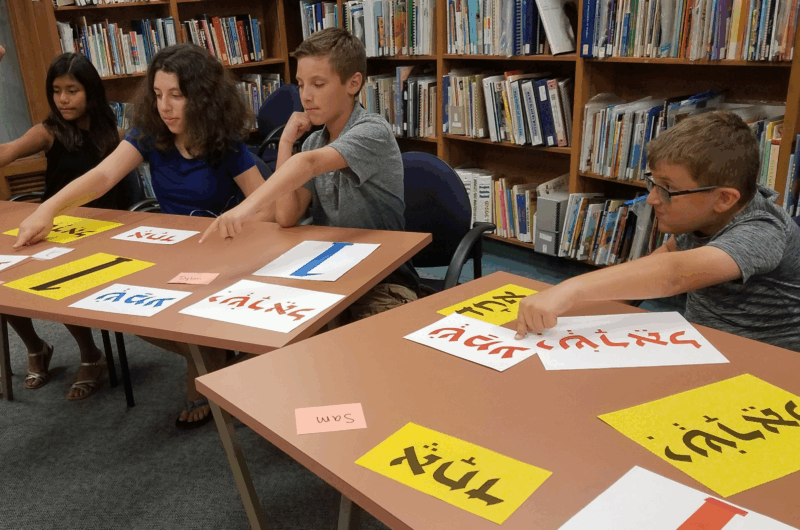
A growing number of Jewish groups are pushing states to adopt a federal tax credit that would relieve some of the financial burden on Jewish day school tuition and other educational costs, while skirting many of the issues related to school choice and church-and-state separation that those organizations have traditionally opposed. Advocates told eJewishPhilanthropy’s Nira Dayanim that the credit could have a “transformative” effect on Jewish education.
Not just day schools: The credit hinges on state-approved nonprofit organizations (SGOs), which dispense scholarship funds for any qualified elementary and secondary school expense. According to David Goldfarb, managing director of public policy and strategic health at the Jewish Federation of North America, which is spearheading an effort to attract Democratic governors to opt in to the tax credit, qualified expenses include tuition, tutoring, support for students with disabilities, including occupational and speech therapy, transportation and uniforms, at both public and private schools. “The common one is obviously tuition for Jewish day school, but it’s actually much broader than that,” he told eJP. According to Goldfarb, in the case of the Education Freedom Tax Credit, the distinction is that the program is federal, and it’s not a direct use of government funds for schools, so the tax incentive does not inherently come at the expense of public schools.
Bonus: Jewish Insider’s Gabby Deutch checks in with state governors to see which are — and aren’t — opting in to the tax credit program…



ON THE STAGE
Hollywood stars highlight link between Jews and Israel at Carnegie Hall performance

Call it a mash note to Jewish identity, and to the Jewish homeland. Hollywood heavyweights took to New York City’s world-renowned Carnegie Hall stage on Tuesday night to highlight the link between the Jewish people and the land of Israel, spanning thousands of years, in the form of recounting historic love letters to the Jewish state, reports Haley Cohen for eJewishPhilanthropy’s sister publication Jewish Insider.
Who’s who: “Letters, Light and Love” made its U.S. premiere in a one-night only performance hosted by UJA-Federation of New York as Jewish celebrities including Amy Schumer, David Schwimmer, Debra Messing, Tovah Feldshuh, Jonah Platt and Michael Aloni read excerpts of letters written about Israel across centuries. The notes came from writers such as Julius Caesar, Maimonides, Golda Meir, Sir Moses Montefiore, Albert Einstein, Harry Truman, John Adams, Winston Churchill and Leonard Bernstein.
Read the full report here and sign up for Jewish Insider’s Daily Kickoff here.
BUILDING CONNECTIONS
Beyond symbolic gestures: Three key elements for Black-Jewish partnership
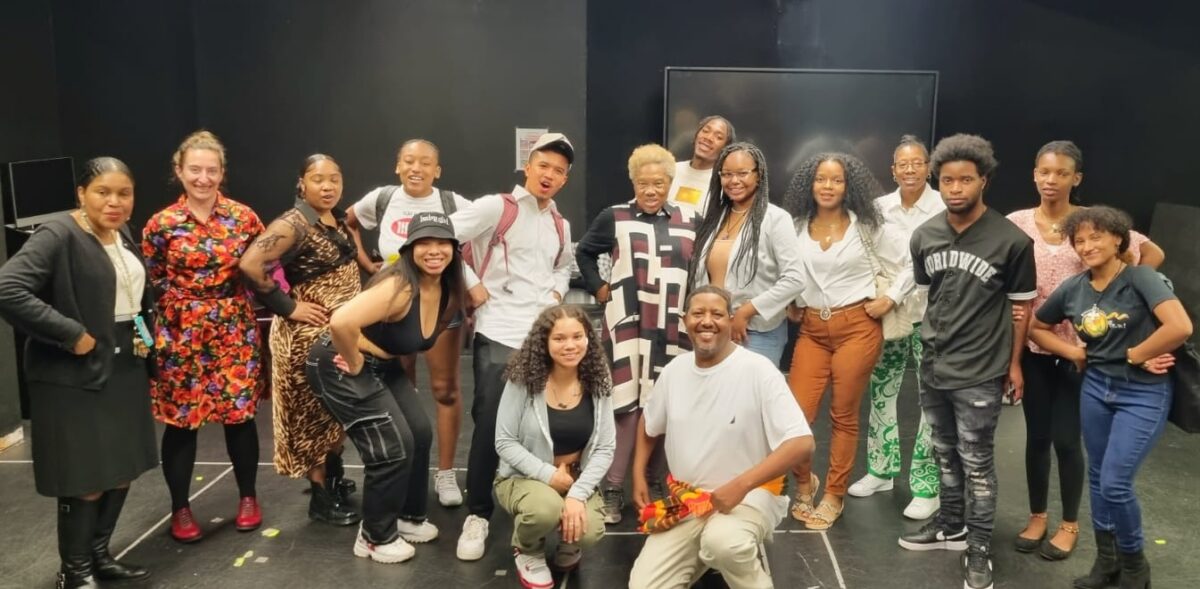
“This Black History Month, I find myself thinking back to this same season three years ago, when I was a college freshman co-leading Still We R.O.S.E. (Recognizing Our Shared Experiences), a Black-Jewish initiative I co-founded in my community in New Orleans after witnessing a rise in both antisemitism and anti-Blackness around me,” writes Aarinii Parms-Green, a Gladys Blackburn BAMAH fellow, in an opinion piece for eJewishPhilanthropy. “While the stakes surely feel higher, the truth remains the same: Black-Jewish partnership is still necessary, still unfinished and still deeply needed on our campuses and in our broader civic life.”
Al shloshah devarim: “One of the hardest parts of this work is that many people carry good intentions but do not know where to begin — how to contribute to the wheel rather than reinvent it, or what meaningful intercommunal engagement actually requires in practice. Experience has clarified something for me. If Black-Jewish coalition building is going to be durable in this moment, three elements must be treated as nonnegotiable: sustained dialogue, impactful educational initiatives and cultural connection through history and the arts — not as accessories to partnership, but as its infrastructure.”
SYSTEM UPDATE
Jewish civil society: From fragmentation to integration

“In recent weeks, a familiar debate has resurfaced in the Jewish community. Urgent and emotional, it is increasingly framed as a choice between security and engagement, but this framing obscures more than it clarifies,” writes Michael Schlank, executive director of the Sid Jacobson JCC in East Hills, N.Y., in an opinion piece for eJewishPhilanthropy. “The challenge here is not scarcity — it’s structure.”
Parallel tracks: “Defense organizations operate in one ecosystem, federations in another and synagogues, JCCs, day schools and camps in others still. Advocacy groups measure incidents and policy wins; community institutions measure participation and belonging. Funders reinforce these distinctions by treating security and engagement as separate and often competing priorities. Even when leaders articulate a holistic vision, the architecture they operate within translates nuance into competition: competing budgets, competing priorities, competing narratives. Our communal operating system forces distinctions that no serious leader actually believes in. It rewards fragmentation, not integration. It treats security and Jewish life as parallel tracks rather than interdependent components of a resilient civil society, and then we ask which deserves more. That binary is not only false — it is strategically unsound.”
‘THE WALL’ IS FOR ALL
Not one more dollar: An open letter I never thought I would have to write

“At a moment when Israel desperately needs friends, we cannot afford to lose even one. But unity does not mean silence. It means accountability. It means loving Israel enough to demand that it reflect the values of the entire Jewish people,” writes lay leader and former Mercaz delegate Tom Sudow in an opinion piece for eJewishPhilanthropy, responding to eJP’s coverage yesterday of legislation seeking to criminalize egalitarian prayer at the Western Wall making its way through the Knesset (“Western Wall gets swept up in Israeli government’s feud with the judiciary”).
Hands on the tap: “To Eric Fingerhut and the Jewish Federations of North America; to Russell Robinson and the Jewish National Fund; and to every organization that seeks financial support from pluralistic Jewish communities, the time has come to speak clearly: Inform Israel’s leadership that not one more dollar of North American Jewish philanthropy will flow through your institutions until the rulings of Israel’s Supreme Court are respected and efforts to criminalize pluralistic Judaism cease. Some will say that such actions endanger Israel. My own mother might have said so. But I believe legislation that makes pluralism illegal is already endangering Israel — spiritually, morally and politically.”
Worthy Reads
A Blast of Joy: In The Detroit Jewish News, Rabbi Yoni Dahlen shares the story behind his Southfield, Mich., synagogue’s donation of a Torah scroll to Beth Israel Congregation in Jackson, Miss., which was targeted in an antisemitic arson attack in January. “When we got off the plane in Jackson, we screwed up our strength for what we expected to be a sad and difficult meeting of two communities sharing consolation in tragedy. But that is not how we were met. Zach [Shemper, Beth Israel’s president,] was waiting for us at the airport, and he was waiting with a shofar in his hand. He gave us the big kind of hugs that are so beautifully ubiquitous in the South, and then he brought the shofar to his lips and blew a long, pure and resonant tekiah gedolah. It was not a blast of despair, of crying out or anguish. It was one of unmistakable joy. And I felt it somewhere deep inside me, and I’m still feeling it as I’m writing these words.” [DetroitJewishNews]
Social Capital: In The Times of Israel, Sagi Balasha lays out how a nonprofit “social bank” works. “A social bank introduces a different organizing logic into the financial system. Deposits operate as mission driven capital. Financial sustainability aligns with social value creation. Credit functions as a development tool rather than a gatekeeping mechanism, assessing viability in context rather than only through standardized risk profiles that systematically exclude entire communities. Customers gain the ability to place their money in institutions that reflect their values alongside their financial priorities. Trust becomes part of the institutional infrastructure, not a marketing layer.” [TOI]
Up Close and Personal: In The Chronicle of Philanthropy, Rasheeda Childress spotlights the use of “high-touch expeditions” as a donor relationship-building tool. “In 2023 Nick Espinosa, chief advancement officer at the Houston Zoo, went to the Galapagos Islands with donors, where they got to see penguins, sea lions, and other animals native to the famed islands. It was an unforgettable adventure. Now whenever he sees those donors, they grin and say, ‘How about those penguins!’ The trip was an extension of an approach called experiential philanthropy, in which supporters get firsthand views of organizational work. … These trips are not just for conservation groups. Espinosa says he’s seen experiential philanthropy work for museums, universities, performing arts groups, and more.” [ChronicleofPhilanthropy]
Word on the Street
The Louis D. Brandeis Center for Human Rights Under Law and StandWithUs filed a lawsuit today against the State of California over an alleged failure to address antisemitism — some of which is stemming from teachers’ unions — in K-12 public schools across the state, reports Jewish Insider’s Haley Cohen…
In a Times of Israel opinion piece, Rabbi Stuart Weinblatt, chair of the Zionist Rabbinic Coalition, raises concerns about recent pledges by candidates and elected officials not to take donations affiliated with AIPAC…
“Bishop’s House,” an expansive stone building built in the 19th century, located on Hanevi’im Street in Jerusalem, is on the market for $17.4 million…
Protests tied to the San Francisco chapter of the Democratic Socialists of America at an event on tax reform with San Francisco Mayor Daniel Lurie included chants to “Tax the rich” that morphed into calls to “Tax the Israel” and at least one person shouting “Tax the Jews”; Gov. Gavin Newsom’s press office called the incident “[d]isgusting,” while San Francisco Supervisor Bilal Mahmood condemned the chants as “blatant antisemitism”…
Former Treasury secretary and Harvard President Larry Summers announced he will resign from teaching at the university following the release of documents that showed a close relationship between Summers and disgraced financier Jeffrey Epstein; and Børge Brende, president and chief executive of the World Economic Forum, is stepping down following the release of documents linking him to Epstein…
Right-wing Israeli activists staged a third protest in as many weeks outside the home of Lucy Aharish, stemming from comments the Israeli Arab news anchor made earlier this month criticizing the government’s lack of response to a recent uptick in violence in the Israeli Arab community…
Major Gifts
The Israeli city of Netanya was named one of 24 global winners of the 2025-2026 Bloomberg Philanthropies Mayors Challenge, securing $1 million to expand a municipal program aimed at boosting early childhood development…
Transitions
Cindy McCain announced that she is stepping down as executive director of the World Food Programme after suffering a stroke last year…
Former Wall Street Journal reporter Jay Solomon is joining The George Washington University’s Program on Extremism as executive head of investigations…
Pic of the Day

Israeli President Isaac Herzog meets yesterday with the local Jewish community in Ethiopia during a visit to the country.
Birthdays
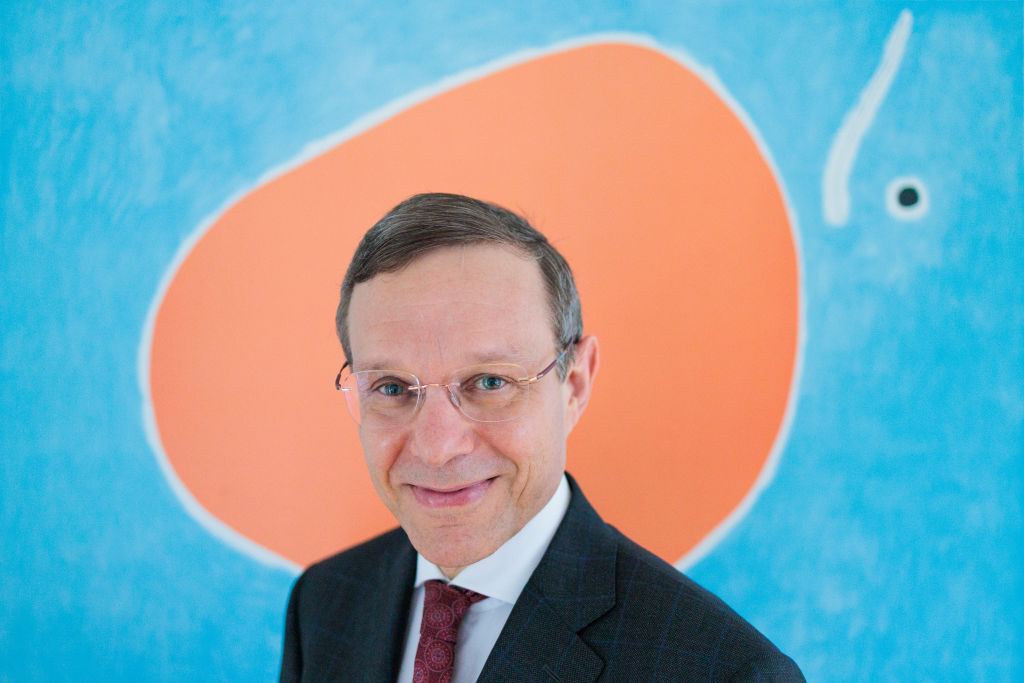
Israeli-born theoretical physicist who works on astrophysics and cosmology, Abraham “Avi” Loeb turns 64…
Professor emeritus of sociology and Jewish studies at Rutgers University, Chaim Isaac Waxman, Ph.D. turns 85… Businessman, art collector and political activist, he is the president of the World Jewish Congress since 2007, Ronald Lauder turns 82… Professor emeritus in the sociology and anthropology school of Tel Aviv University, Yehouda Shenhav turns 74… Grammy Award-winning singer and songwriter in multiple musical genres, he has sold over 75 million records, Michael Bolton turns 73… Former member of the Knesset for the Labor Party, she is now president of Beit Berl College, Yael “Yuli” Tamir turns 72… Julie Levitt Applebaum… Member of Knesset for over 30 years, he is the former Israeli national security advisor, Tzachi Hanegbi turns 69… Former U.S. attorney for the District of New Jersey, now a partner at Arnold & Porter, Paul J. Fishman turns 69… Professor of sociology and bioethics at Emory University, he is the older brother of Rabbi David Wolpe, Paul Root Wolpe turns 69… CEO and Chairman at Gilgamesh Pharmaceuticals, Jonathan Sporn, M.D. turns 68… Partner at Unfiltered Media, Alan Rosenblatt, Ph.D…. CEO at Rutgers University Hillel, Lisa Harris Glass… President of MLB’s Miami Marlins from 2002-2017, he was a contestant in the 28th season of “Survivor” in 2014, David P. Samson turns 58… Motivational speaker, focused on anti-bullying, Jon Pritikin turns 53… First violin and concertmaster (since she was 26) for the D.C.-based National Symphony Orchestra, Nurit Bar-Josef turns 51… Founder and editor-in-chief of Tablet, Alana Newhouse turns 50… Member of the House of Representatives (D-NY-10), he is an heir to the Levi Strauss & Co. fortune, Daniel Sachs Goldman turns 50… Entrepreneur, she launched “Student of Life, For Life” in 2020, Rebekah Victoria Paltrow Neumann turns 48… Special assistant to the president and director of Jewish engagement in the White House Faith Office, Martin J. Marks turns 45… Brett Michael Kaufman…