Opinion
BUILDING CONNECTIONS
Beyond symbolic gestures: Three key elements for Black-Jewish partnership




 Add EJP on Google
In Short
Black-Jewish partnership remains urgent and unfinished work — not only in moments of crisis, but because durable coalitions demand that dialogue, education and the arts be treated as nonnegotiable foundations and infrastructure of relationship rather than symbolic gestures.
This Black History Month, I find myself thinking back to this same season three years ago, when I was a college freshman co-leading Still We R.O.S.E. (Recognizing Our Shared Experiences), a Black–Jewish initiative I co-founded in my community in New Orleans after witnessing a rise in both antisemitism and anti-Blackness around me. Launched in 2023 through the U.S. Department of Homeland Security’s Invent2Prevent competition as a student-led response to rising antisemitism and anti-Blackness, Still We R.O.S.E. aimed to strengthen Black–Jewish understanding through sustained dialogue, shared historical education and collaborative programming.
Under the Biden administration, the initiative was spotlighted by the White House as a model for organizations seeking to navigate conflict and tension between Black and Jewish communities through education, dialogue and sustained partnership rather than reactionary responses. Partnering with over 26 organizations, the initiative has built a sustained framework through intentional student programming and cross-community partnerships that sustain its bridge-building work beyond moments of crisis.
Courtesy/BAMAH
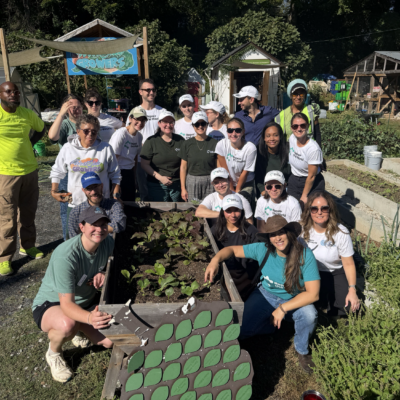
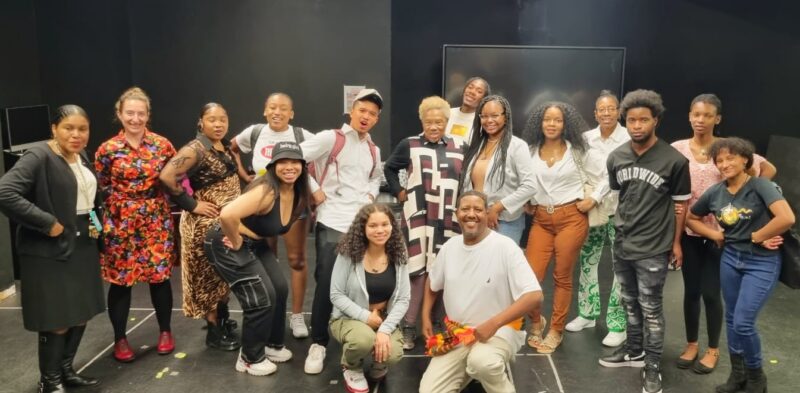
Shai Fredo (kneeling, right), an acclaimed Israeli actor, director and co-founder of the first Ethiopian theatre in Israel, visits Clark Atlanta University as an artist-in-residence through BAMAH's Visiting Israeli Artists Program.
What began as a need to stand up for what is right and respond to rising social tensions in my local community and across the country became a commitment and passion that will forever change how I view community-relation building and shared responsibility across differences.
One of the hardest parts of this work is that many people carry good intentions but do not know where to begin — how to contribute to the wheel rather than reinvent it, or what meaningful intercommunal engagement actually requires in practice.
Experience has clarified something for me: If Black-Jewish coalition building is going to be durable in this moment, three elements must be treated as non-negotiable: sustained dialogue, impactful educational initiatives and cultural connection through history and the arts — not as accessories to partnership, but as its infrastructure.
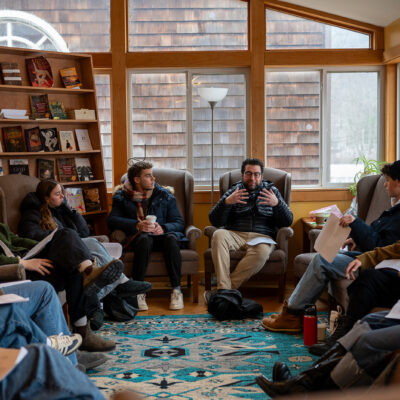
Dialogue is not a public relations strategy. It is a relational discipline that requires continuity, with both sides coming together to focus more on what is similar rather than different. The most transformative conversations I witnessed as a student leader did not happen on stages; they happened in smaller rooms at randomly assigned tables where people were willing to ask honest questions, sit with discomfort and stay at the table long enough for understanding to shift their perspectives. Students know when a conversation is symbolic or “performative” and when it is sincere. Even just one such conversation can build trust.
Education initiatives matter just as deeply. Shared learning, from professor to student and student to professor, changes the quality of engagement. When Black and Jewish histories are studied with intentional care in a learning setting, empathy becomes rooted and embedded into the exploration of life experiences instead of abstract learning that feels forced. Through shared memory, we gain critical insights about how to move forward when we evaluate the past. Without shared historical literacy, partnership remains shallow and easily shaken; it can’t uproot the stereotypes and counter the hate leveled at both communities. This is the task for building bridges today.
The arts operate as another non-negotiable, often the most undervalued area of finding common ground. Art allows for encounter before dialogue, by inviting curiosity and exploration to understand others before making any assumptions. Creative expression opens doors that structured discussion alone often cannot, from establishing tacit connection to conveying emotion that words cannot describe.
Through my work as a Gladys Blackburn BAMAH fellow, supporting multicultural Jewish artists-in-residence on HBCU campuses, I have seen how artistic and cultural exchange shifts the atmosphere of engagement. When artists enter as teachers and collaborators, not just performers, students experience living culture rather than distant identity. They ask more thoughtful questions, listen differently and connect across difference through story, sound and creative practice. Partnership becomes experiential instead of theoretical.
Students are more prepared for this work than many assume. We are not afraid of complexity or difficult history. We value deep, meaningful interactions over performative engagement or slogans that disappear once public attention moves on. We are looking for coalitions grounded in long-term action and genuine relationships, not just public moments: work that continues after a program ends and headlines move on.
Black-Jewish relations are still too often discussed primarily through the lens of crisis and rupture. The strongest bridges are not built under emergency pressure but through repetition and consistency: recurring programs, sustained dialogue spaces, educational collaboration and creative partnership, long before anything “goes wrong.”
This is where philanthropic leaders, educational institutions and community organizations continue to play a decisive role. Investment must move beyond statements and intention and into structure and community programming. Recurring intercultural education initiatives, sustained arts and exchange programs and long-term support for student-led bridge-building work are key, even when there is no crisis-driven urgency — if anything, especially then.
This work also requires humility. Neither the Black community nor the Jewish community is monolithic. Both hold internal diversity, layered memory, disagreement and evolving identity. Strong partnership does not erase those differences; it requires learning how to remain in relationship through them.
In the future, we say we want more connected campuses, more resilient coalitions, more principled partnerships — but we will not arrive there through declarations alone. We will arrive there through studying each other’s histories, creating alongside one another and sustaining dialogue beyond the spotlight.
Which brings me back to Black History Month.
This month is about honoring history and honoring the legacy and the inherited call of those who modeled courageous cross-community partnership before us: from Dr. Martin Luther King Jr. and Rabbi Abraham Joshua Heschel, to the organizers and educators today who continue building bridges within communities. We honor our ancestors’ wildest dreams not only through remembrance but through continuation, living them forward in how we build relationships, how we learn together and how we show up for one another across lines of difference with sustained coalition-building.
Three years ago, I stepped into this work because I could not ignore what I was seeing in my community. Now a recent graduate, looking at how much has changed and how much has not, the conversations are louder and the tensions more visible than ever; but while the stakes surely feel higher, the truth remains the same: Black–Jewish partnership is still necessary, still unfinished, and still deeply needed on our campuses and in our broader civic life. At the same time, I am also elated to say that I have seen this work increasingly tackled by the public and private sectors: through artists of BAMAH, and through community and international organizations like my local Jewish federation in New Orleans, the Eradicate Hate Global Summit, campaigns like Stand Up Against Hate, Black education and advocacy nonprofits like the United Negro College Fund, and many more initiatives with not only good intentions but grounded, sustainable efforts to implement change.
Three years later, I remain committed, just as future leaders must remain committed to sustaining this work — and the future demands that dialogue, education and the arts remain nonnegotiable foundations of Black-Jewish partnership.
Aarinii Parms-Green is a Gladys Blackburn BAMAH fellow, a Louisiana native and an HBCU student who studied political science, history and psychology. She co-founded the Still We R.O.S.E. student initiative.