Opinion
COMPANIONS NOT COMBATANTS
Face to face: What Jewish leaders in Greater Boston learned during hard conversations about Israel




 Add EJP on Google
There is a Jewish tradition to recite Tefilat HaDerech, the Traveler’s Prayer, before embarking on a journey. It is not a prayer for certainty, nor does it promise smooth roads, perfect companions or easy destinations. Instead, it asks for protection, wisdom, humility and safe passage through unfamiliar terrain.
Today, many Jewish leaders find themselves on precisely such a journey.

Courtesy/Panim el Panim
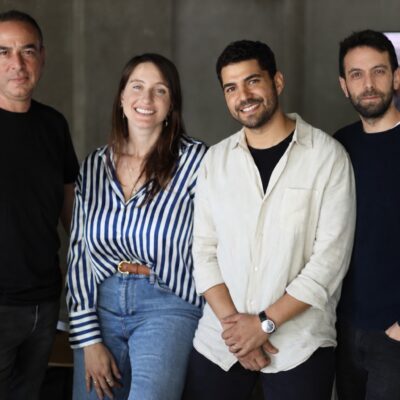
The Panim el Panim Fellowship is intentionally small and fully in-person, where participants truly converse face to face.
The assumptions, language, relationships and certainties that have shaped conversations about Israel and the Israeli-Palestinian conflict for decades no longer hold in the same way they once did. New generations are asking different questions. The realities on the ground in Israel, Gaza and the Middle East continue to evolve. The discourse in our communities has become more polarized, more public and often more painful. Across synagogues, schools, nonprofits, campuses, workplaces and families, people who care deeply about Israel often struggle to speak with one another.
Whether we welcome it or not, we are on a bumpier journey than expected. In a moment of profound communal rupture across Jewish communities, we know that traveling the distance to understand another person’s view of Israel demands resilient listening and the courage to stay in the room, especially when it would be easier to simply walk away.
In September 2025, a group of twelve Jewish communal leaders in Greater Boston — rabbis, Jewish educators and nonprofit executives representing a wide range of experiences, perspectives and relationships to Israel — set out on such a journey together as participants in the inaugural cohort of Panim el Panim (Face to Face): Engaging Israel Across Difference, a fellowship created by Hebrew College’s The Miller Center for Interreligious Learning and Leadership.
Most participants arrived carrying grief and exhaustion; many brought anger, confusion, fear or disappointment. Some felt caught between personal convictions and professional responsibilities, and others struggled to reconcile long-held beliefs with new realities.
The fellowship was designed to engage productively with these tensions. Funded by the Henry Luce Foundation, the program’s goals are threefold:
- To develop the dialogical skills necessary to engage in difficult and emotionally charged conversations about Israel, conceptions of Zionism and their critiques, and antisemitism.
- To learn from practitioners, activists, scholars and bridge-builders who have navigated these challenges in their own communities, including Israeli and Palestinian peace-builders.
- To cultivate meaningful one-to-one relationships with fellow Jewish leaders who could serve as trusted thought partners after the fellowship ended.
Unlike many initiatives that aim to “go big,” Panim el Panim is intentionally small and fully in-person, away from the day-to-day pressures of the workplace. Participants do not simply discuss difficult issues. Over seven months, the fellowship combines sustained relationship-building, reflective structured dialogue, text study, leadership development and real-world case analysis. The goal is not to achieve consensus but rather to strengthen leaders’ capacity to navigate complexity, maintain relationships and lead communities through uncertainty.
Over time, one insight became increasingly clear: healthier Jewish communal discourse requires more than information, expertise, careful talking points or stronger arguments. It requires deep relationships, resilient listening and the willingness to remain engaged even when conversations become uncomfortable. During the fellowship’s seven-month pilot, four important lessons emerged.
1.) Jewish leaders need spaces where uncertainty is permitted — and even valued
Many Jewish leaders feel intense pressure to project certainty at precisely the moments when they are wrestling with the most difficult questions.
Participants repeatedly described how rare it is to find spaces where they can openly explore tensions and ambiguities without fearing professional or communal consequences. Together, they wrestled with questions such as:
- What am I holding back — and why?
- What is the braver question I need to ask? And what is the braver question I want others to ask me?
- How do I navigate tensions between personal beliefs and communal responsibilities?
- How do I remain open to complexity without feeling pressure to arrive quickly at certainty?
One of the most memorable exercises in Panim el Panim was “Walking the Line.” In response to a series of provocative statements, participants physically positioned themselves along a continuum from “Strongly Agree” to “Strongly Disagree.” The prompts explored difficult and deeply personal questions about Israel, Zionism, antisemitism, democracy, military service and communal belonging. Rather than debating or persuading one another, participants were invited to notice the diversity of perspectives in the room, share the experiences that shaped their positions and listen with curiosity. The exercise made visible both unexpected areas of common ground and genuine differences, demonstrating that complex issues cannot be reduced to binary choices. More importantly, it demonstrated how trust can grow when people are willing to stand honestly in their convictions while remaining open to hearing the stories of others.
Again and again, participants expressed gratitude that Panim el Panim treated uncertainty not as a weakness but as an expression of discernment, responsibility and intellectual honesty. In a culture that often rewards certainty, we discovered the importance of creating spaces where leaders can acknowledge what they do not yet know. Importantly, one leader shared:
“I appreciated the time and space to be in real conversation about topics that seldom have a safe and brave space in our own professional environments. The fact that half the group are parents in the school I lead had the potential to be very uncomfortable, but the environment cultivated throughout the year melted those worries away over time.”
2.) One-on-one structured conversations matter more than we think
When communities become polarized, there is often a temptation to focus exclusively on public interventions: statements, policies, panels, webinars and large communal gatherings. These efforts matter. But sustainable change often begins on a much smaller scale.
Participants shared that the most transformative moments of the fellowship happened through one-to-one (or small group) conversations. Trust grew slowly through personal stories, vulnerable questions and sustained relationships. The poet and essayist Adrienne Rich captures this beautifully:
“The possibilities that exist between two people, or among a group of people, are a kind of alchemy. They are the most interesting things in life.”
Those possibilities emerge not when people are trying to win an argument, but when they are trying to understand another person’s lived experience. If we want healthier Jewish communal discourse, we need more opportunities for leaders to encounter one another as human beings rather than representatives of positions, institutions or ideologies. Such encounters also require planning and coordination, especially given the heavy demands on our leaders.
3.) Resilient listening is not a soft skill but a leadership discipline
At Harvard University’s commencement this spring, senior speaker Noah Eckstein offered his classmates a simple but profound challenge: “Listen like you might be wrong.” That phrase is a touchstone for our work. Reflective dialogue, resilient listening and the ability to navigate difficult conversations are often dismissed as “soft skills.” In reality, they are among the most important competencies of effective leadership. Listening like you might be wrong does not mean abandoning deeply held convictions. It does not require moral relativism or the suspension of critical thinking. Rather, it reflects a posture of humility: the recognition that another person’s story, experience or perspective may reveal something we do not yet see.
In an era marked by polarization, leaders are increasingly called upon not simply to provide answers but to help communities navigate complexity. The ability to ask thoughtful questions, manage conflict constructively, remain curious amid disagreement and sustain relationships across differences is essential to building trust and strengthening institutions. Far from being “soft,” these capacities often determine whether communities fracture under pressure or emerge stronger and more resilient.
4.) Healthier discourse about Israel often begins within families
One of the fellowship’s most significant discoveries was how frequently participants applied what they learned beyond professional settings. Frameworks designed for communal leadership found their way into conversations with spouses, siblings, parents, children and friends.
Among the most effective tools we developed was an exercise called “Roots, Rivers, Bridges.” Participants were invited to reflect on the foundations of their relationship with Israel, the experiences shaping their present understanding and the relationships they hoped to build or repair. The framework proved powerful because it shifted conversations away from positions and toward stories.
Rather than asking, “What do you think?” participants were encouraged to ask, “Who or what has shaped you?” and “What are you hoping for?”
One participant used the framework to have a difficult conversation with her adult daughter and son-in-law. Another adapted it for use within their organization. Again and again, participants found that conversations became more productive when people began with biography rather than ideology. The lesson was simple but profound: healthier communal discourse often starts at the kitchen table.
During the fellowship’s final gathering, participants were invited to compose their own Traveler’s Prayers as they returned to their congregations, schools, organizations and communities. Many prayed for courage to listen before reacting. Others prayed for wisdom to hold complexity without rushing toward certainty. Some asked for humility to learn from those with whom they disagree and for strength to remain in relationship when tensions arise. The exercise reminded us that the challenges facing Jewish communities today are not merely political or intellectual. They are also deeply relational and spiritual. One participant wrote the following:
May we have the courage to truly see
to see those who are close
and to see those who are far.
May we be blessed with feeling seen
by those close and by those far.
May the seeing be gentle and loving
May the seeing be courageous – taking in
what is hard and returning to it.
Never abandoning. Never walking away.
Staying.
May we always invite one another and ourselves
to be our best, sweetest selves.
In a moment when conversations about Israel so often begin with assumptions and end in estrangement, the act of blessing ourselves and one another for the work of dialogue felt both countercultural and profoundly Jewish. Perhaps this should become the norm: approaching difficult conversations as travelers on a shared journey rather than combatants armed for battle.
Like the traditional Tefilat HaDerech, healthier discourse requires us to acknowledge uncertainty while seeking wisdom and guidance along the way. None of us possesses the entire map. None of us can navigate this terrain alone. We could all benefit from listening like we might be wrong, remaining curious when the path grows difficult and trusting that stronger relationships can help us find our way forward.
Jordan Namerow and Rabbi Or Rose co-direct the Panim el Panim Fellowship housed at Hebrew College’s Miller Center for Interreligious Learning and Leadership.