CLOUD PHILANTHROPY
Community O wants to be AWS for Israeli nonprofits
The organization gives social ventures a ready-made legal, financial and operational home
Courtesy
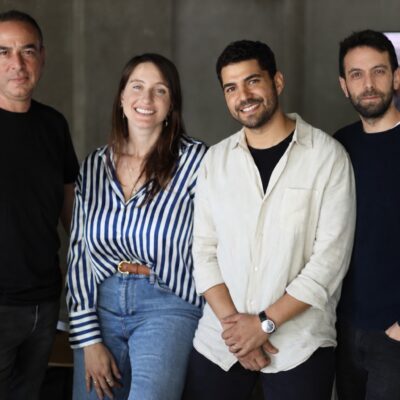
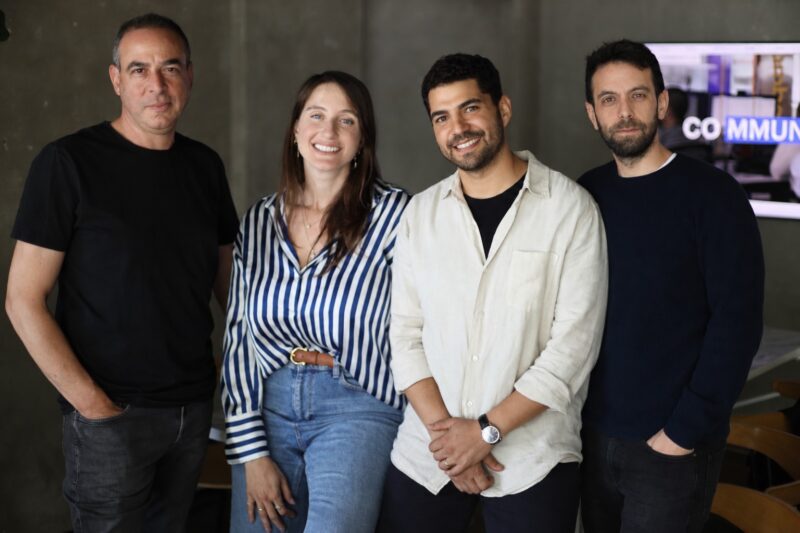
From left: Alon Bachar, Keren Greengrass Lavie, Nehoray Erdinast Ofri and Lior Avrahami.




 Add EJP on Google
With more than 150 projects across 30 cities in Israel, when you ask Israeli social entrepreneur Nehoray Erdinast Ofri what Community O is, he skips the nonprofit vocabulary and reaches for the clouds.
It’s AWS — Amazon Web Services — for nonprofit organizations in Israel, he responds.
The comparison is deliberate. Amazon’s cloud service allowed a generation of startups to launch without buying and running their own servers; companies rent computing power on demand and leave someone else to keep the data center humming. Community O wants to do the same for social ventures, serving as a fiscal sponsor and operational host that hands founders the legal, financial and administrative machinery of a nonprofit so no one has to build it from scratch. Community O initiatives operate inside its existing legal and regulatory framework instead of incorporating as a stand-alone amuta (nonprofit).
Launched in the weeks after the Oct. 7 attacks, Community O was founded by four partners from different corners of expertise essential to running a well-oiled nonprofit in Israel. Erdinast Ofri is founder and former CEO of Skillsup.ai. Alon Bachar led the Israeli Corporations Authority and the Privacy Protection Authority. Keren Greengrass Lavie is the former CEO of Social Space. And Lior Avrahami is a former senior program officer at Yad Hanadiv and strategy associate at the Ministry of Education.
Erdinast Ofri told eJP that he left the high-tech world to build something he hopes will be transformative for Israel’s next generation of social entrepreneurs. “I really believe in infrastructure,” he said.
Founding a new Israeli nonprofit and securing recognized tax status can drag on for years, he said, a lag he contrasts sharply with the United States. “There is a lot of regulation. In order to get the tax status, the waiting list can take three years,” he said. “Compared to the U.S., which is a lot faster.”
Bachar, who ran the governmental body that regulates Israel’s nearly 50,000 nonprofits, according to GuideStar, framed the gap the same way. “Israel has no shortage of talented social entrepreneurs, philanthropists or good ideas,” he told eJewishPhilanthropy. “What has been missing is the institutional infrastructure that allows them to act quickly, responsibly and at scale.” The Israeli social sector, he added, faces “a basic mismatch.”
“Our ideas and capital have become more sophisticated, but the infrastructure available to deploy them has not evolved at the same pace.”
That delay, Erdinast Ofri argues, drains the people the sector most needs.
“Entrepreneurs like me want to do something,” he said. “They think, what can I actually do, beyond money — what can I build? Who can I partner with?” The bureaucratic slog pushes some to quit before they start. Community O, he said, “started from there — a place that helps entrepreneurs and philanthropists to deploy.”
There is a crowding problem, too. Israel’s civil society is dense with registered nonprofits, only a fraction of them meaningfully funded. His pitch to would-be founders is to resist adding to the pile. When someone arrives wanting to launch, he said, Community O’s first move is to send them to look at who already does the work.
The savings Community O can provide startups, Erdinast Ofri said, comes from sharing. One HR firm, one accountant and one legal shop serve every initiative at once, so each pays for what it needs on demand rather than carrying a permanent back office. “You pay just for what you need, so we can do it a lot cheaper,” he said. Scale also buys quality: Pooled spending, he said, lets the group retain stronger advisors than any single small initiative could afford alone.
“We let the founders run independently, based on their vision,” he said.
“When I look at American Jewish and Israeli philanthropy there is amazing energy that we see in the last few years,” he continued, crediting Jewish foundations, families and a wave of partnerships and ideas. The roadblock comes later. “We know how to mobilize capital, but there is a bottleneck about how to transfer capital to ideas and create solutions on the ground,” he said. “That’s an infrastructure issue.”
Erdinast Ofri’s sharpest pushback is aimed at donors who arrive with a blueprint already drawn. “When you want to make an impact, don’t run and build a legal entity, because most of the time it’s not the right solution,” he said.
“Coming to Community O is for social entrepreneurs and philanthropy to understand the problem together, build the right structure and deploy the idea and solutions in the right way.”
One of the organization’s most successful test cases came out of the war in Gaza when five American foundations, UJA-Federation of New York and the Ministry of Education joined with private Israeli donors to fund mental health support for education staff after Oct. 7. The money and the commitment were there from the start, he said; the obstacle was structural. Absorbing the question of “how to establish a complex initiative like that” — who hires, who collects the funds, how a multiparty partnership is governed — let the funders operate as one body rather than spend years establishing a new one.
Another initiative, Hinenu, which translates to “we are here,” encourages young Israelis to relocate to the Western Negev and build there. Its founder, Roee Azizi, who served in the IDF reserves after Oct. 7 before moving to the region himself, launched it as an all-volunteer movement and turned to Community O once it outgrew that structure.
“You can’t really start an initiative in Israel without such infrastructure and that’s critical,” Azizi told eJP. Azizi noted that establishing an independent nonprofit in Israel, he explained, takes at least a year to win the government approval needed to fundraise and offer donors tax deductions — a gate that stalls giving before it starts. “How can they support you if they don’t receive the tax deduction?” Working under Community O’s umbrella, he said, let him grow “from a one-person initiative to a movement with hundreds of volunteers.” The services Community O provided him allowed him to focus on the mission.
Community O has deployed more than NIS 400 million ($134 million) into its initiatives since its inception in 2023 and its annual budget has climbed from roughly NIS 90 million ($30.2 million) in 2025 to more than NIS 100 million ($33.5 million) in 2026, with 2027 on track to top NIS 200 million ($67 million). Erdinast Ofri reads the trajectory as evidence the model is meeting a real need for both funders in the U.S. and Israel as well as Israeli practitioners on the ground.
According to the organization, Community O now supports more than 150 projects across 30 cities in Israel. Its funding partners include Yad Hanadiv, the Schusterman Foundation, the Scheinberg Family Foundation, JFNA, UJA-Federation of New York, the Maimonides Fund, The Paul E. Singer Foundation, the Weinberg Foundation and the Shaashua Foundation, alongside Israel’s ministries of education, health, welfare and Diaspora affairs. Corporate supporters include Wix, Google, monday.com, Bank Hapoalim and Fiverr.
“The Israeli philanthropist mentality wants to be a builder and partner more than just writing checks,” Erdinast Ofri said, pointing to tech founders in particular. Many of these founders reject the term philanthropist completely. “They don’t see themselves as philanthropists even though they’re writing checks, because they’re running things they built,” he said. “So they’re citizen-entrepreneurs, not philanthropists.”
That instinct, he argues, is where Diaspora and Israeli giving can meet: funders abroad bringing experience and capital, Israelis bringing the build-it mindset and the localization with Community O as the bridge between them.
Erdinast Ofri’s bet is that those kinds of partnerships will pay off. “In the next decade, the most important social initiatives won’t be defined by who raises the most capital, but by who builds the right partnerships and plugs into the right infrastructure to move capital, talent and ideas quickly and intelligently toward the problems that matter most.”
Related News

MAGICAL EXPERIENCE
Shefa launches psychedelics retreat for Jewish professionals suffering burnout
CLOSING WORDS
In AZM address, Cosgrove links communal ‘orthodoxy’ on Israel to rising anti-Zionism among young Jews
EXIT INTERVIEW
Elizabeth Sokolsky, longtime EVP of Birthright Israel, to retire next year

MAJOR GIFTS
Center for Jewish History celebrates 25 years with a $25M matching grant
ADVANCING A VISION
N.Y. federation donates $1M toward building shared-society center named for peace activist killed on 10/7