Opinion
A DEBT OWED
No grave left unmarked




 Add EJP on Google
In Short
We are far less organized, and far less generous, in funding the work of finding our own dead.
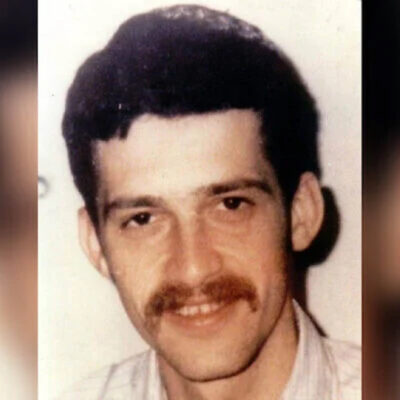
Forty-four years. That is how long IDF Sgt. First Class Yehuda Katz was missing. On June 11, 1982, his tank was overrun by Syrian forces in the Bekaa Valley, in one of the bloodiest engagements of the First Lebanon War. The crew was declared MIA. His two fellow soldiers from that battle, Zachary Baumel and Zvi Feldman, were eventually brought home, Baumel in 2019, Feldman last year. Katz remained the last unknown. This week, the IDF and Mossad announced that his remains have finally been located and identified, the end of a four-decade effort that outlasted multiple wars and the very regime that once held the intelligence. His family finally has a grave to visit.
It is easy to read a headline like this and move on. It should not be moved past. It is a statement about who we are.
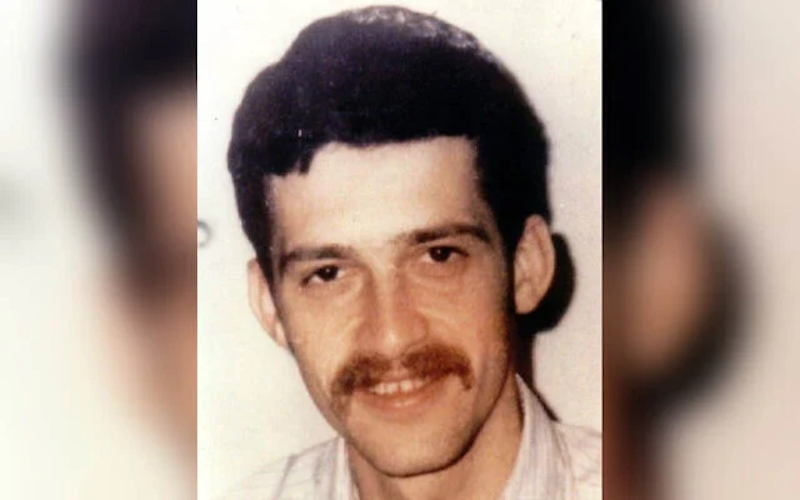
Courtesy/Israel Defense Forces
IDF Sgt. First Class Yehuda Katz.
This year alone, the IDF’s Missing Persons Unit closed three more files from the War of Independence, now 78 years ago. Pvt. Dov Parmet, killed at 17 in 1948 near Malkia, was found in a mass grave after a six-year investigation combining archival research, soil analysis and archeological surveys. Pvt. Yaakov Zarihan, killed escorting a supply convoy to besieged Jerusalem, was located after 15 years of work. Shlomo Haimson, shot by British guards while trying to escape a Cyprus detention camp after learning of his daughter’s birth, was identified this month, his remains among those of more than 163 people brought to Israel in 1970, most buried in Haifa without identification.
None of these men died in secret. Their families simply did not know where to stand and grieve. Israel decided, as a matter of state policy, that this was unacceptable, and built institutions whose sole purpose is to correct it, no matter how long it takes.
The same instinct drove the more than two-year effort to bring home every hostage taken on Oct. 7, 2023, living and dead. When First Sgt. Ran Gvili’s remains were recovered from a Gaza cemetery this past January, the war’s darkest ledger finally closed. Israel had insisted, against pressure and fatigue and the passage of time, that “all of them” meant all of them, the murdered as much as the living, the last body as much as the first hostage released.
I have spent decades engaged in a related, older and far larger version of this same work, in the forests and fields of Eastern Europe. The Holocaust is remembered, correctly, through Auschwitz, Treblinka and the other death camps. But hundreds of thousands of Jews were murdered outside the camps entirely, rounded up in their own towns and shot into pits in the woods, with no camp, no transport list and often no surviving witness. Many of those sites remain unmarked to this day, known only to a shrinking number of elderly local residents, if they are known at all. For decades, together with local Jewish organizations, Poland’s chief rabbi, historians, local officials and non-Jewish partners across the region, I have worked to identify these places, document them and see them properly marked.
Not as a research project, but as a debt owed.

The parallel to Katz, to Parmet, to Gvili is not sentimental. It is structural. In every case, the work is the same: patient investigation, often taking years or decades; partnership with people, sometimes non-Jews, who hold a piece of the record; and a refusal to let time close the file. What differs is who is doing it. Israel has built standing institutions for this purpose and funds them permanently because it treats identifying its fallen as a core function of Jewish sovereignty, not a discretionary one. In the Diaspora, the equivalent work of locating and preserving the sites where Jews were murdered without record is carried out largely by a scattering of underfunded nonprofits and individual efforts like my own, without anything resembling that institutional backing.
That gap should trouble Jewish philanthropy. We are generous funders of Jewish education, of Israel advocacy, of security for our institutions. We are far less organized, and far less generous, in funding the work of finding our own dead. There is no Diaspora equivalent of the IDF’s Genomic Center for Identifying Fallen Soldiers. There is no coordinated, well-resourced Diaspora institution whose job is to do for Holocaust-era mass graves what Israel’s investigators did for Dov Parmet: treat every unmarked site as an open case rather than a closed chapter.
This is one of the instances in which the Diaspora has something clear to learn from Israel, rather than the reverse. Israel has shown, across 78 years and every war since, that a nation can decide, as policy, that no missing person is ever quietly written off; that the search continues after the headlines fade and the people who remember have themselves passed away. Jewish philanthropic institutions abroad should study that model and fund accordingly: endow the forensic and archival work; formalize partnerships with local governments and historians across Eastern Europe; and treat the last unmarked grave with the same seriousness Israel brought to the last missing tank crewman.
Yehuda Katz is home. So is Ran Gvili. So, now, are Dov Parmet, Yaakov Zarihan and Shlomo Haimson, each one returned to memory after decades in the dark. Their families finally have a grave to visit, a place to recite the mourner’s Kadish. The work is never finished. But it continues because a people decided, as a matter of principle, that it must. That principle should not stop at Israel’s borders.
Businessman and philanthropist Harley Lippman works to advance U.S .and Jewish interests around the globe, including the U.S. Commission for the Preservation of America’s Heritage Abroad, and has led efforts to find and preserve Jewish graves in Eastern Europe.