Opinion
THE WAR COMES HOME
Living in pain




 Add EJP on Google
A young reservist leaves Sheba or Ichilov Hospital with a new prosthetic, a folder of discharge paperwork and a bottle of painkillers. His physical therapy went well. His surgeons are satisfied. By every measure the hospital tracks, he is a success story.
Then he goes home.

Adobe Stock
Illustrative.
Almost no one in the philanthropic world is looking at this moment, but the three of us come to it from three different vantage points. One of us works with foundations that direct funding toward Israel’s war-affected populations. Another sits in the therapy room week after week with soldiers and spouses living this reality. The third served as a combat medic before going on to run the program described below that has carried soldiers through the very transition we’re describing here.
From all three angles, we keep seeing the same gap.
Soldiers are trained, almost from their first day of service, to push through pain. To keep moving under the weight of gear and exhaustion, with some training sergeant’s voice still rattling around in the back of their heads about how the hard part is only the crust of the bread, and you eat that too. When a soldier is actually wounded, pain can even be a kind of good news: a medic learns fast that a wounded soldier crying out is generally in better shape than one who’s gone quiet. And then, for a while at least, pain is treated as exactly what it usually is: a sign that a wound is healing.
But somewhere between the battlefield and the operating room, between intensive care and rehab, pain stops playing that role. It’s no longer a symptom pointing to something else. For a great many wounded soldiers, it simply becomes the thing itself, and it does not go away.
We have, rightly, put enormous resources into emergency trauma care, prosthetics and rehabilitation wards — into getting wounded soldiers physically well enough to walk out of the hospital. What happens after discharge is a different story. That’s when a soldier is left, mostly alone, to build an entire life around pain that isn’t going anywhere. Almost nobody is funding that part. Almost nobody is even talking about it. Yet give it a few years and this will be one of the defining social challenges facing this generation of Israelis.
A wave that hasn’t crested yet
Israel is facing a rehabilitation challenge without real precedent. The Ministry of Defense’s Rehabilitation Department already provides care to roughly 82,400 disabled veterans and wounded members of the security forces. Since the war began on October 7, 2023, more than 25,000 wounded service members have entered that system. About 70% have been formally recognized so far; the rest are still working through the process. The Ministry itself projects the number of living disabled veterans receiving rehabilitation services will climb to around 100,000 in the coming years. Roughly half of those injured in this war are under 30.
Chronic pain sits near the top of the list of long-term consequences of combat injury. International military research puts the rate of persistent chronic pain among combat-injured service members somewhere between 40 and 60%, and as high as 96% in specific groups — polytrauma, amputations, nerve injuries, traumatic brain injury.
Sit with those numbers for a second. This isn’t a small slice of a large group; for a lot of these soldiers, chronic pain may simply be what comes next. And because it tends to show up only after acute rehab has ended, the real scale of the problem is still in front of us. Most of these soldiers are just now finishing the part of care hospitals know how to give. The part almost nothing is built to give them hasn’t really started.
Hospitals and rehab centers are genuinely excellent at what they do: stabilizing bodies, managing acute pain, restoring physical function. Chronic pain is a different animal. It’s not really a medical problem so much as a life problem. It shows up as a marriage quietly coming apart, a job that becomes impossible to hold onto, unexpected flashes of anger at the people closest to you, or a slow slide into dependence on medication that started out perfectly legitimate.
Chronic pain in combat veterans rarely shows up alone, either. It tends to travel with post-traumatic stress, depression, anxiety and a strain on the household that most rehabilitation programs were never built to handle because those programs were designed around the injured soldier and no one else. Not the spouse absorbing a partner’s pain and personality changes day after day. Not the kids noticing when a parent disappears into a bad stretch. Family finances buckle under lower income and higher medical bills. None of it shows up in a discharge summary; it shows up years later — in divorce filings, in unemployment numbers, in addiction treatment, in emergency rooms dealing with whatever comes next.
It’s a hidden epidemic, in the truest sense. An injury is visible. Pain isn’t, and after a while, the people carrying it can start to feel invisible too. There’s no cast, no wheelchair, nothing that signals to the rest of us — including funders — that help is needed here. That invisibility is a big part of why it’s gone unnoticed for so long.
What a real response looks like
We didn’t want to wait around for the field to catch up on its own. A protocol developed by Live the Pain, an organization built specifically around the life ramifications of chronic pain, was adapted by Social Platform (formerly known as Yedidut Toronto) on a fairly simple premise: chronic pain is physical, emotional, relational and economic, all at once, so a response aimed at only one piece of that isn’t going to work.
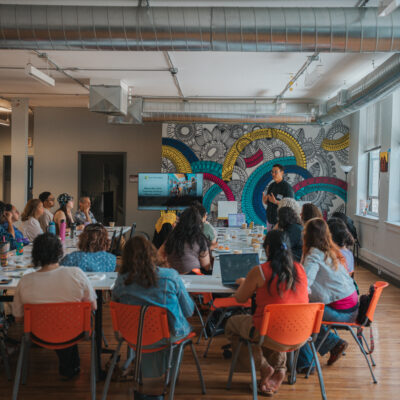
That’s what became Warriors in Pain. The thinking behind it is that when 10 soldiers sit in a room and talk openly about pain — maybe for the first time — and start picking up real tools for managing this new version of their lives, the effect doesn’t stay in that room. It moves outward, into partners and kids, bosses and clients, friends and parents, professors and students.
The core of the program is a 12-week trauma-informed group process built on the Live the Pain model, where participants learn how pain works on the nervous system, on behavior, on relationships and emotional regulation, along with practical tools for actually living with it day to day. But information and coping skills only go so far. Treat the soldier and ignore everyone around him, and it usually doesn’t hold, so the model is also building out a couples track meant to rebuild trust and communication after an injury reshapes a household, plus individualized employment and financial coaching, since for a lot of wounded soldiers, lost income, unemployment,\ and debt end up becoming their own separate source of trauma.
In one exercise, participants write a letter to their pain. Then they write one back, from the pain to themselves. People are usually skeptical going in. Something tends to shift once they actually start writing, though — for a moment, at least, pain stops being the whole picture and becomes something they’re facing rather than something they simply are.
None of this is really about eliminating pain. It’s about handing people back some control over their own lives.
Earlier rounds of the model showed real results: meaningful gains in participants’ ability to manage pain’s effect on daily functioning and emotional regulation, along with better communication and conflict resolution as couples. That matters, because it shows chronic pain doesn’t have to be handled as a purely medical issue in isolation. Address it as a whole, and its grip on a person and their family can genuinely loosen.
This isn’t a pilot trying to prove a concept. It’s a working model that’s already been scaled to meet a need this size.
Programs like this exist because foundations were willing to fund the entire picture instead of one slice of it. Support from the Samis Foundation and the Nitzan Foundation for Warriors in Pain is a good example: together they’re backing trauma care and economic support inside the same program, on the theory that treating one without the other is really only treating half the problem.
That kind of integrated funding is hard for government systems to offer, especially for a need that hasn’t been fully recognized yet or handed off cleanly to a single agency. This is exactly where philanthropy has something distinctive to offer. Public money tends to follow proof rather than get out ahead of it, and somebody has to be willing to take the first risk to generate that proof. Philanthropic dollars can move before a problem has even been properly categorized, before it’s been divided up between ministries, before it’s made its way into policy — testing models, building evidence, training the people who will run this work, showing what good care could actually look like.
Social Platform’s model has now received formal recognition from the Ministry of Defense’s Rehabilitation Department, and a pilot group co-run by Live the Pain and the Rehabilitation Department is set to begin soon — one of several conversations underway that could eventually bring this approach into the public system at real scale. None of that happens without foundations willing to fund the work before anyone else would.
That’s really the point the philanthropic community should sit with: Money given today doesn’t just help the people currently in the program — it helps decide whether an entire field of care gets built now or is left to catch up years after it’s needed.
Twenty-five thousand wounded soldiers isn’t a number that holds still, and the population living with chronic pain that grows out of it isn’t going to shrink on its own. The soldiers discharged this year will still be dealing with this in five years. In ten. The families carrying the weight of it today will still be carrying it long after this stops being news.
Funders who get involved now have a real chance to shape what care looks like for a whole generation of Israelis, before the need outpaces whatever field ends up built to meet it. Samis and Nitzan have already shown what that can look like. The rest of the philanthropic community doesn’t have to wait for the field to mature. It needs to help build it.
Rachel Grunbaum is the Israel-based consultant to the Samis and Nitzan Foundations.
Ora Kalfa is the founder of Live the Pain and the professional developer and manager of Warriors in Pain.
Aviad Yisraeli is a combat medic and director of Warriors in Pain.