Opinion
WORDS TO LIVE BY
Let’s remember the Torah of Dolly Parton




 Add EJP on Google
In Short
I went to Dollywood anticipating rhinestones, music and cowboy boots. I came home thinking that the American Jewish community could use a little more Dolly Parton.
Last summer, I made the most unconventional of Jewish pilgrimages — not visiting Jerusalem or tracing my family’s journey from their former shtetls in the Pale of Settlement, but taking a road trip to the happiest place on earth (with apologies to Disney World): Dollywood.
As a die-hard Dolly Parton fan, I was heartbroken to read news of her death yesterday. My obsession over the years has included a collection of blonde wigs from each of Dolly’s eras, and visiting Dollywood in Pigeon Forge, Tenn., not far from where Parton grew up, was something I had dreamed about for years. For those of you who are not fully versed in all things Dolly, please indulge me as I share why I found her approach to life and philanthropy relevant to the American Jewish community today.
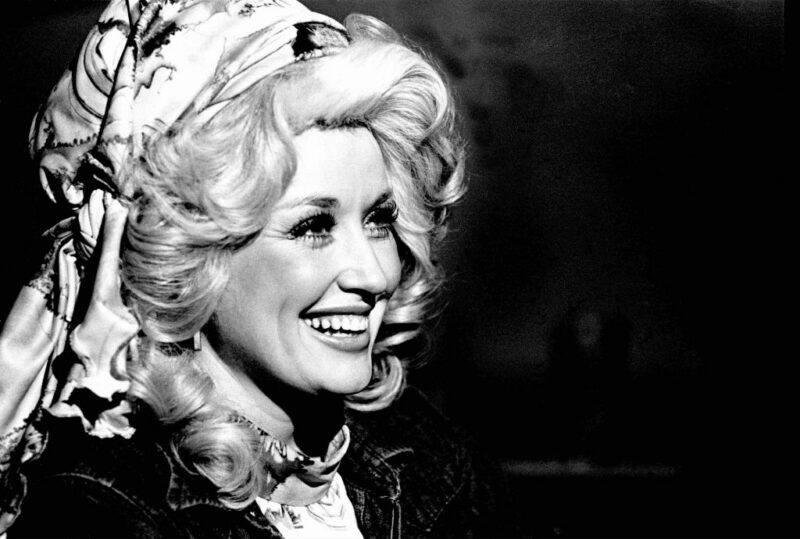
Richard E. Aaron/Redferns
Dolly Parton in August 1978.
Dolly’s life embodied the quintessential rags-to-riches story: resilience and overcoming adversity in the face of unrelenting hardship and poverty. The fourth of 12 children, Dolly was born in a one-room house without electricity or running water in Sevier County in the mountains of East Tennessee. From a young age, she demonstrated remarkable musical talent and grit, nurtured by a loving family that supported her dream of becoming a famous singer. Much of her story has been told, from her early days in Nashville on “The Porter Wagoner Show” to her ascent as one of the most storied songwriters, recording artists and actresses of our time.
As a development professional for the past 20 years, with a significant portion devoted to working in social and criminal justice reform, Dolly has always been a North Star for me. Today, four years into my role as the first-ever director of development at The Bronfman Fellowship, I see an American Jewish philanthropic landscape that has been facing unprecedented challenges since Oct. 7, 2023. Basic assumptions we thought we could rely on as Jews in America have been upended, and donors are trying to determine the most effective path forward to create sustainable Jewish joy and thriving communities. It is precisely in times of such uncertainty and adversity that a few Dollyisms can provide inspiration to those of us who have devoted our professional and philanthropic work to strengthening the American Jewish community.
1.) ‘Find out who you are. And do it on purpose.’
Dolly long carried a deep sense of faith in herself, her path in life and her belief in a higher power. As her career began to take off, Porter Wagoner did not want to let her leave his show and threatened to destroy her career if she did. As Dolly has shared, she knew that she was destined for a bigger stage, but remained two years longer than she intended to protect her relationship with Porter and leave with integrity. As always, Dolly took pen to paper to express her feelings and wrote a song about the end of their working relationship. “I Will Always Love You” became a No. 1 country hit, and it reached an entirely new audience when it was later recorded by Whitney Houston.
At a time when the Jewish community feels beleaguered and threatened from the outside by antisemitism and from schisms within, even the debate about Jewish joy versus Jewish strength feels exhausting. As a community, we need to figure out who we are, what matters, and act with intention and grace. As Hillel said, “If I am not for myself, who will be for me? And if I am only for myself, what am I? And if not now, when?” Dolly never forgot her roots: Despite her enormous fame and wealth, she remained a Tennessee country girl who was not afraid to proclaim her deep spirituality. My wish for the Jewish community is that we also hold fast to our roots with the same pride, humility and intention as Dolly.
2.) ‘You’ll never do a whole lot unless you’re brave enough to try.’
Though there is much to fear in these uncertain times, Jewish philanthropy needs to exhibit courage and innovation. Now is the perfect time to reimagine and reinvent our institutions, think and act boldly and support organizations creating new programs and approaches for this critical moment, while preserving those that have stood the test of time and produced long-term results.
As another line widely attributed to Dolly goes, “Storms make trees take deeper roots.” American Jews have an opportunity to grow from the challenges of the past few years in ways that strengthen our future and deepen our Jewish identities, but only if we have the courage to think and act differently.
3.) ‘I don’t really have a strategy for my donations. I just give from my heart.’
And give from her heart she did. Dolly’s philanthropy had an extraordinary impact on the East Tennessee region where she was raised and the world beyond. Driven by her childhood experience of seeing her father struggle because he could not read or write, Dolly launched the Imagination Library, which began in her home county by sending young children a free book each month until age 5. Today, the Imagination Library gives away millions of books each month across the United States and internationally — and even inspired the Grinspoon Foundation’s PJ Library.
Dolly also developed a long friendship with Vanderbilt physician Dr. Naji Abumrad, whom she met when he treated her following a car accident. In 2020, she donated $1 million to COVID-19 research at Vanderbilt in his honor. Her gift supported critical early research that contributed to the development and testing of the Moderna vaccine. And in February, East Tennessee Children’s Hospital was renamed Dolly Parton Children’s Hospital in recognition of her support and commitment to children’s health.
There are few stars who have been as generous as Dolly. Rather than focusing solely on metrics or scale, Dolly gave from her heart, proving that generosity driven by values and love can be transformational. In the Jewish world, where engagement, belonging and connection can be difficult to measure, perhaps we need to broaden our thinking about what successful outcomes look like. Not everything that transforms a life can be easily captured by a neatly packaged metric.
4.) ‘You don’t even have to believe in anything to be good to people.’
Despite being raised in a deeply conservative Pentecostal Christian family, Dolly Parton was always a beloved ally in the LGBTQ+ community and fierce feminist who shied away from such labels and refused to judge people (“That’s G-d’s business,” she’d say). Her concerts were among the most open-tent, inclusive spaces I have experienced, and her iconic “9 to 5” theme song and movie have become an anthem to women and workers across the country.
Dolly somehow managed to transcend race, class, religion, politics and gender. As the Jewish community becomes increasingly siloed, we could all learn from Dolly’s radical acceptance and show more love and compassion for our fellow Jews. Perhaps we should think of ourselves more like Dolly’s “Coat of Many Colors,” stitched together from different experiences, observance and perspectives — and uniquely Jewish because of this diversity.
A true iconoclast, Dolly was a self-proclaimed “dumb blonde” who fashioned her look after the town “tramp,” built a business empire, wrote some of America’s most enduring songs. She became beloved across divides that increasingly seem impossible to cross. She knew exactly who she was without needing everyone else to be like her and wanted everyone else to follow their own path with courage, authenticity and a little dose of humor.
Maybe that is what I was looking for on my unlikely pilgrimage to Dollywood. When American Jewish life can feel defined by fear, division and questions about who belongs, Dolly reminded me that there is another model: Know who you are, holding fast to your values and where you come from; and be brave enough to try something new, give generously and keep the tent wide enough for people who see the world differently.
Laura Liebman is the director of development for The Bronfman Fellowship.