ANATOMY OF A FALL
Inside the slow, convoluted demise of a beloved L.A. Jewish day school
The Kadima Hebrew Academy came to rely heavily on a prominent Israeli American real estate developer. Were the millions of dollars Shawn Evenhaim put up a charitable gift or a loan? And did the school’s board exercise proper oversight?
COURTESY/KADIMA
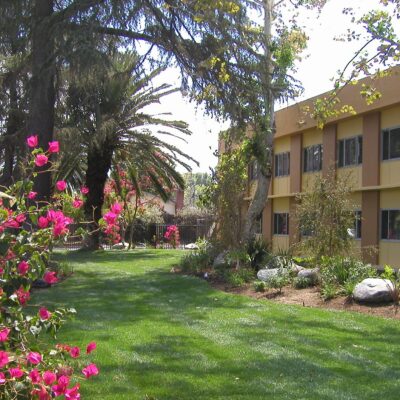
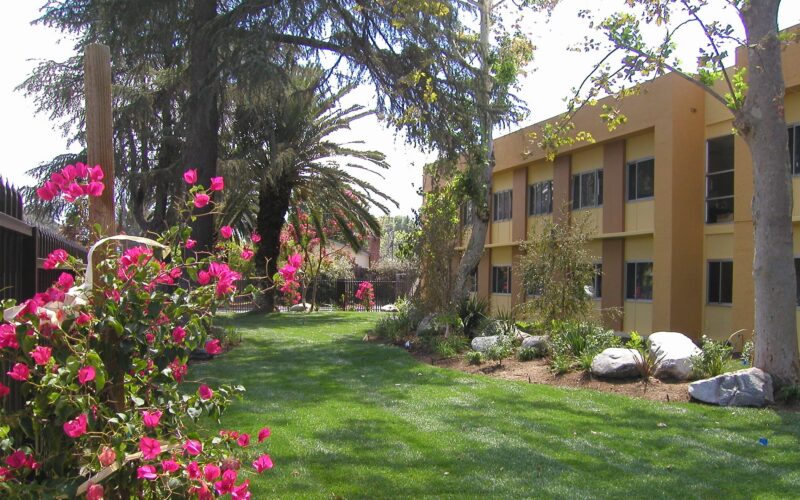
A view of the Kadima Day School's Evanheim Family Campus in Los Angeles.


 Add EJP on Google
It was an offer that the Kadima Hebrew Academy couldn’t refuse.
It was 2004, and the Los Angeles-based pluralistic Jewish day school was in a bind: The building in which the school was housed, an old surplus public school facility, was on a list of properties the Los Angeles Unified School District intended to reclaim. The cost of renting the property more than quadrupled, a sum the school couldn’t possibly afford, creating a sense of urgency. The school would be forced to move.
“And then the next thing I knew,” Barbara Gereboff, the head of school at the time, told eJewishPhilanthropy, “I got a phone call from Shawn Evenhaim.”
That phone call and the deal that Evenhaim — a prominent Israeli American real estate developer for whom Kadima’s campus is named — proposed for the purchase of a nearby property would eventually leave Kadima burdened with a debt that it never got out from under. Eventually, that debt reached some $15 million, roughly half of which is still owed back to Evenhaim, according to a draft of the settlement agreement reviewed by eJP.
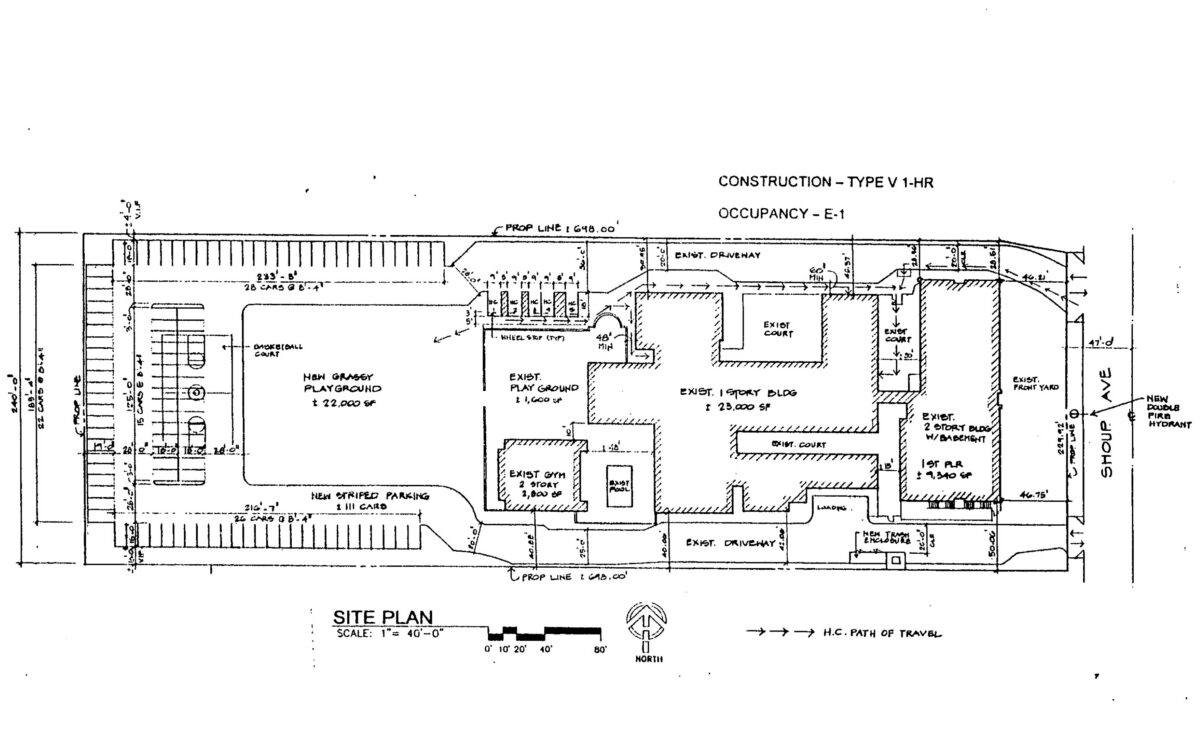
As Gereboff recalls, Evenhaim said that he had the opportunity to bid on an old mental hospital on a seven-acre plot of land that was going under, located at 7011 Shoup Ave. in Los Angeles’ West Hills neighborhood, a mile away from the property the school had been leasing. Evenhaim estimated that it would cost between $700,000 and $900,000 for a deposit “to secure” the property at the time, she said, and “more than that” to remodel it.
Gereboff was wary of the deal, she said, concerned that the school did not have an adequate “culture of giving” to support the purchase of a building.
Evenhaim reassured her. “He said, ‘Don’t worry, we’ll work on it. I’ll secure it so we have it.’ And that’s the beginning of the story,” Gereboff told eJP. “What I don’t recall is… I don’t know where the minutes from the different board meetings at that time are, but I feel like nobody really took any oversight of it. Shawn ran with it and structured the deals the way he did.”
This summer, 22 years after Kadima struck that deal, the school closed its doors after a more than 50-year run serving L.A.’s Jewish community, particularly its Israeli expat community. Interviews with 13 members of the Kadima community — including heads of school, finance directors, board members and parents — as well as several external figures and independent experts, and a review of IRS documents, property records and a draft of a debt settlement agreement paint a picture of a convoluted arrangement that left the school in debt to Evenhaim, even as he has long since recouped the money that he paid for the property.
Evenhaim, one of the founders of the Israeli-American Council and its chair from 2012-2015, purchased the Shoup Avenue property for $6.95 million, selling four of the seven acres to Kadima for nearly the same amount, as he then redeveloped the remaining three acres into more than a dozen single-family homes, which he sold for millions of dollars.
Though the real estate developer is typically referred to by Kadima as a donor and benefactor — in some cases, contracts require the school to thank “Shawn and Dorit Evenhaim for their generous support” — his status with the school was at least equally that of a creditor, even as he did also make donations and interest-free loans to the school over the years.
The investigation also raised serious questions about the school’s governance practices and its oversight, particularly as it relates to its fiduciary responsibilities. Interviews with former board members and officials indicate that the board entered into multimillion-dollar agreements that it did not entirely understand and that left the school hampered with debt that it could not feasibly repay.
“For a while, we said, ‘Who the hell put this contract together? What were they thinking?’”
For instance, a Memorandum of Assignment, dated Aug. 1, 2005, outlined Evenhaim’s financial stake in the property. Under the agreement, if the school sold the campus, Evenhaim would be entitled to receive 100% of a defined minimum amount from the sale proceeds, plus 55% of any proceeds above that minimum.
“For a while, we said, ‘Who the hell put this contract together? What were they thinking?’” said Jerry Isaak-Shapiro, who was Kadima’s head of school in its last year. “But you know, maybe they thought they needed it, and that was going to be the best deal they could find… I thought, well, the person writing this up didn’t have the best interest of the school at heart, for sure. So I don’t know who put it together.”
Speaking to eJP, Evenhaim disputed these categorizations, describing himself as a charitable figure. While he does stand to receive millions of dollars in repayments from the school when it is sold, Evenhaim said that this was not a money-making scheme and that he lost out on greater profits that he could have earned with the property in order to help create a Jewish day school and made donations to Kadima over the years to keep it afloat. He has described the school’s collapse as a result of poor fundraising and low enrollment.
As Gereboff describes it, at the time the deal was struck, the school was still doing its budgets on handwritten ledgers and didn’t have a development team or a principal. She trusted the board and its executive committee to handle the transaction as the school’s fiduciaries, she said. But, according to those who joined the board later, the initial purchase of the school building is where its troubles started.
“The confusion was the power,” said Suzy Bookbinder, who served as Kadima’s board president in the early 2010s. “The initial board [was] irresponsible, horrible, but …the boards that followed, they couldn’t follow the trail. It was just so confusing.”
Indeed, the scores of official documents reviewed by eJP show debts growing and shrinking over the years, seemingly at random, land valuations sketched out in pencil on legal pads and a glaring lack of clarity over what amounted to a charitable gift and what was a loan.
Bookbinder, a former chief development officer at the American Jewish University, De Toledo High School and a number of other Jewish nonprofits, along with several legal experts who spoke with eJP described the arrangement Kadima entered into with Evenhaim as highly unusual, with one saying that “odd is probably a soft way to approach it.” The three attorneys — each of whom specializes in nonprofit management and reviewed many of the documents related to the school — spoke on condition of anonymity to discuss an organization that they are not directly involved with.
“A mini Israel”
Founded in 1970 as the day school of Los Angeles’ Congregation Beth Kodesh, the school was first a Solomon Schechter and then became a nondenominational day school. Over the course of its 56 years, Kadima moved four times before landing at its final location on Shoup Avenue in Los Angeles’ West Hills neighborhood. In its early years, it was known for lobbying to create the first stamp produced by the U.S. Postal Service dedicated to Hanukkah. In its later years, it became particularly popular among Los Angeles’ robust Israeli expat community, which is not necessarily religious, and was drawn to the school’s focus on Hebrew and Israeli culture.
Shimrit Shalev, a member of the school’s parent-teacher organization whose two sons attended the school for four years, described the school as a “mini Israel” and “a home” for the 180 Jewish Israeli families whose children were enrolled.
“You walk through the school, it’s like you can see Israel in the walls,” Shalev told eJP.
In May 2025, Kadima announced it had found itself in dire financial straits and ran an emergency fundraising campaign, which grossed some $700,000 in donations. The donations were primarily small gifts from members of the school community, Orly Levy, the school’s current director of finance, told eJP, and aimed to cover end-of-year costs and keep the school open. The smallest gift was $25, Levy told eJP, and the largest was $18,000. This fundraising campaign, she said, was also novel for its urgency.
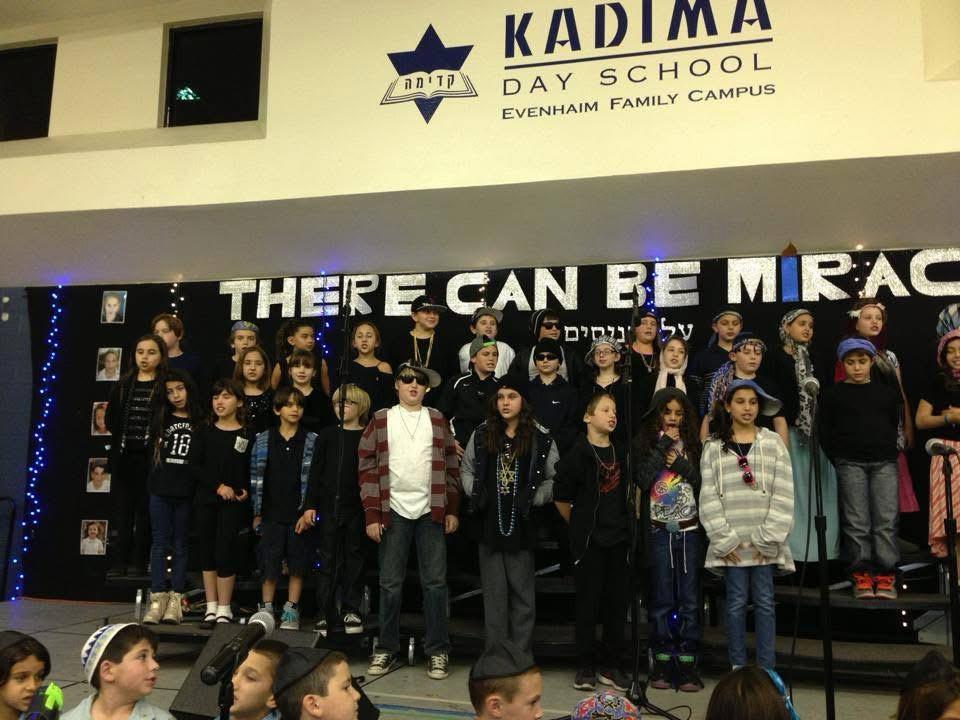
“We had various [fundraising campaigns over the years], we had galas. But not urgency like this,” said Levy. Last year, when it became clear the school’s future was in peril, some families decided to enroll their children in different schools, one mother of Kadima students, who asked to remain anonymous, told eJP. Those that remained rallied to raise money and “fight” to keep the school open another year, the mother said. That experience brought the school community closer together, said Shalev, creating “the strongest year.”
“Even with all of the problems money-wise and closure,” said Shalev, if the Kadima community “would do what we did the last year, maybe five or 10 years ago, maybe it would be helpful, but it was the end of the end of the end, so it was hard to lift up [our] head from that.”
In April 2026, a year after the campaign (and publicly disclosing its financial woes), the school announced its impending closure. At the time, coverage by eJP and other Jewish publications linked the school’s closure to its overdependence on Evenhaim. After speaking to over a dozen sources involved throughout the school’s history, eJP has learned that this was only part of the story.
“It’s a lot of paper shuffling, playing with numbers”
Before moving to its final home on the Evenhaim family campus in 2004, located on Shoup Avenue, Kadima had been operating out of an old Los Angeles Unified School District surplus facility.
When Gereboff, who served as Kadima’s head of school from 1999 through 2009, learned that the school would have to move, she assembled what she described as a “think tank” of parents in the Kadima community who could help brainstorm the school’s next steps.
Among them was Evenhaim, whom she knew because his wife, Dorit, worked in the front office, and because he was a real estate developer. According to the school’s IRS Form 990s, Evenhaim served as the school’s building and grounds vice president from 2004 until 2006, when he became its finance vice president. In 2006, Evenhaim became Kadima’s board president, a position he held until 2009. He remained a trustee until 2024.
Documents obtained by eJP shed light on the convoluted financing structure through which Kadima purchased the Shoup Avenue property from Evenhaim.
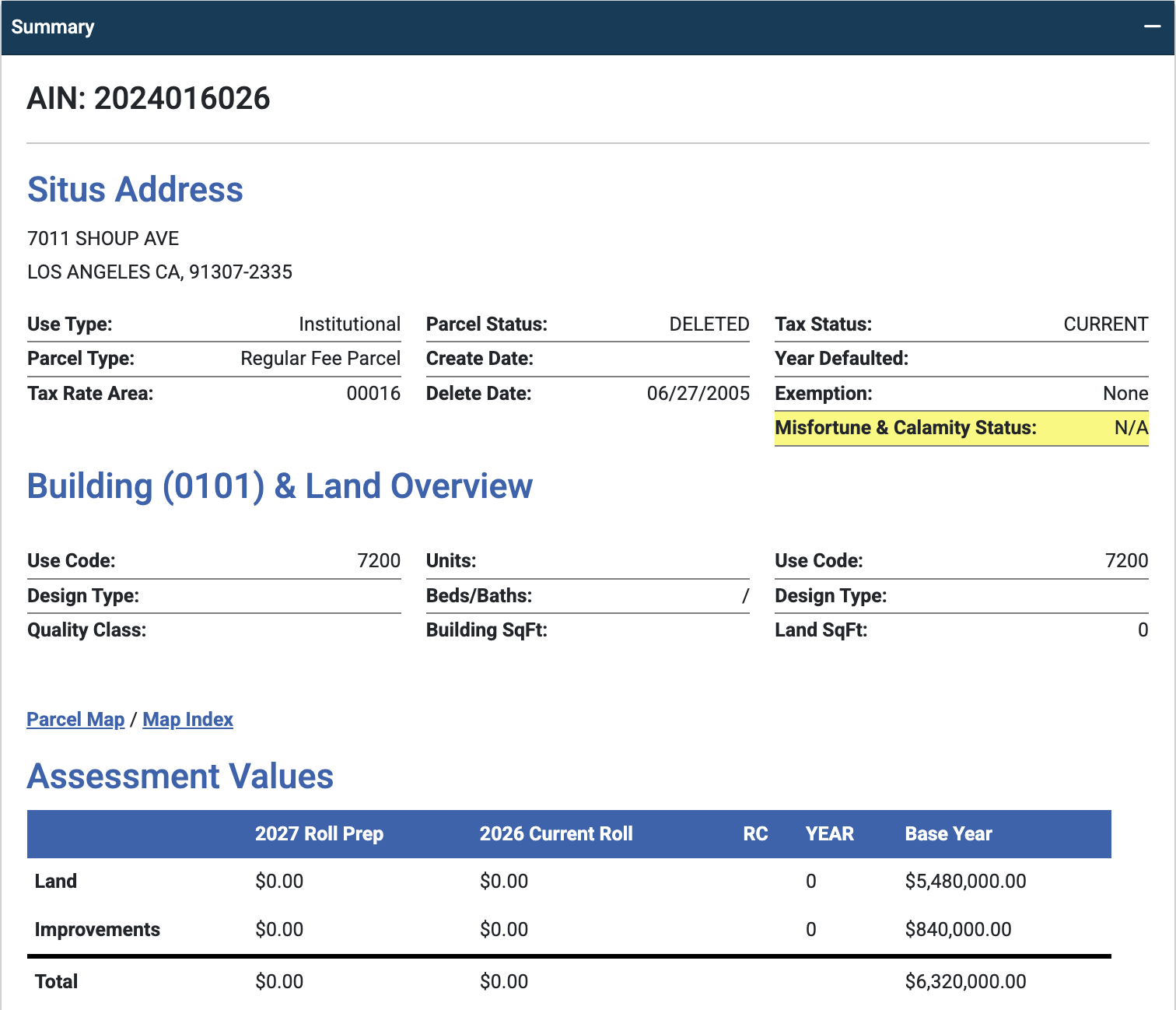
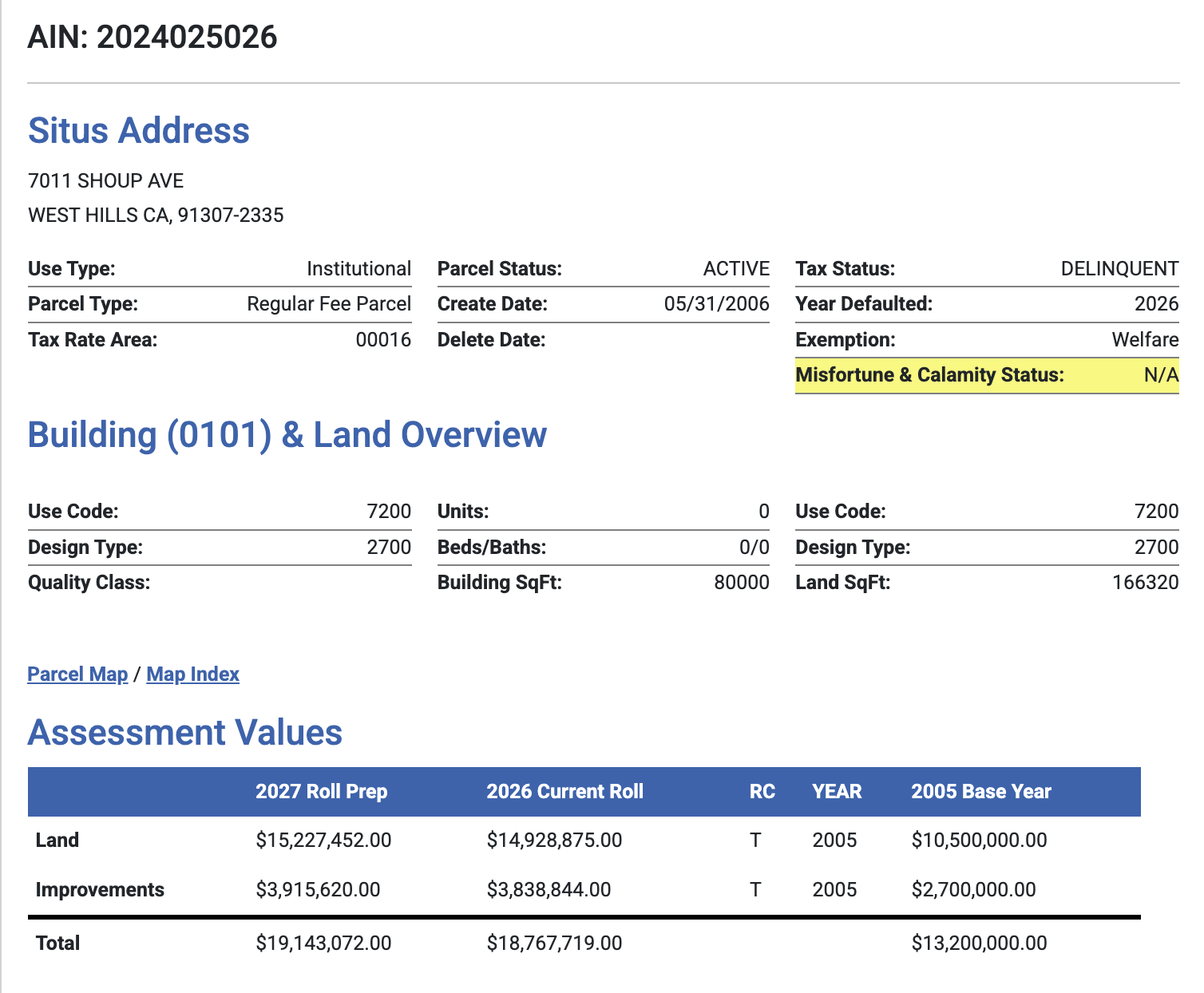
As shown in bankruptcy court filings, Evenhaim purchased the seven-acre property for $6.95 million at a court-supervised bankruptcy auction in May 2003. L.A. County Assessor records show the Shoup Avenue property was valued at $6.3 million until June 27, 2005.
In June 2004, city council records reflect that Evenhaim filed to parcel the land into two plots. One was rezoned for 20 lots of single-family homes, each of which eventually sold for between $700,000 and $1 million. The other was for the school.
In March 2004, Kadima offered to purchase four of the seven acres from Evenhaim for $13.2 million, a purchase that was finalized in June 2005. How that price was reached is unclear. After June 27, 2005, the valuation for the property jumped significantly, with county assessor records showing that the land was worth $10.5 million, while the hospital building on it was worth $2.7 million. However, a handwritten note in the school’s 2004 financial statements breaks down the same $13.2 million as $6.5 million for the land and $6.7 million as an estimate of what it would cost to construct the existing building on the property from scratch.
The Jewish Journal’s coverage of Kadima’s move to the new campus in 2004 describes a “$7.2 million donation” from Shawn and Dorit Evenhaim that allowed the school to purchase the four-acre property. However, a deeper inspection of the donation commitment reveals that this was not a true gift but rather a reduction in the sale price, albeit one that could be considered a charitable donation. Receiving $13.2 million from the school for the property, the Evenhaims agreed to make a $7.2 million gift, but noted that if the gift were for any less, the sale price would be reduced for the same amount “dollar for dollar.”
One year later, a 2006 bank-commissioned appraisal of the four acres and building, reviewed by eJP, put the property’s market value at $9.4 million.
How did a property purchased for $6.95 million rise so significantly in value over the course of a year and then drop again shortly thereafter? One legal expert who spoke with eJP suggested that because land valuations are often subjective, the parceling and rezoning of land can inflate a plot’s appraised value.
According to a source who was directly involved in the purchase at the time, although Evenhaim “fronted” the money for the school to purchase the property, it was well-known to those involved that Evenhaim planned to have the four acres that Kadima was buying get appraised at a higher rate. That way, Kadima would cover the cost he paid for the full seven acres, even though he was “carving off” three acres to develop for his own personal business, the source said.
A school board member at the time, who spoke to eJP on the condition of anonymity, said that decisions about the school’s finances and the building acquisition were being made behind the scenes by the executive committee and Evenhaim. “I walk into a meeting, and it’s like the decision has been made already,” the board member told eJP. “So there is really no donation. There is nothing. It’s a lot of paper shuffling, playing with numbers.”
Asked about this, Evenhaim said that this arrangement — his selling the four acres to Kadima at its market value and keeping three acres for his business — “always the plan,” which the school was fully aware of.
“If we would have developed the whole property, the value would have been much much higher than the school. But the reason we purchased the property was to create a Jewish school — a permanent Jewish school,” Evenhaim told eJP.
He stressed that he did not intentionally have the land reappraised to alter the valuations for his benefit. He added that “we had to front the money for it” and that they also paid additional fees associated with the property.
Evenhaim told eJP that he purchased the plot at a discount as it was being sold in a bankruptcy auction, and that the original $6.3 million appraisal “sounds very very low,” suggesting it was made as part of the bankruptcy court’s proceedings.
“I don’t remember that number ever. I remember the $13 [million] and $15 [million] and $16 [million], whatever the number that was appraised over the years, but I don’t remember the $6 million appraisal at all,” he told eJP. “So maybe it was before our time.”
Evenhaim’s position that he lost out on additional profits by selling the property to the school was also echoed by Arnold Rudnick, who in 2006 was brought on as the school’s financial consultant when Evenhaim was Kadima’s board president. Rudnick told eJP that Evenhaim knew of him and his background in finance through his wife, who was Evenhaim’s longtime employee, most recently serving as his COO.
Rudnick later became the school’s director of finance, a role he held at several points over the years. He also told eJP that Evenhaim effectively donated more than $6 million — the difference between what Evenhaim paid to buy the property at the bankruptcy auction and what he called the “fair market value” of the property. “You’re right that he bought a property for $7 million,” said Rudnick. “That he had the potential to develop and sell for $30 million, and instead, he donated the fair market value of that property that let them finance at almost 50% [the true cost].”
Rudnick and others who spoke with eJP about the Kadima closure bristled at the criticism of Evenhaim by some board members in light of the sacrifice that he made in terms of potential profits. “Your headline should be, ‘No good deed goes unpunished,’” Rudnick said.
One attorney who spoke with eJP pushed back on the lost “potential profits” argument as the seven-acre plot was zoned for institutional use and would thus not have easily been converted entirely into single-family homes, even as a part of the property was.
Some former board members were dismissive of Rudnick, referring to him as “Shawn’s guy,” as his wife was a longtime employee of Evenhaim and thus had a financial incentive to agree with him.
Asked by eJP whether the school had a formal conflict-of-interest policy or how it navigated the potential conflict created by his wife’s employment, Rudnick did not have a definitive answer but noted that everyone on the board knew that his wife worked for Evenhaim.
“I’ve been transparent to everyone I ever met at Kadima, to all of the auditors, and they know me,” he said. “The fact that my wife works with Shawn is irrelevant to my opinion, other than the fact that I get to see the level of ethics he brings to the world.”
“A noose around the school’s neck from Day 1”
In conversations with eJP, legal experts described this arrangement of Evenhaim selling the property and making a related donation to the school as suspicious, emphasizing that the land purchase transaction should be kept separate from donations, as it raises questions about how accurately and fairly the price was set.
In May 2005, the City of Los Angeles acted as a middleman in issuing Kadima $9.1 million in tax-exempt bonds to cover the cost of the building and its renovation, described as a $16.3 million undertaking.
According to documentation of the transaction, the school initially borrowed $1.8 million from Evenhaim, for which it initially only paid interest to him, until the bond reached maturity. The remaining $7.3 million bond was secured through Bank of America with Evenhaim and Jerry Arnold — the school’s president at the time — as guarantors. The school possessed $7.2 million in equity — the amount of the Evenhaims’ cash donation.
Asked why the school’s campus was named for a loan, instead of a philanthropic gift, Gereboff told eJP that she thought at the time that the Evenhaim family had given Kadima the ability to “move forward in some way.”
She noted that, at the time, she and the board were in dire need of a property, even as they were aware that Evenhaim had not given a true donation, but rather a loan. “People were just excited that we had an opportunity to have a piece of land…that we weren’t going to be forced out in the middle of the year and trying to figure out what to do with 300 plus kids,” she said.
Some board members told eJP that they also believed that Evenhaim would eventually forgive the loan.
Gereboff added that the property was named the “Evenhaim Family Campus,” but the school building itself retained naming rights in an effort to provide an opportunity for another philanthropist to step in and support the school.
Between 2008 and 2009, the last year Evenhaim was board president, Kadima’s tax returns show a steep decline — $3.15 million — in the land’s book value, and therefore the school’s equity, from $10.5 million to $7.35 million, cited as an “impairment loss,” an accounting term for writing down the value of an asset. Rudnick and Evenhaim both suggested that the decrease in value was likely due to the 2008 financial crash, but couldn’t recall exactly why the school’s value decreased by $3 million.
According to the school’s tax returns, the total value of the four acres and renovated school dropped permanently from $16.8 million to $13.2 million.
Although the estimated value of the property had significantly declined, documents show that by 2013, the school still owed $9 million for the property and its renovations, and over $3 million in additional loans from Evenhaim, an untenable amount of debt for a school that size, said Bookbinder, who was president at the time.
“It was a noose around the school’s neck from Day 1,” said Bookbinder, who was Kadima’s board president between 2012 and 2013. “I don’t know any Jewish day school that could have handled it, not even De Toledo High School with a true charitable multimillion-dollar donation to name the school, or Milken, or any of the schools that have been named.” In those cases, the schools were named for people who made “multimillion-dollar donations — they weren’t A bonds and B bonds where the donor received the money and then used that money to do his real estate development.”
Speaking with eJP, Evenhaim maintained that he had effectively donated the property, but had to “finance” a portion of it and guarantee the loans because the school “was not financially stable” at the time. Asked if he profited, broke even or lost money in the deal, he told eJP, “we didn’t break even, we lost money. When I’m saying we lost, we didn’t lose; we donated… and we got the campus name after us. That was the reason.”
“I don’t remember the numbers, but I remember it was a very, very substantial amount for us at the time. We were pretty young,” Evenhaim said of the deal. “We didn’t plan on making such a big commitment, but we were stuck with it in a way because everyone promised us that ‘We’ll fundraise,’ and that did not mature.”
When the bonds came due
Ten years ago, the letters of credit for the bonds came due, according to Bookbinder. When that happened, she said, Evenhaim informed the board he planned to pull out as guarantor and asked them to sell the property. The board responded by hiring a lawyer and proposed declaring bankruptcy, prompting Evenhaim to guarantee the loans, said Bookbinder. As she recalls, Evenhaim then pledged $1.2 million over three years as a donation to close the budget gap.
“I said we need a three-year runway, $400,000 a year, $1.2 million to get back on track. He agreed to that, but I found out after we left… that $1.2 million donation turned into part of the money that he’s saying he loaned the school and that the school is supposed to pay him back,” she said.
Evenhaim disagreed with Bookbinder’s recollection, saying that in addition to the loans, he donated millions to the school.
“I probably donated at least that much money,” he said, referring to the $1.2 million loan. “I’m not talking about loans. … The donations are way in addition to that, and it’s in the millions,” he said.
The school’s tax returns show that for many years, when Evenhaim fronted operating costs, he created a rising line of credit for the school that by 2024 totaled more than $7 million. Evenhaim noted that this credit was offered without interest, which in itself represents a donation to the school.
According to members of the school leadership, the line between loan and donation was often unclear, and though they believe Evenhaim gave some true donations to the school, they were unable to identify exactly how much.
Evenhaim told eJP in July that he donated approximately $5.3 million to Kadima and provided a $5.5 million interest-free loan, but three months prior, Evenhaim told eJP he donated $10 million to Kadima over the years and provided an additional $6 million in loans. Because the bookkeeping was at times inconsistent — and because gifts were unnamed in the school’s tax returns and eJP was unable to review the relevant audits before publication — eJP could not determine an objective number.
For nearly 20 years, according to members of Kadima’s leadership past and present, Evenhaim remained involved in the school’s decision-making, even while he was operating as its de facto creditor. Though public perception reflected that he had donated large sums of money to the school, they say that perception was outsized.
“I just can’t emphasize enough how much control Shawn exhibited over the board and the school. Even though he wasn’t formally a privileged member, he was,” Michael Cohn, a previous board member, told eJP. “I remember saying to the board not to treat him like a benefactor. That he’s a creditor, plain and simple.”
According to the school’s tax returns, Evenhaim remained listed as a trustee on Kadima’s board of directors until 2024, the most recent year that eJP could review.
Because Evenhaim also guaranteed the bonds, said Cohn, members of the board had the sense that he could at any point force a sale and “get his money out.”
Cohn added that the school’s board “could have been a little more assertive and not let him dictate the terms of anything financial with the school, which is what he did.”
“You need to know when it’s over”
According to Isaak-Shapiro, who became Kadima’s head of school in August 2025, he was warned by the search committee that the school was experiencing financial challenges, including a budget deficit. He was not aware of the large bonds, he said, and that they were going to be due within his first year.
“And I certainly didn’t know about Shawn telling the bank that he would discontinue being the guarantor of the large bond,” he told eJP.
Last year, Kadima received notice from the bank that Evenhaim had again declined to guarantee the bonds, said Isaak-Shapiro, and the bank did not allow them to find a new guarantor. Due to the size of the debt, said Isaak-Shapiro, none of the other banks the school approached were willing to accept other board members as guarantors.
“You can put fault on all sides, the professional side, the donor side, the board side, but in my 40-year experience, the donor in this case is the one that initially put the school into an unwinnable situation”
For a number of years, Evenhaim recruited his connections to donate to the school, a number of sources from within Kadima’s current and former leadership, as well as Evenhaim, told eJP. But after Evenhaim left the board, many donors cut their ties to Kadima, citing the end of Evenhaim’s official involvement with the school. According to members of the school’s leadership, this added to Kadima’s financial difficulties.
“Some [former funders] were a little bit more nasty about it,” said a source who spoke with eJP on the condition of anonymity to discuss a sensitive matter. “Saying, ‘So what if a Jewish school closes,’ some just [said], ‘Oh, we’re friends [with Evenhaim], we don’t want to step on his toes.’”
In a correspondence with Isaak-Shapiro in December 2025, a representative of the Adelson Family Foundation, which had in the past supported the school, declined Isaak-Shapiro’s request for donations. “Our past gifts were based on Shawn Evenhaim’s relationship to the school,” the email said.
Evenhaim denies that he told any of his connections to stop donating to the school, citing donor reciprocity as the reason for the end of their support. He emphasized that he fundraised “probably an additional few million dollars” for Kadima through his connections.
Beyond the bonds, Bookbinder attributes a part of the school’s financial struggles to the school’s decision to lower tuition by 43% for K-8 in 2017, an effort she described as heavily driven by Evenhaim. Isaak-Shapiro described Evenhaim’s push to lower tuition as “faulty thinking” aimed at increasing enrollment, which ultimately left money on the table and harmed the school’s financial outlook.
“Shawn directly suggested that the school adopt… a much lower tuition, in the thought that if you make it less expensive, people will be more prone to come on board, and then once they see how great the school is, they’ll stay,” said Isaak-Shapiro. “There’s a lot of data, I mean, genuine data, not just anecdotes, that suggest that that’s really faulty thinking.”
In 2008, when Evenhaim was president of the school’s board, at the height of the recession, the school lowered tuition by about 20% for the 2009-2010 school year, in an effort to increase enrollment, encouraging board members to make up a part of the gap. “Most schools in the last few years have continued to increase tuition,” Evenhaim said at the time. “We’ve pushed a large part of our community away because it just wasn’t accessible anymore.”
In 2017, the school reduced the cost of tuition by 43% for K-8, and by 11% for children in early education. Evenhaim hailed the decision in the local Jewish press. “My goal is to create a model where the school sustains itself and we’re not relying on a few donors but are creating families who are not just sending kids to Jewish education,” said Evenhaim at the time, “but are becoming supporters of Jewish education.”
“I can’t be responsible for something that I know is failed and will fail very soon completely. You need to know when it’s over, and it was over, and they didn’t want to realize it.”
Reflecting on the school’s closure, Evenhaim maintains that the school closed not because of the debt, but because the board never reached the fundraising and enrollment numbers that it needed to be sustainable and was overdependent on his donations, often on short timelines.
“They all fail because part of the responsibility, which they don’t realize, as board members, is the financial stability of the school,” he said. “But the school failed not because of that. The school failed because it lost students over the years, and it couldn’t increase its enrollment.”
He also contested that pulling out of guaranteeing bonds impacted the school’s viability. “I can’t be responsible for something that I know is failed and will fail very soon completely,” he told eJP. “You need to know when it’s over, and it was over, and they didn’t want to realize it.”
Bookbinder, Cohn, Isaak-Shapiro and other members of the school community who spoke anonymously with eJP believe that Evenhaim’s influence and involvement in the board contributed to a “self-fulfilling prophecy,” where the school was presented publicly as a failed or faulty endeavor while they were hampered with debt accrued in a deal that financially benefited Evenhaim 20 years prior.
“You can put fault on all sides, the professional side, the donor side, the board side, but in my 40-year experience, the donor in this case is the one that initially put the school into an unwinnable situation,” said Bookbinder.
Even with its challenges, said Bookbinder, before last year, the school never defaulted on its loans. According to Isaak-Shapiro, had the school continued, they were anticipating a 12%-15% increase in enrollment for the coming year.
“It’s a family”
When Shalev told her sons, ages 7 and 9, that the school would be closing, she said, they brought their allowance money to her and asked if it would be enough to save the school.
“They told me, ‘Imma, do you think that this will help the school not close?’” said Shalev, using the Hebrew word for mother. “It was seriously one of the saddest moments to tell them that even if we’re gonna gather the money, it’s not gonna help.”
In August of 2025, three months after their emergency campaign, Kadima’s leadership approached the Jewish Federation Los Angeles to request a loan. The federation decided against the loan after doing its due diligence, the federation’s CEO, Rabbi Noah Farkas, told eJP. In February, the school approached the federation again and informed them that they would not have the funds to make it to the end of the year and to pay their teachers. According to Farkas, the federation provided them an interest-free loan of $500,000 — an unprecedented step for the federation — he said, on the condition that they do not try to continue for another year.
“Our recommendation was that they should not open the school again if they don’t have a plan… a real business plan with real metrics,” said Farkas. “We felt it was unfair to Jewish teachers who are under contract to force them to sign an employment contract and then go into a second year, and then suddenly not have a job over the summer, or not have prospects for a job.”
The federation also created a fund to help families exiting Kadima afford tuition at another Jewish day school in the city. “Fifteen or 20 families,” have taken the federation up on that offer, said Farkas. While there is a “transition” happening, said Farkas, members of the school’s leadership told eJP that the loss of the specifically Israeli character of the school is driving between 80% and 90% of students toward public schools.
This fall, most former Kadima families decided together to send their kids to Lashon Academy, a Hebrew-language charter school that opened a location in the West Valley in September. Because the charter school is public, the families are pooling money to hire private security for the campus, one mother said.
“Even now that we’re leaving, they still want to be with their friends. So they’re asking, “Where are my friends going because I want to go there?” said Shalev. “They want to stay together. And for me, that shows how deep the connection was, and how it’s a family. It’s a family.”
According to Shalev, though, her older son will be attending Lashon Academy to remain with his friends, and her younger son will be attending Ilan Ramon Day School, because she feels he’s too young to pull him out of Jewish education. “Even if we have Hebrew in there, it’s still not Jewish,” she said. “Kadima was the only one like that, and that’s the saddest part, I think, in all this.”
“A cautionary tale”
In the draft of the sale agreement obtained by eJP between Evenhaim and Kadima’s board before the school entered escrow, upon the school’s sale, $7.5 million is owed directly to Evenhaim. This is in addition to the remaining $5.8 million balance on the bond for the school’s purchase. The $7.5 million owed to Evenhaim was the sum of $1.8 million bond that paid for the school’s renovation 20 years prior, and $5.5 million in additional loans since.
The school owed $1.4 million in outstanding operational expenses, including delayed payroll for teachers and employees and $200,000 to three members of the board who had loaned money to close the school’s financial gap. The draft also included a confidentiality agreement and the requirement to thank the Evenhaims.
“It’s very important that the community knows what went on here, if only as a cautionary tale for other communities to be wary of how they go about their business.”
Asked why he believes the school closed, Isaak-Shapiro described a “perfect storm,” citing the tuition model that was instituted and the presentation of declining enrollment as a “foregone conclusion,” which led to the “self-fulfilling prophecy” of closure. While low enrollment played a part, he said, it was already improving.
“What led to it was some well-intentioned, but poor decisions, a bond coming due, the guarantor ceasing his guarantee at the same time, and some very serious financial hurdles that were a holdover for the last couple of years,” he said. “I’m loath to put anything at the feet of an individual. I think there are forces in a community that are due in part to an individual, but they’re larger than that.”
What happened at Kadima, said Isaak-Shapiro, should be viewed as a “cautionary tale” for other nonprofit organizations.
“I do believe that the organized Jewish community needs to have a very serious conversation about philanthropy, about making deals with institutions and individuals for short-term gain that sometimes produce long-term problems,” said Isaak-Shapiro. “It’s very important that the community knows what went on here, if only as a cautionary tale for other communities to be wary of how they go about their business.”
Related News

PRESIDENTIAL REBUKE
Israel’s Herzog: Mamdani ‘makes no effort’ to hide disdain for Israel, Jews must fight back
EXCLUSIVE
Detroit-based philanthropists Nancy, James Grosfeld donate $8M to renovate JDC’s Israel campus

EXIT INTERVIEW
Elizabeth Sokolsky, longtime EVP of Birthright Israel, to retire next year
ADVANCING A VISION
N.Y. federation donates $1M toward building shared-society center named for peace activist killed on 10/7
CLOSING WORDS
In AZM address, Cosgrove links communal ‘orthodoxy’ on Israel to rising anti-Zionism among young Jews