Opinion
BAD MEDICINE
The American Psychological Association abandons its own science


 Add EJP on Google
Last week, the House Education and Workforce Committee released a report detailing allegations of antisemitism within the American Psychological Association, the nation’s largest professional organization of psychologists. The report documents troubling conduct within the APA, including expressions of support for Hamas, hostility toward Jewish members and an institutional response that raises serious questions about the organization’s commitment to combating antisemitism.
The findings are especially troubling given the APA’s responsibility for advancing psychological science. Psychologists understand that prejudice is not always conscious, discrimination is not always explicit and dismissing someone’s experience of harm can deepen suffering, yet the APA appears to disregard these basic principles. Its 2026 resolution on antisemitism raises a larger question: What happens when an organization entrusted with advancing psychological science fails to apply that science to itself?
Screenshot
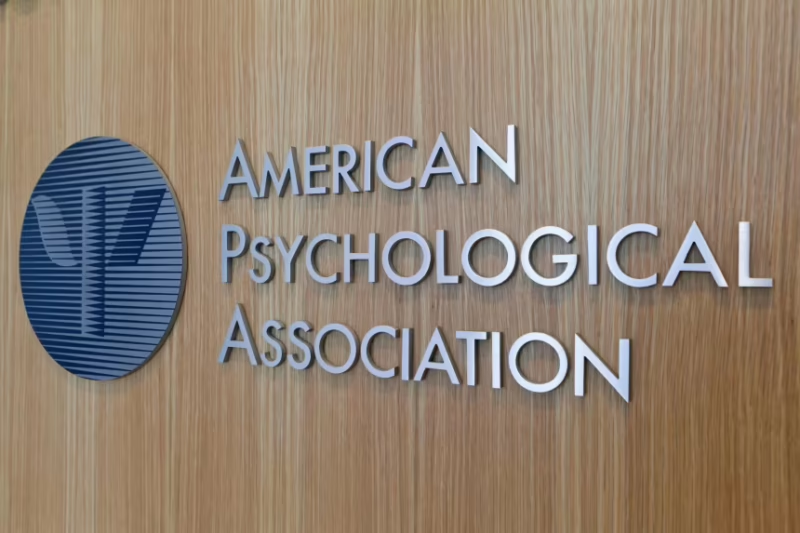
Signage in the lobby of the American Psychological Association's headquarters in Washington, D.C.
Adopted in February, the APA’s new resolution on antisemitism replaced one that had stood for roughly two decades. Antisemitism had risen sharply since Oct. 7, 2023, including within universities and professional organizations, and the APA itself was not immune. Its division listservs had featured posts declaring “Kudos to Hamas” and “Intifada, Intifada.” During a discussion of antisemitism in the APA’s governing council, one member referred to Jews as a “privileged class.” By the time the resolution was adopted, the APA was already facing a congressional investigation into allegations of antisemitism within the organization and several of its divisions. The House report also reveals extensive behind-the-scenes communication between APA leadership and advocates seeking to revise the resolution, including discussions about involving groups that opposed the existing policy. The resolution ultimately passed despite objections from the APA’s own board of directors and without the approval of its appointed Collaborative of Jewish Psychologists.
Against this backdrop, the APA adopted a resolution that risks casting doubt on those reporting antisemitism while offering insufficient guidance for recognizing it within the profession.
Consider the definition. The resolution recognizes hostility, prejudice, discrimination, harassment, hatred or violence “against Jews as Jews.” Its four concrete examples, all framed as concerning Israel, are legitimate but offer an incomplete picture of how antisemitism can manifest particularly in professional settings. Antisemitism adapts to changing political conditions, often taking forms that are not explicitly anti-Jewish.
This is illustrated by a case from our profession. In 2024, a counselor published a list of “Zionist therapists,” urging colleagues not to refer patients to them; some of the clinicians listed reportedly had never publicly expressed views on Israel and appeared to have been included because their names sounded Jewish. But even if every clinician had identified as a Zionist, targeting them on that basis would remain troubling. For many Jews, Zionism reflects historical, cultural and ancestral ties to Israel, not allegiance to any particular government or its policies.
The list did not explicitly target “Jews.” It was framed as political activism. Psychologists should know better than to judge prejudice solely by how those engaging in it describe their intentions. A useful policy would explain how discrimination can operate through labels that obscure its targets.
The resolution also explicitly warns against the “weaponization” of antisemitism through bad-faith accusations intended to silence criticism of Israel. Comparable APA policies addressing racism, sexism and anti-LGBTQ+ bias contain no such warnings. Why are allegations of antisemitism singled out for this additional scrutiny?
The inconsistency is particularly striking given recent events within the APA. Following a Wall Street Journal op-ed criticizing the organization and its newly elected president, a memo circulated among APA members accusing the authors of misogynoir, or prejudice against Black women. Whether that accusation was justified is not the point; what matters is that the APA’s policy on antisemitism introduces a suspicion of bad faith that its other discrimination policies do not. The problem is selective suspicion. When a Jewish colleague reports antisemitism, the question risks shifting from what happened to whether the person’s motives can be trusted. This can reinforce epistemic antisemitism: treating Jewish accounts of discrimination as inherently driven by hidden motivations. By warning against bad-faith allegations without comparable guidance on recognizing antisemitism disguised as political principle, the APA creates an uneven framework.
Such doubt has psychological consequences. Research involving Jewish faculty, staff and students has linked antisemitism, including subtle forms of exclusion and dismissal, to depression, anxiety and traumatic stress. Denying or delegitimizing someone’s experience of harm can compound suffering, a process sometimes described as traumatic invalidation. That the APA would risk reinforcing this dynamic in a policy intended to combat discrimination is a troubling irony.
Although the resolution acknowledges Jewish fear, anxiety, insecurity and other consequences of victimization, what it lacks are practical illustrations relevant to psychologists: excluding Jewish colleagues, stereotyping Jewish patients or making belonging contingent on disavowing Jewish attachments. A policy intended to guide professional conduct should help psychologists recognize prejudice within their own institutions, even when it is presented as a commitment to justice.
The treatment of evidence has also changed. The earlier resolution cited national data documenting rising antisemitism; the new one omits those statistics and frames the recent increase primarily in the context of the war in Gaza. This risks presenting antisemitism as a response to Israeli government actions rather than prejudice against Jews in its own right. It also risks reinforcing the notion that Jews are collectively responsible for a foreign government’s conduct. Meanwhile, FBI data document a disproportionate number of antisemitic hate crimes, despite Jews comprising only about 2% of the U.S. population. Furthermore, antisemitic persecution and violence long predate Israel’s establishment in 1948. Contemporary events may provide a pretext for expressing an ancient prejudice; they do not make Jews responsible for the hatred directed at them.
These are not merely disagreements over wording. The APA’s policies shape professional education, research and clinical practice. Jewish patients report feeling judged or pathologized when discussing their Jewish identity or connection to Israel. Jewish trainees describe environments where acceptance can depend on passing a political litmus test. In a recent survey, 91% of Jewish mental health providers reported increased workplace antisemitism. When policies offer insufficient guidance for recognizing prejudice, clinicians may be less equipped to identify it in their own practice.
The implications also extend well beyond the APA. Jewish communal organizations increasingly confront questions about how antisemitism is defined, whose experiences are believed and whether Jewish identity is treated differently from other minority identities. When a leading professional association applies inconsistent standards to antisemitism, it risks legitimizing those same inconsistencies in universities, healthcare institutions and other settings where Jews seek equal treatment.
There are consequences for the broader public as well. If political considerations shape how a professional organization recognizes prejudice against one group, what prevents the same approach from influencing its treatment of others? An organization entrusted with advancing psychological science cannot selectively apply its own principles without undermining public trust.
The APA should revise this resolution and uphold the scientific principles it expects psychologists to follow. Its credibility depends on applying those principles consistently, including when doing so is politically uncomfortable. An organization dedicated to understanding prejudice must be willing to recognize it within its own profession.
Dean McKay is a professor of psychology at Fordham University, Miri Bar-Halpern is a lecturer in psychology at Harvard Medical School and the director of trauma services and training at Parents4Peace, and Joshua Simmons is a psychologist and psychoanalyst in San Francisco. All three authors are members of the American Psychological Association-appointed Collaborative of Jewish Psychologists; their views are their own and do not represent the APA or the Collaborative.