Opinion
LEADERSHIP PIPELINE
Before I could stand up for the Jewish People, I needed to know where I stood


 Add EJP on Google
In Short
The significance of a Jewish high school club, a relationship with an educator or a summer in Israel may unfold over years.
By the time many people learned my name, they were seeing the hardest chapter of my college experience: They saw a Jewish student body president at the University of California, Santa Barbara, facing hostility after Oct. 7, 2023 — the signs, the public targeting and the effort to remove me from office. Some later encountered my story in the documentary Oct. 8.
What they could not see was the foundation beneath those moments: the experiences that had helped me understand my Judaism, find my community and believe I had something worth standing up for.
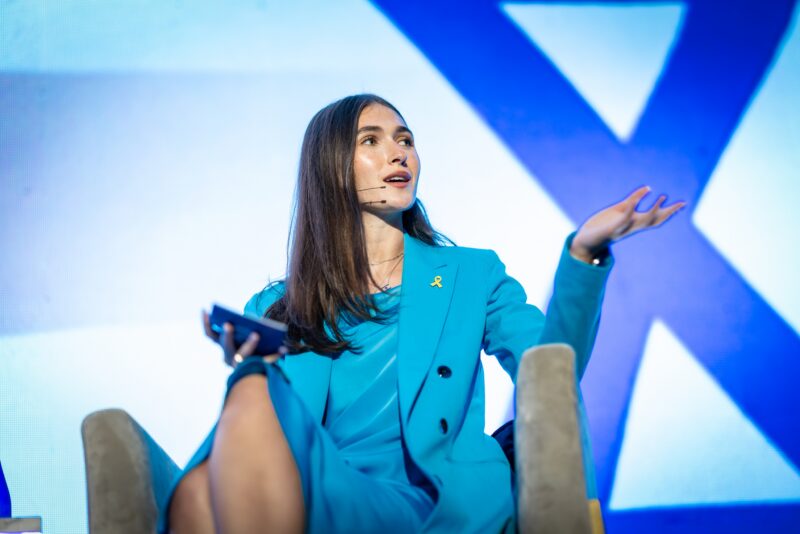
Courtesy/Israel on Campus Coalition
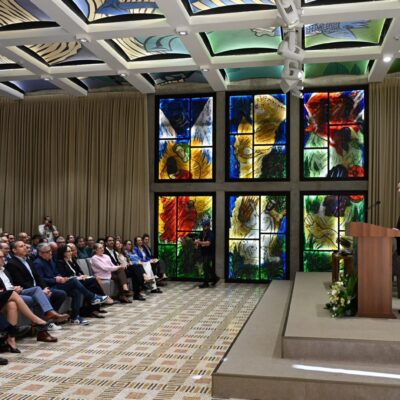
Tessa Veksler moderating a panel discussion at the 2025 Israel on Campus Coalition National Leadership Summit.
That part of my story began years earlier, through NCSY, a summer in Israel and the Jewish Student Union club I founded at my public high school. It is why I am coming to the JSU Presidents Conference in Stamford, Conn., this November. I want the students there to understand the significance of what they are already doing, and I want the adults investing in them to understand how far that investment can reach.
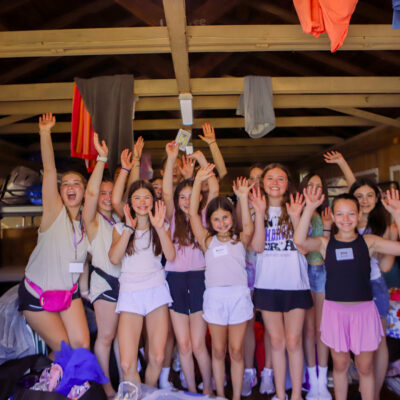
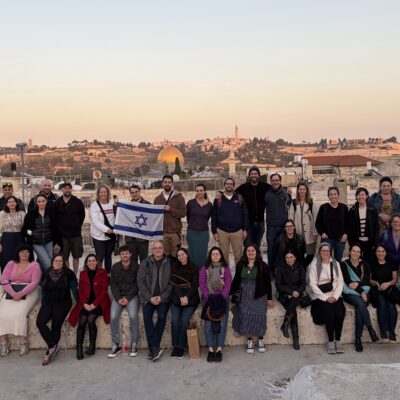
At 17, I was still figuring out where Judaism belonged in my life. I had a Jewish background, but I was searching for a connection that felt like my own. That summer, I traveled to Israel on NCSY’s The Anne Samson Jerusalem Journey, known affectionately as TJJ. The experience changed the direction of my life. Jewish community, tradition and Israel became deeply personal. I began to see a Jewish life I wanted to build, and I returned home with a stronger sense of who I wanted to become.
Back at school, I founded our first Jewish Student Union club. I had discovered something meaningful and wanted other students to have a place to explore it, too. Creating that space meant taking responsibility: inviting people in, bringing them together and helping make Jewish life visible in the school we shared.
Those were early lessons in leadership. They were also lessons in belonging. I learned that I could help create the community I wanted to be part of.
Years later, when I became student body president at UCSB, that understanding came with me. I wanted to serve the broader student body while bringing my whole self to the role, including my Judaism.
After Oct. 7, doing so became much harder.
There is no training that makes being personally targeted painless. A strong Jewish identity does not make you immune to fear or loneliness. But it gives you somewhere to stand when other people are pressuring you to retreat.
By then, I had experienced Judaism as a source of meaning, responsibility and connection. I knew what my community meant to me. I had built a life around choices I valued. That foundation helped me continue leading when my identity became a reason others wanted me to stop.
When people ask where that strength came from, NCSY and JSU belong in the answer.
For the Jewish philanthropic community, there is a lesson here about when leadership development begins. We understandably devote enormous attention to what happens when Jewish students arrive on college campuses. We ask whether they know the history, can recognize antisemitism and have the resources to respond. These are necessary questions.
But we also need to ask what experiences they had before they arrived. Did they have a place to explore Judaism without feeling they needed all the answers? Did someone take their questions seriously? Did they experience Israel for themselves? Were they trusted with responsibility? Did they learn that they could contribute to Jewish life, rather than simply attend it?
These experiences help shape the person who eventually walks onto a campus, but they also deserve support for everything they make possible in their own right. A teenager’s Jewish life should be rich with friendship, learning, celebration and discovery. We owe young people opportunities to love being Jewish, alongside the tools to defend their right to be Jewish.
That is what makes a JSU club in a public high school so consequential. It creates a recurring opportunity for students to connect with something they might otherwise encounter only occasionally. It allows a student’s curiosity to develop into commitment, and commitment to grow into responsibility for others.
The Presidents Conference carries that work forward. From Nov. 1–3, JSU leaders from across the United States and Canada will gather to develop their skills, learn from one another and bring ideas home to their schools. Their leadership already has a practical expression: they are building Jewish communities among their peers.
I want to help them recognize the value of that work: The student who invites a hesitant classmate to a meeting may change that classmate’s relationship with Judaism; the club leader who makes room for a difficult question may help someone feel comfortable enough to return; the teenager who decides to start something can give an entire school a Jewish space it did not have before.
I know how much can begin with those decisions. My own involvement eventually helped shape my public advocacy and professional life. It influenced the subjects I speak about, the people I hope to reach and the responsibility I feel toward younger Jewish students. Returning to JSU is a chance to bring that experience back to the community that helped set it in motion.
For donors and communal leaders, this work requires a long view. The significance of a high school club, a relationship with an educator or a summer in Israel may unfold over years. Some of its most meaningful effects will happen long after a participant has completed a program.
My story offers one example of that reach. There are many others whose impact will be felt in their schools, families, professions and communities.
When I stand before these students in Connecticut, I will see something of the young woman I was at 17: still figuring out what being Jewish meant to me and where it might lead. My high school JSU club and my summer in Israel through the Anne Samson Jerusalem Journey helped shape the life and work I have today. I want these students to leave with the confidence to lead, the freedom to ask difficult questions and the understanding that they do not need to have every answer to take their next step. Those opportunities mattered to me at their age, and helping another student find that same sense of possibility is a responsibility I am proud to carry.
Tessa Veksler is a Jewish advocate, speaker and former student body president of the University of California, Santa Barbara. An NCSY Anne Samson TJJ and Jewish Student Union alumna, she is featured in the documentary “October 8.”