Opinion
BETTER TOGETHER
The covenant we choose


 Add EJP on Google
In Short
If the only thing that brings us into the same room is a threat, we will spend most of our energy reacting, not planning proactively for the future.
Most of my working days since Oct. 7, 2023, have included a phone call or email about something that went wrong for the New York Jewish community. Responding to those calls is a large part of my job at the Jewish Community Relations Council of New York, and it likely will be for a long time. But on Oct. 28, after spending a morning with more than 70 leaders of dozens of Jewish organizations from across New York, I left the event feeling more hopeful than I have in years.
In Kol Dodi Dofek, written in 1956, Rabbi Joseph B. Soloveitchik describes two covenants that bind the Jewish People. The first is a brit goral, a covenant of fate. We did not choose it; it is the shared experience of being targeted, and of knowing that the people who hate us do not care what kind of Jew we are. The second is a brit yi’ud, the covenant of destiny. It is the decision to build something together and to take responsibility for where we are going.
JCRC of NY/X
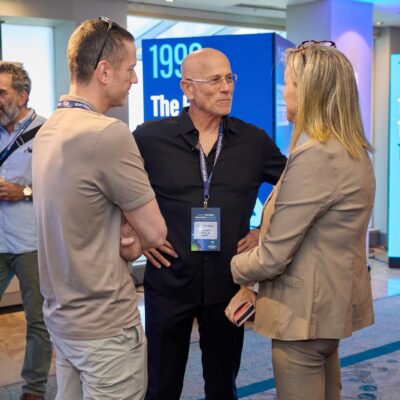
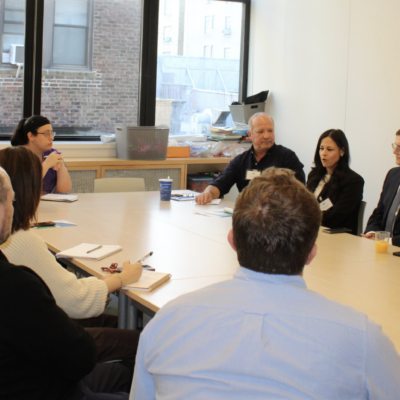
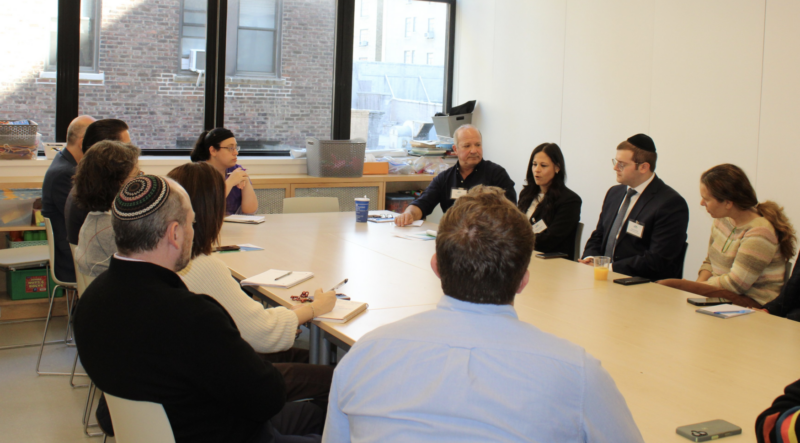
One of three task forces that met during the Jewish Community Relations Council of New York's New York Jewish Coalition meeting on Oct. 28, 2026.
Since the Oct. 7 attacks, the covenant of fate has done most of the work of holding our community together. We have shown up for each other — at rallies, in mourning — and I would never minimize that. But fate cannot sustain a community on its own. If the only thing that brings us into the same room is a threat, we will spend most of our energy reacting, not planning proactively for the future.
Last year, Eran Shayshon argued in eJewishPhilanthropy that Rav Soloveitchik’s vision both shaped and splintered American Jewry. In his telling, American Jews embraced the covenant of destiny as a commitment to universal values, and then divided over what those values require of us on Israel, on antisemitism and on politics. His answer was to rekindle the covenant of fate. I agree with much of his diagnosis, but I don’t think the answer is to choose fate over destiny; I think it is to build a destiny we share, with people we disagree with, around the real needs of the community in front of us.
The New York Jewish Coalition, which JCRC-NY convenes, now includes more than 55 organizations serving New York’s Jewish community. On Oct. 28, JCCs and Ys from Canarsie, Harlem, Riverdale and the Rockaways sat with Orthodox rabbinic leaders and Reform advocates, and organizations serving Russian-speaking Jews joined organizations serving Asian American Jews. It was the week before Election Day in the U.S. and the day after it in Israel. Everyone in that room had a reason to be somewhere else, but they chose to be together. That is what a shared destiny looks like in practice.
We started the day with a presentation by New York City’s chief demographer, who walked us through how the city’s population is shifting. Many of the decisions we make about where to run programs, open sites or build partnerships are based on a picture of the city that is 10 or 20 years out of date. If we are going to plan for the next generation, we need to start with the city as it is.
Then we split into three new task forces: civic engagement, building allyship and futures thinking. Many of the organizations in the civic engagement group were in the middle of get-out-the-vote work for the upcoming election, but instead of planning for this election, the group started with a more basic question: What do we mean by civic engagement? Is it turning out voters, or something broader? From there, the questions were practical. What has worked that others should copy? What would make our work more effective? The group’s first project is a map of the civic work already happening across the coalition to stop duplicating efforts and start sharing what works.
While the building allyship group expected to focus on relationships outside the Jewish community, the conversation went somewhere else almost immediately. One participant said the bigger problem is that we are not showing up for each other, and asked how we can expect anyone else to show up for us if we don’t begin with ourselves. Not everyone agreed. One leader thought the group’s time would be better spent on relationships outside the Jewish community, while another described an organization’s decision to stay inside a broader movement despite real disagreements with some of its partners.
By the end, the group agreed it needed to work both inside and outside the community, and to start by mapping who each organization serves and who its partners are. As one participant said, we need to “expand the aperture of what it means to be a Jewish New Yorker.”
The futures-thinking group was asked to imagine Jewish New York 10 to 15 years from now and what needs to be built today to get to where we need to be. They talked about Jewish kids in public schools who have no Jewish cultural life during the school day, and about Jewish education that costs too much. They discussed immigrant communities that don’t see themselves in institutions built by earlier waves of immigrants, and synagogues and community centers that sit empty most of the week. These are the questions of a community planning to thrive long into the future.
A coalition meeting may not be earth-shattering news, but these relationships between organizations that might never otherwise work together mean that when the next crisis comes, we already know each other and know how to move together. Most Jewish philanthropy goes to programs with measurable outcomes, but the relationships between our organizations are what make those programs work when it counts. Relationship-building almost never has a line item in anyone’s budget, but it is what allows us to strengthen our brit yi’ud.
The covenant of fate will be with us for a long time, but on a Wednesday morning in October, leaders who disagree about a great deal chose to spend their day planning a shared future. Rabbi Soloveitchik called that the covenant of destiny. I call it good news, and we could use more of it.
Sara Fredman Aeder is the executive vice president of programming at the Jewish Community Relations Council of New York.