END OF AN ERA
L.A.’s nondenominational Kadima Day School to shutter after yearslong funding crisis
The school's primary — nearly sole — funder announced last year that he would no longer support the school after it failed to expand its donor base, attract students

COURTESY/KADIMA
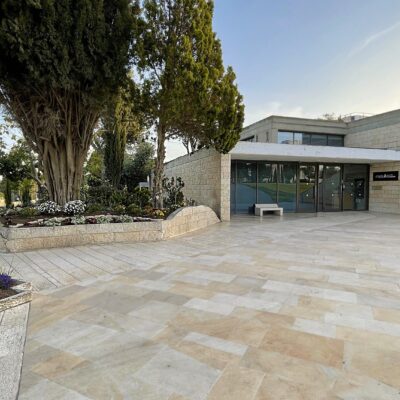
A view of the Kadima Day School's Evanheim Family Campus in Los Angeles.




 Add EJP on Google
Los Angeles’ nondenominational Kadima Day School is shutting down at the end of the school year and hopes to sell its campus to another Jewish day school, in light of growing financial struggles and diminishing enrollment, the institution informed parents, staff and other stakeholders this week.
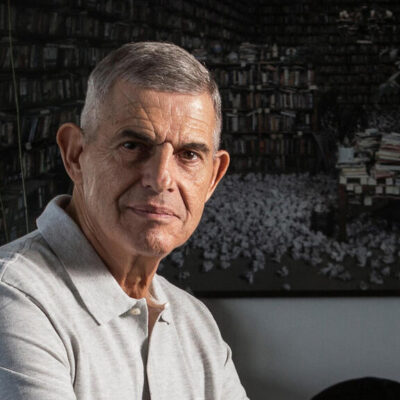
The closure comes less than a year after the pre-K-8 school announced that it was in a financial crisis after its primary — and nearly sole — donor, board member Shawn Evenhaim, decided to halt his funding over growing frustration that the school was overly reliant on him and had failed to expand its donor base.
“Kadima is participating in final negotiations with potential buyers,” read the school’s letter, which was sent on April 24. “We are hopeful that Jewish education will remain at 7011 Shoup Avenue and that the students, families, and faculty will have an opportunity to be welcomed to a new community as they will be disenfranchised by Kadima’s closure.”
Last May, when Evenhaim cut his support, he warned the school, many of whose roughly 180 students come from L.A.’s Israeli expat community, that it was not financially sustainable and should not open for the 2025-2026 academic year. The board chose to proceed anyway, raising nearly $900,000 through a tenacious fundraising campaign, featuring Israeli celebrities. But the school was not able to turn that emergency effort into lasting support.
“This didn’t start a year ago,” Evenhaim told eJP. “I’ve been warning for years that the school wasn’t financially sustainable. No one should rely on a single donor, and if that donor stops contributing, and you don’t have enough students, you have to shut down.”
There are currently about 180 students enrolled at the school. Evenhaim estimates that 50-60 of them are in early childhood education, with the remainder in kindergarten through eighth grade.
Evenhaim, an Israeli American real estate developer, helped purchase the Shoup Avenue property in 2004. Including the funds that he gave for the acquisition, he has since donated $10 million to the school and provided an additional $6 million in loans.
Those loans have not been repaid, and the school has struggled to meet its mortgage payments, as well as cover salaries and suppliers. The financial strain led to staff reductions and a planned 8% cut in teacher salaries, though this was later walked back.
Evenhaim, whose three children attended the school, said his decision to stop providing financial support — after 20 years — came after concluding the school would not recover. “They dug themselves a hole they didn’t know how to come out of,” he said. “They used to call me on Tuesday and ask for $200,000 by Friday because they needed to pay salaries. It happened a few times.”
Evenhaim said the loans eventually grew to $6 million.
On May 27, 2025, he decided he would no longer continue supporting the school. In a letter to the board, he wrote that when he first became involved, he did not expect to be the sole supporter but hoped others in the Jewish and Israeli American community would also contribute. “But it never happened,” he said. “We found ourselves almost alone in carrying the financial responsibility of keeping Kadima open.”
Kadima’s head of school, Jerry Shapiro, told eJP that he hoped the campus would remain a Jewish day school to provide the local children a Jewish education.
“Throughout millennia, we’ve been taught – and we’ve learned – that, Talmud Torah k’negged kulam, that Jewish education is more important than anything else,” Shapiro said. “In this light, the closing of a Jewish Day School is a deeply sad and troubling moment, for those students and families affected today, and for all of those who would have experienced Jewish learning in the years to come. There will undoubtedly be various perspectives to share as to how this came to be, but for now, it is our fervent hope that our students will find a place of enthusiastic Jewish learning at another area-wide Jewish school, and that they’ll retain the passion and love for Judaism and Zionism that was inculcated at Kadima.”
Months into the school year, concerns among staff grew. In interviews earlier this year, several teachers said that they had begun looking for new jobs.
“We don’t know if we’ll open next year or if we’ll even be able to finish the school year,” one teacher told eJP, speaking on condition of anonymity. “It’s very stressful. We have mortgages and bills to pay.”
The school tried to find a buyer to take on the bond in order to remain on the campus. After those efforts were unsuccessful, it sent an email to teachers and parents last week announcing the closure.
Evenhaim said that a year ago he had proposed selling the school to a slightly more religious Jewish institution, but the board rejected the offer, saying it did not align with Kadima’s educational approach.
Now, he said, at least two potential buyers are interested in the campus. “Had they accepted my suggestion back then, they wouldn’t be where they are today, but they simply waited too long,” Evenhaim said.
The developer and philanthropist, who is the founder and CEO of the L.A.-based Balaciano Group, said that two schools interested in acquiring Kadima have asked for his help, and that he plans to provide a one-time significant donation to support whichever one ultimately acquires the campus.
“I want to ensure there will still be a Jewish school there. I want to save Jewish education,” he said.
When asked why he did not continue supporting Kadima but chose to help the new schools interested in acquiring the campus, he pointed to what he described as a lack of financial viability. “When you continue supporting a failing business, it won’t succeed no matter how much money you invest in it,” he said. “Unfortunately, they brought the school to where it is today. The other schools interested in the purchase have more students, better resources and a strong track record. They won’t need to come to me each year for donations.”
Evenhaim also addressed rumors that he plans to reclaim the property for development, saying he has no such intention. “If I had wanted to do that, I would have done it back in 2004 when we purchased it,” he said. “I believe in Jewish education and want the place to continue functioning as a Jewish school.”
Kadima was first established in 1970 by Rabbi Eli Schochet. In its first year, the school had fewer than 10 students. Over the years, it grew and moved through several locations before settling in West Hills, where it is now located on the Evenhaim Family Campus.
In an effort to attract more students, Evenhaim had offered reduced tuition. But even the approximately $16,000 annual tuition was not enough to generate a significant increase in enrollment.
“People recently asked me if I regret giving so much money to the school,” Evenhaim said. “And it’s not only money — I’ve invested thousands of hours in the school. But I don’t regret it for a second. In the past 20-plus years, we have made an impact on so many Jewish students, and I truly hope this campus will continue serving the community as a Jewish school. It would be a shame if it doesn’t.”
Ed. note: This piece was updated to include comments from Kadima’s head of school, Jerry Shapiro.
Related News
EXCLUSIVE
Detroit-based philanthropists Nancy, James Grosfeld donate $8M to renovate JDC’s Israel campus
HIGHER EDUCATION
As Jewish donors reconsider academia, Jan Koum doubles down, endowing Israel studies at Stanford

MAJOR GIFTS
Center for Jewish History celebrates 25 years with a $25M matching grant

PRESIDENTIAL REBUKE
Israel’s Herzog: Mamdani ‘makes no effort’ to hide disdain for Israel, Jews must fight back

MAGICAL EXPERIENCE
Shefa launches psychedelics retreat for Jewish professionals suffering burnout