Opinion
OPEN DOORS
Before the coffee date: New pathways for Jewish engagement




 Add EJP on Google
In Short
The fundamental model of Jewish engagement on campus has changed.
I recently found myself at breakfast with a longtime friend and supporter of Hillel Ontario — someone deeply invested in Jewish campus life and the next generation, and thoughtful enough to ask hard questions about our work and where it’s headed.
At one point in the conversation, she asked me how our work has changed over the last few years.
Hillel Ontario/Facebook
I started giving what I assumed would be a straightforward answer. I spoke about the changing campus climate, the impact of the Oct. 7, attacks, rampant Jew-hatred and the mental health epidemic affecting young people. I spoke about the importance of social media, our efforts to make our programs more compelling and engaging and about our organizational growth.
But as I was explaining these strategic shifts out loud, I realized something important: the fundamental model of Jewish engagement on campus has changed.
For years, Jewish campus life operated under the premise that engagement begins with a coffee date. For decades, that one-on-one conversation was the foundation of the work. Relationships were built student by student, interaction by interaction. The assumption was that personal connection came first, and broader participation followed.
And for a long time, that model worked well.
But today, engagement doesn’t always begin with a coffee date; and as organization that has doubled its student engagement in four short years, we have come to understand that relying primarily on one-on-one engagement is not a scalable model for long-term growth.
Today, engagement begins long before that.
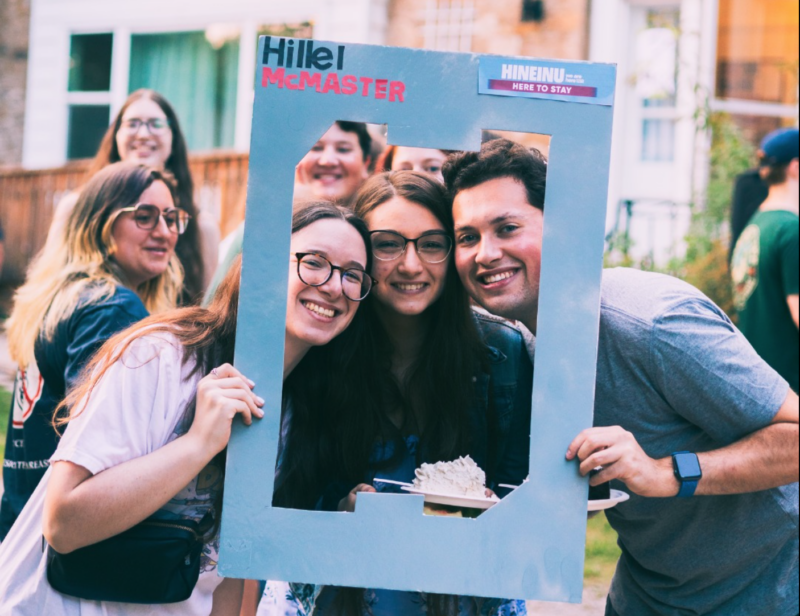
It begins on social media. At a party. At a sports tournament. At a large Shabbat dinner where a student sees Jewish life that feels vibrant and alive. It begins through low-barrier experiences that simply invite Jewish students to show up, meet each other and feel part of something larger than themselves.
These moments may appear casual on the surface. But they are not superficial. They are strategic.
Increasingly, broad engagement is not the outcome of relationship-building — it is the starting point of an intentional journey.
Social programming is sometimes treated as secondary to “real” engagement. Metrics like attendance and reach are occasionally viewed with suspicion, as though breadth somehow comes at the expense of meaning. But this misunderstands the moment we are in. Breadth does not compete with depth; if done well, breadth creates the conditions for depth. In other words, engagement is not simply a moment in time; it is the entry point to a journey.
A student may first come to Hillel because their friends invited them to a party or a basketball game. That same student may later attend a Shabbat dinner, join a leadership program, volunteer for a tikkun olam initiative, travel to Israel, advocate publicly for the Jewish community or become a campus leader during moments of crisis.
The social event was never the destination; it was the doorway.
That journey — from participation to belonging, from belonging to leadership, from leadership to lifelong Jewish connection — is the real work. And in today’s environment, that journey matters more than ever.
Jewish students are navigating an increasingly complicated campus environment. Many are searching not only for meaningful experiences, but for confidence, pride, friendship, resilience and community. Large-scale engagement helps students see that Jewish life on campus is not small, isolated or defensive. It is joyful, visible and alive.
There is enormous power in a student walking into a crowded room and realizing they are not alone. There is power in seeing Jewish joy expressed publicly and confidently at a time when many students feel pressure to shrink themselves. There is power in creating spaces where students can first connect socially before they are ever asked to engage more deeply intellectually, spiritually or politically.
For years, many engagement models assumed intimacy created participation. Increasingly, participation is what creates openness to deeper connection. That does not make the work shallower. It makes the front door wider.
The future of Jewish campus life will belong to organizations that understand this simple truth: that engagement no longer begins by asking students to go deeper. It begins by helping them want to come closer.
Jay Solomon is the chief advancement officer of Hillel Ontario.