Opinion
BE PREPARED
A curriculum alone won’t get Jewish teens through their time on campus. Immersion will.


 Add EJP on Google
In Short
It is tempting to fund what can be packaged and distributed — a curriculum, a toolkit, a video series — and those have their place; but the outcomes funders want come from an immersive community experience.
As a British Army commander, I would never have contemplated sending my troops into battle without proper training. The tragic reality of 21st-century America is that, for many Jews, university campuses have become a kind of battlefield, and too many young Jews arrive unprepared.
Some Jewish high schools and community organizations run programs to help, and parents do what they can. But in my experience — and I have been involved in the struggle against anti-Zionism and Jew hate for many years — most students turn up ill-equipped for what will confront them. Those of us long past that stage of life find it hard to comprehend the psychological toll on a teenager of even moderate social rejection or isolation, solely because of their ethnicity, culture or religion.
Courtesy
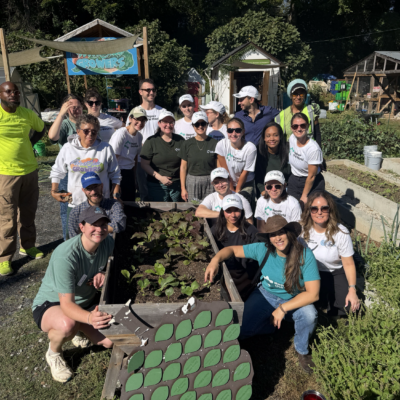
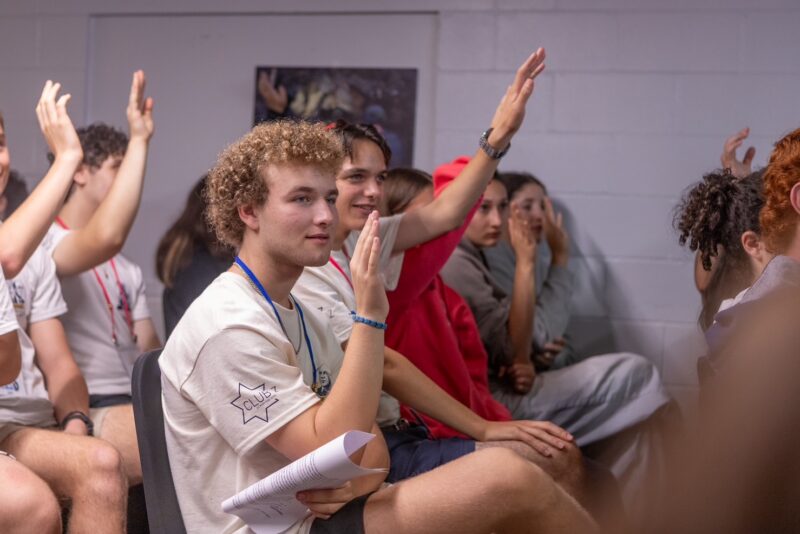
Teens participate in Club Z programming in an undated photo.
The Jewish community’s instinct has been to answer this with content: better curricula, better talking points, better toolkits. Those matter. But having watched one organization do this work for many years, I am convinced that content on its own does not produce young Jews who hold their ground.
Immersion does.
Masha Merkulova founded Club Z in San Mateo, Calif., in 2011. She was motivated by concern for her own children, who would face Jew hate and anti-Zionism in public school and at university, long before the upsurge that followed Oct. 7, 2023. I serve on the organization’s board, and as a non-Jew I give my time for two reasons: I am horrified by what Jewish students so often face while simply trying to complete their education, and I have seen the effect Club Z has on them.
Let me be clear: Education is the foundation, and it is rigorous. Participants typically join at age 13 and continue through 17 or 18. All of the programming is in person, and learning is measured, not assumed: exit cards after every session, a knowledge test at the end of basic training and, for the advanced cohort, a 65-question comprehensive exam that requires 80% to earn a diploma.
They begin with learning what it means to be a Jew and a Zionist, because without that knowledge and the confidence it brings, too many are lost the first time they meet even passive hostility. Then come the facts, techniques and arguments that equip them for everyday conversation, formal debate and responding to online abuse. They learn how to build Jewish and Israel groups at school. They also learn leadership skills that will help them steady fellow students who have had none of this preparation.
Crucially, in a society increasingly dominated by an unforgiving dichotomy of right-think and wrong-think, Club Z does not tell its students what to think, which political camp to join or what to do. It equips them and then trusts their judgment. The aim is a Jew who stands up straight, proud and with dignity rather than “a Jew with trembling knees,” to borrow from Menachem Begin.
But education cannot do the job alone. What makes it hold is everything built around it: overnight retreats, practical experience in the community, mentorship, friendships and support that continues long after graduation. Each part reinforces the others.
I saw this over Labor Day weekend at The Rising, a three-day national gathering Club Z ran in Florida. Unlike Club Z’s previous conferences, it was open to any Jewish teen in the country, not only its own students. Nearly 100 came.
Five faculty members covered a different vector of antisemitism: progressive, Islamist, far-right, Christian nationalism and foreign-influenced narrative warfare. But they were not there to give a lecture and leave. The deal was that they stayed the whole weekend, taking part in workshops, discussions and simulations, eating with the kids and talking with them in the downtime. You could see each of them in the communal areas, one-on-one or in small groups, holding high school boys and girls enthralled, often late into the night.
The lecture set out the argument. The conversation over lunch is where a teenager tests it.
Then there were the alumni. Several individuals who went through the program, now university students, helped run activities, led discussions and talked with the teens in their free time. It is a long-established military practice for battle-hardened soldiers to help train new recruits, not only to pass on hard-earned combat skills but to answer the endless questions about what it is really like in battle, steadying the nerves of the apprehensive. That is what Club Z alumni do. Most have experienced Jew hate firsthand and have held their ground on campus. They are volunteers, unpaid but eager and proud to pass on what they themselves gained.
Napoleon said that in battle, the moral is to the physical as three is to one. The same is true here. A key aim of the Jew haters is to demoralize Jewish students: to drive them out, force them to hide their identity or even turn them against the Jewish state and their own people. Knowledge answers the arguments. Identity — and a community ready with backup when things get dark — is what keeps a young person from giving up.
For those who fund Jewish education, the lesson is simple, if not always convenient. It is tempting to fund what can be packaged and distributed — a curriculum, a toolkit, a video series — and those have their place. But the outcomes funders want come from an immersive approach: in-person programming and retreats with their peers, educators who stay in the room, alumni who come back, staff who pick up the phone when a student is struggling. Funding the curriculum without the rest is like equipping an army and never training it.
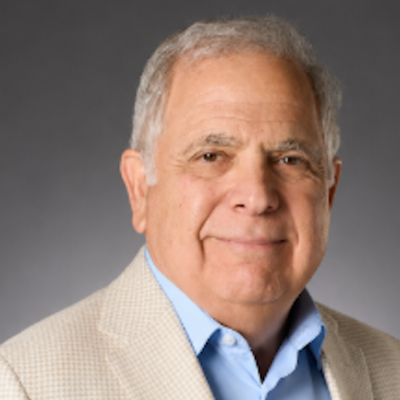
Col. Richard Kemp CBE served 29 years in the British Army, including as commander of British forces in Afghanistan and head of international terrorism at the U.K. Joint Intelligence Committee, and was appointed CBE for his work on the 2005 London bombings. A bestselling author and leading voice on military ethics and counterterrorism, he serves on the board of Club Z.