Q&A
The businessman urging U.S. Jews to make ‘aliyah,’ hoping it will set Israel on a better path
Eying demographic trends that he believes are pushing the country toward illiberalism, Gilad Ramot is convinced that mass immigration is the only solution

Flash90
New immigrants from North America arrive on a special 'aliyah' flight" on behalf of the Nefesh B'Nefesh organization, at Ben Gurion Airport in central Israel on Aug. 14, 2019.




 Add EJP on Google
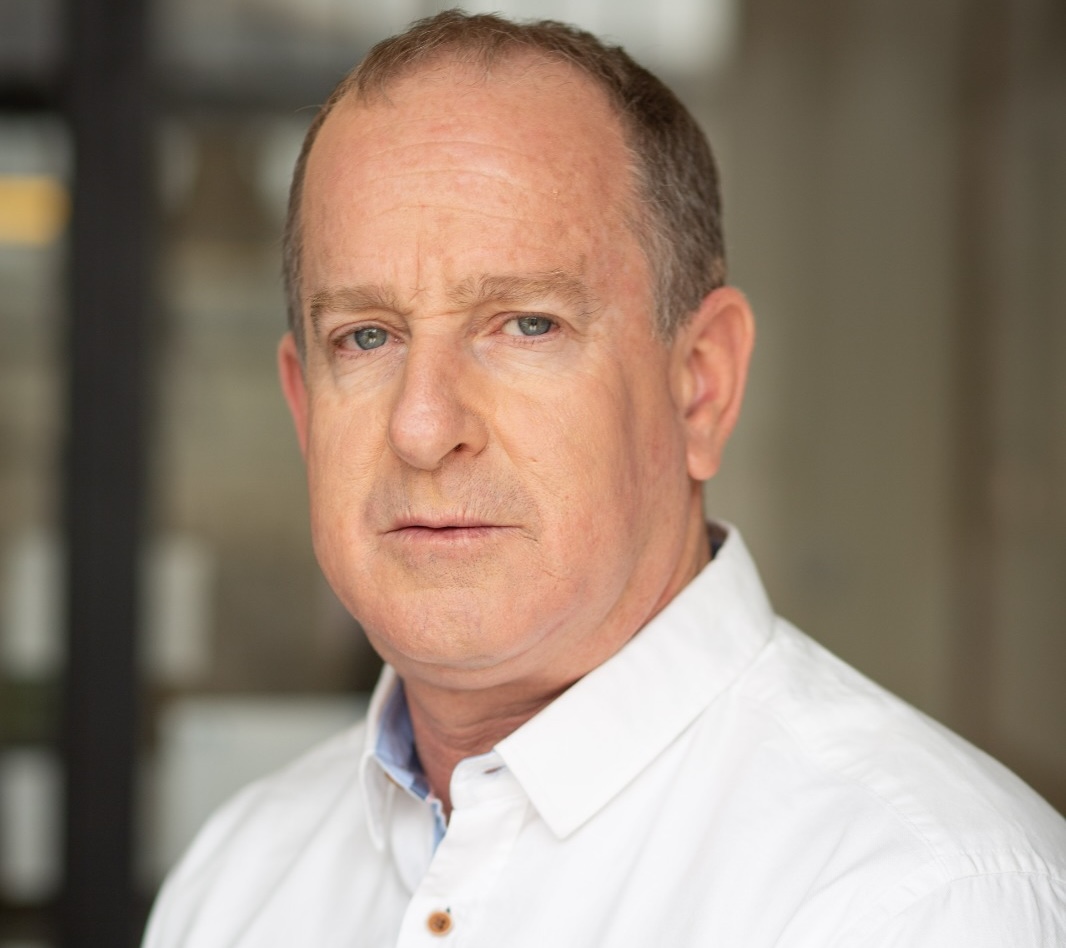
Gilad Ramot describes himself as an Israeli businessman — a concerned one. In a country he loves, one trend alarms him above all: what he sees as Israel’s drift toward illiberalism.
Ramot belongs to a growing cadre of elite Israelis unsettled by that trajectory, with many launching their own initiatives to address it. Some are working toward change at the ballot box, including mobilizing Israelis abroad to fly home and vote in the Oct. 27 election. Ramot, a brigadier general in the reserves, sees the issue as a question of demographics: Haredi families are growing far faster than secular ones, which he sees as creating an Israeli public that is increasingly tolerant of illiberal leaders. To combat this, he wants more Liberal American Jews — Ramot insists on a capital-L to signify liberal in the classical sense, not as a catchall for left-wing — to immigrate to Israel. He therefore founded Belong, a Tel Aviv-based for-profit company that helps people make aliyah, catering specifically to the classically liberal population he wants to import.
Ramot, whose company helps people navigate travel, study, work and investment in Israel as they prepare to move permanently, says his pitch sets him apart from existing organizations in the field. Nefesh B’Nefesh, which facilitates all immigration to Israel from the United States, he argues, primarily serves religious-minded clients who are more likely to immigrate anyway, without external encouragement. Belong, on the other hand, courts the more secular, Liberal Diaspora Jews — the audience that he says is the hardest to convince and the one he believes Israel’s democratic future depends on.
He built Belong as a for-profit company, investing nearly NIS 10 million ($3.35 million) since it launched in 2024. Today, Belong has a staff of 10 full-time employees. In a recent interview with eJP, he touched on why he chose a for-profit model over a traditional nonprofit, how his approach differs from established aliyah organizations, the demographic imperative driving his mission, and his push to engage American Jews to safeguard Israel’s democratic future.
This interview has been edited for length and clarity.
Justin Hayet: What led a businessman like you to put so much of your time, resources and energy into Belong?
Gilad Ramot: About 15 years ago, I looked at Israel’s demographics and realized we’re moving in the wrong direction. The groups that have more children than us are winning, and the only real potential lies outside the country. If they don’t come, we lose, and we’ll be left with a country that, for me, won’t be a place I want to live.
So I had to do something to make them want to move here. At the same time, I anticipated that antisemitism will grow. I watch what’s happening on Twitter, Facebook, social media, and I knew that Jews in Western countries would feel less and less comfortable where they live. I love this place [Israel]. It’s my only home. I’ve lived all over the world. For me, Israel is the greatest country in the world. We have a very good product, and when you have a good product, all you need to do is market it aggressively.
JH: Many people in the philanthropic world would ask what makes your initiative different from Nefesh B’Nefesh. Why is Belong different, and why should American funders, especially the Liberal ones, care?
GR: Nefesh B’Nefesh is essentially a government initiative, and they help people who’ve already decided to make aliyah. They help them with the logistics. I’m focused on the harder audience — American Jewish Liberals — who are much more difficult to convince, but they’re our goal.
JH: You established Belong as a private company instead of a nonprofit. Why?
GR: I also had to decide whether to run this as a private company or a nonprofit, and I chose a private company. I don’t really know the nonprofit world — it’s too restricted and supervised by the government. There are too many rules, and I’ve been in business all my life; that’s what I know.
I don’t like being beholden to donations because when the donations run out, you’re stuck. Belong runs on profit. If someone’s buying an apartment, I connect them with a contractor, and the contractor gives us a commission; that’s how we sustain ourselves.
So I’m not looking for donors. I’m looking for people who believe in the product and the ideology, and for investors who want to put money into the company and into that ideology. They can see it as a donation, but my goal is not to rely on donations.
JH: But can you actually outpace the demographic trends in Israel? Haredi birthrates are exponential, whereas immigration is generally more of a flat line.
GR: That’s exactly why I said, when I started, that it would take years. But we’ll convince them we have a great product here. I know antisemitism will keep growing in the U.S., and I believe many of them will eventually see that Israel is home.
At first, it’ll be more for defensive reasons, but it will grow. What you’re saying is true — but we don’t have a choice. We’re not going to have more children than they do, and given that, aliyah is our only option, and we’ll have to work hard and spend a lot of money to make them come.
JH: This sounds similar to the AID Coalition’s Fly & Vote initiative, which is mobilizing all Israelis living abroad, regardless of political affiliation, to fly in to vote in the upcoming election. But the numbers seem to work against initiatives like that. If 70,000 people fly in to vote, and even if you convince 25,000 to move, can the math add up to real change?
GR: The two sides are very close — very close. So even 75,000 matters, and the potential is bigger than that. The name of the game is, ultimately, how many voters you get to the polls on Election Day. Is there more potential? Yes, but we have to fight to bring anyone who wants change. We don’t have another choice. I think it’s a very important thing to do.
JH: Why should major American funders care about this initiative and your warnings?
GR: Israel belongs to all the Jews in the world, not only those living here now. If you care about keeping Israel a democratic country, this is one of the things you can do.
If a million Liberal Jews came to vote, you would find yourselves with a different government and a different policy, and this would change how countries around the world treat us. So American Jews have a big interest in seeing a different government come out of this election because the current direction is not going to a good place. And it’s getting worse.
JH: Are you seeking other funders to join you, or do you want to continue self-funding this?
GR: We are starting to look because the more you campaign and market, the more people come. I can’t do this alone for long, or at the scale I want. We need to make a real change. So yes, we’re looking for partners, and we’re starting now to do so.
JH: Israeli or American philanthropists? Who are you approaching?
GR: They have to know and agree with our ideology because you have to be aligned with your partners. They can be Israeli or American — it’s open — as long as they’re good people. That’s good enough for me.
JH: Do you really think a campaign can push someone to move to the other side of the world?
GR: A good campaign is the only way I know to sell this. If I didn’t believe we have a good country, it would be very hard, but I believe in this product. Maybe you have to be here to see it for yourself, but I do believe it — and the only thing that works is a long, aggressive campaign. That’s how you sell a good product: if people don’t know what they’re buying, they won’t come. I believe in the founding purpose of Israel.
Israel was built to be a home to all the Jews in the world. That’s the only reason the country exists. So, I see Jews in the Diaspora as having the same rights here that I have. They may choose to live elsewhere now, but this is their country, and that’s another thing you have to campaign on: to convince them and make them proud that even if they live abroad now, Israel is theirs too.
It takes time to put that into people’s minds, which is why we need a long-term, aggressive campaign. We’re not really selling a product — we’re selling an idea, an ideology. We don’t have oil or gas or minerals; the only thing we have is our minds. If we bring more of that mind here, we’ll be a superpower — a superpower of knowledge. And that knowledge should go toward doing good in the world: new medicines, cyber technologies, building a better world, rather than weapons.
More minds here will do good for the whole world eventually. That’s my aim for the long run. It’ll take time, but we don’t have a choice.
Related News

EXIT INTERVIEW
Elizabeth Sokolsky, longtime EVP of Birthright Israel, to retire next year

EXCLUSIVE
Detroit-based philanthropists Nancy, James Grosfeld donate $8M to renovate JDC’s Israel campus

MAJOR GIFTS
Center for Jewish History celebrates 25 years with a $25M matching grant
CLOSING WORDS
In AZM address, Cosgrove links communal ‘orthodoxy’ on Israel to rising anti-Zionism among young Jews

MAGICAL EXPERIENCE
Shefa launches psychedelics retreat for Jewish professionals suffering burnout