Opinion
FOUNDATIONAL INVESTMENT
Preparing Jewish teens to stand tall




 Add EJP on Google
In Short
Jewish identity rarely develops through one transformative moment. It grows through relationships and experiences that build on each other.
Just a few weeks ago, I stood on an overlook in Jerusalem with a group of high schoolers. As the sun dipped over the Judean Hills, teenagers who had arrived in Israel not knowing one another just a month earlier stood arm-in-arm, singing together.
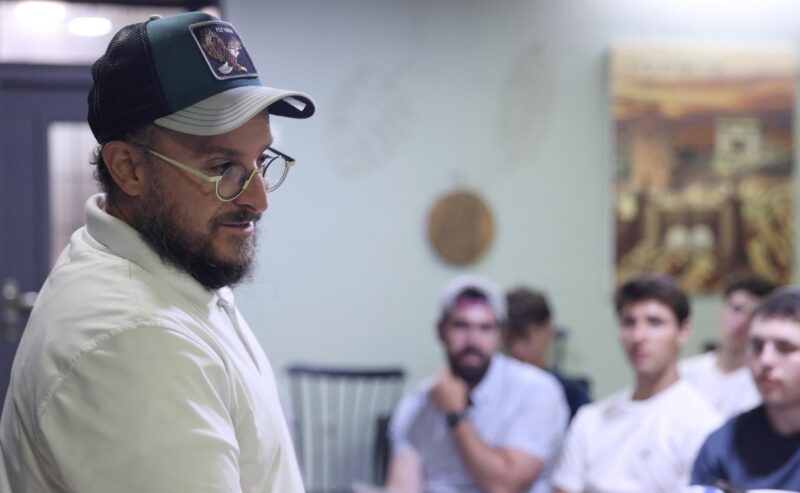
These teens were participants on The Anne Samson Jerusalem Journey, or TJJ, NCSY’s flagship summer experience for public school teens in partnership with Root One. For three weeks, they connected with thousands of years of Jewish history, each other and their heritage.
Courtesy
Rabbi Derek Gormin addresses participants on The Anne Samson Jerusalem Journey, or TJJ, NCSY’s flagship summer experience for public school teens in partnership with Root One.
I witnessed something special this summer, something I have experienced before: that moment when a teenager realizes that being Jewish isn’t just something they inherited or learned about; it’s something they can experience, explore and make their own. But that journey doesn’t end in Jerusalem. The question is what happens when they land back in New York, Chicago, Miami or Los Angeles.
Our participants have returned home for their junior and senior years in public high schools at a complicated time to be a Jewish teenager. They are navigating a wave of antisemitism and anti-Israel hostility, all while conversations about Israel and global politics increasingly make their way into classrooms, friendships and social media feeds.
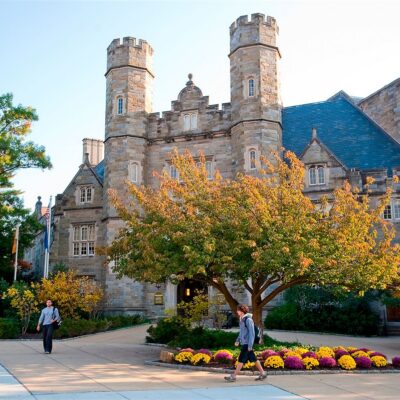
And for our older teens, college campuses are around the corner, and they need all the Jewish pride and armor they can get in preparation. The recent vandalism at the AEPi fraternity house at UC San Diego hit particularly close to home for me. I served as president of AEPi when I was in college, and we faced significant antisemitism on our campus. At the time, I hoped these were battles my generation could fight so that the next generation would not have to fight them.
I was wrong.
Seeing something similar happen decades later, on a campus where some of the high school students I work with may soon find themselves, is difficult. But after years of working with Jewish teens, I have also learned that we cannot prepare them for those environments by focusing only on what they may encounter there. Before we ask a teenager to stand up for being Jewish, we have to give them opportunities to discover what being Jewish means to them.
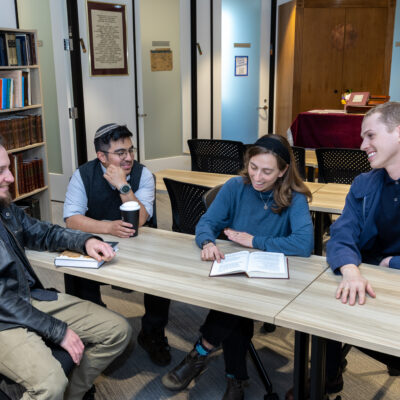
That is a big part of our year-round work through the Jewish Student Union, NCSY’s network of more than 515 clubs in public and community high schools, including 115 on the West Coast alone, where Jewish teens can find one another, explore their Judaism and build relationships with trusted advisors.
For many teens, it starts simply. They gather during lunchtime to eat pizza, ask questions, learn something Jewish and spend time with other Jewish students. An advisor keeps showing up and becomes a fabric of their Jewish lives. Over time, those relationships can extend beyond the classroom to Shabbat dinners, community programs, leadership opportunities and summer experiences like TJJ.
What I have seen again and again is that Jewish identity rarely develops through one transformative moment. It grows through relationships and experiences that build on each other. Each experience creates an opportunity for the next, allowing teens to keep asking questions, exploring and deciding what they want Judaism to mean in their own lives. Slowly, Judaism becomes less abstract. It becomes theirs.
That matters in every generation. But it matters especially now.
Our teens will encounter difficult conversations about Israel. Some will experience antisemitism. Some will eventually find themselves on college campuses where they are the only Jewish person in the room and feel pressure to explain or defend something deeply personal to them.
Of course, we want them to have knowledge. We want them to understand Jewish history and Israel, know how to engage in constructive dialogue, advocate for themselves and know where to turn when a line is crossed.
But confidence does not come from having the perfect response to every question. It comes from knowing who you are. That is something I think about when I look at the teens I stood with in Jerusalem this summer. I don’t know exactly what they will encounter over the next few years. I wish I could promise them that the antisemitism my generation experienced on campus will not be theirs to face, but I can’t. What I can do, and what the educators who work with them throughout the year can do, is make sure fear is not the foundation of their Jewish identity. We can help them build something stronger: the opportunity to explore their own Jewish identity, relationships they can count on and a community they know they belong to.
That investment has to begin before they step foot on a university quad. Then, when they eventually walk onto a college campus, they are not encountering their Jewish identity for the first time through someone else’s hostility toward it. They are arriving with a Judaism they have already begun to experience, understand, appreciate and make their own.
That is what it means to prepare Jewish teens to stand tall, at school, on campus or wherever their Jewish journey takes them next.
Rabbi Derek Gormin is the managing director of programming and education for NCSY and JSU.