TRANSITIONS
OU splits top leadership role, naming Rabbi Shmuel Silber EVP and Rabbi Josh Joseph CEO
The announcement comes 10 months after Rabbi Moshe Hauer's sudden death left a void in both operations and rabbinic leadership at the OU




 Add EJP on Google
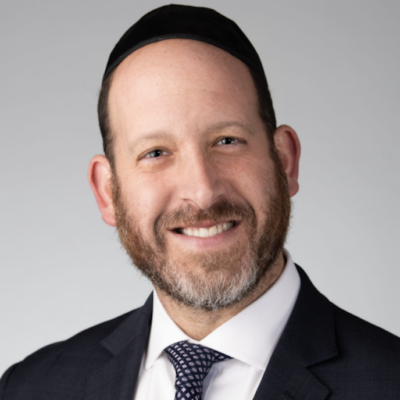
The Orthodox Union has named Rabbi Shmuel Silber as its next executive vice president, the announcement completing a leadership transition that began nearly a year ago after the sudden death of Rabbi Moshe Hauer, the OU’s former executive vice president.
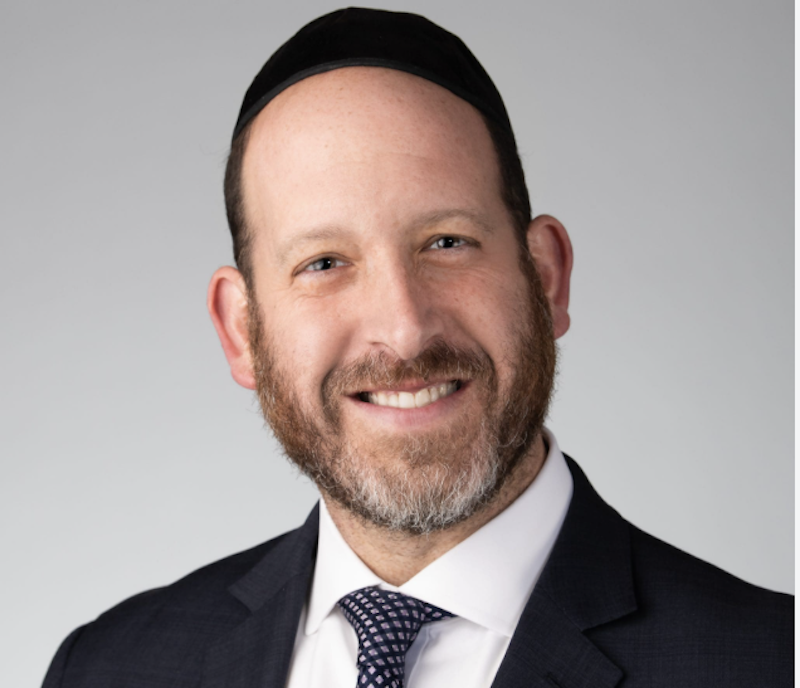
Rabbi Josh Joseph, who had served jointly with Hauer as OU’s executive vice president as well as separately as chief operating officer, will assume the newly created role of chief executive officer.
Hauer, who died of a heart attack at his Baltimore home last October at 60, had led the OU since 2020, guiding the organization through the dramatic period spanning the COVID-19 pandemic and the aftermath of the Oct. 7, 2023 Hamas attacks.
While Hauer had functioned as both OU’s operational leader and its rabbinic and public voice, the leadership change will be accompanied by a new structure in which Silber will focus on rabbinic and public-advocacy work, while Joseph — who has informally filled much of Hauer’s role since his death — will oversee management strategy and operations across the OU’s programs. Both Silber and Joseph will report directly to the OU’s executive committee rather than each other, according to a statement.
“In Rabbi Shmuel Silber and Rabbi Dr. Josh Joseph, we are blessed with two world-class leaders who bring complementary strengths to their respective roles,” said Mitchel Aeder, president of the OU, in a statement.
Aeder described Silber as “a distinguished talmid chacham who possesses the rare combination of deep Torah scholarship, exceptional character, humility, and a warm, empathetic heart,” while the organization’s statement credited Joseph with driving organizational growth across the OU’s management, business strategy and professionalization over the past six years.
Silber will begin his role at the OU on Nov. 2. For over 23 years, he has led Baltimore’s Suburban Orthodox Congregation Toras Chaim, a Pikesville synagogue that has grown under his tenure into a congregation of more than 400 families. He received rabbinic ordination from Yeshiva University’s Rabbi Isaac Elchanan Theological Seminary and holds a master’s degree in secondary Jewish education from YU’s Azrieli Graduate School. Silber is also founder and dean of the congregation’s learning arm, the Institute for Jewish Continuity, and founding rabbi of the Berger Towers community, a still-developing Anglo community in Jerusalem’s Katamonim neighborhood. With rabbinic ties spanning both Israel and North America, Silber described himself as having the opportunity to “dance at both weddings.”
Silber’s appointment comes as the OU has been expanding its work in Israel, amid a broader surge in aliyah from North America since Oct. 7. In recent years, the OU has more than doubled its JLIC presence on Israeli campuses and has been mapping a quickly growing network of congregations with significant populations of American and other English-speaking immigrants, Joseph told eJewishPhilanthropy. That growth reflects a new strategic plan, he said, built around expanding engagement with Jews across the religious spectrum and deepening support for Anglo communities in Israel, priorities he said make Silber, with his ties to both countries, “a perfect match” to help lead.
Asked how he thinks about the growing number of young Orthodox Jews weighing a future in Israel versus the U.S., Silber cautioned against treating emigration as a reflexive response to crisis.
“In general, I think it is always important that whenever we make decisions in life, it’s always good to run to and not to run from,” Silber told eJP. “It’s always tempting to say there’s rising antisemitism, let’s run. I don’t think that should be the math for our life decisions…Our obligation is to figure out where we can have the greatest impact. And if that’s here, fantastic. And if that’s there, that’s great as well.”
Both Silber and Joseph noted the appointment comes as the organization, and many members of its leadership are still mourning the loss of Hauer, whose death last October fell on Shemini Atzeret.
“What I hope to be able to do, first thing, is bring a little bit of consolation. Because Rabbi Hauer was a close friend and a mentor of mine,” Silber told eJP. “I don’t see myself much as an innovator yet, as much as [bringing] hopefully a sense of continuity, because continuity sometimes is the most important thing, especially in times of loss.”
“It wasn’t simply the loss of an executive vice president. It was the loss of a thought leader. It was the loss of a father figure to so many, and it was the loss of someone who lived and breathed the plight of the Jewish people,” he added.
Joseph, who worked alongside Hauer for six years described him as a “chevrusa” or study partner, and the experience of working together as a “brotherhood” and “partnership.”
“It was like a chavrusa,” Joseph told eJP. “We were just aligned.”
In the aftermath of Oct. 7, 2023, Hauer became one of the most visible Orthodox voices in Washington, testifying before Congress on campus antisemitism and helping organize the delivery of 180,000 letters to the White House calling for the return of hostages held in Gaza. The day before Hauer died, noted Joseph, the last of the living hostages were returned.
“There’s no question his efforts along those lines were helpful, not just helpful, but fundamental in driving that incredible result, that still did take a lot of time, but that was something that was very much connected to his heart and his passion and his work,” Joseph told eJP.
Related News
HIGHER EDUCATION
As Jewish donors reconsider academia, Jan Koum doubles down, endowing Israel studies at Stanford
PRESIDENTIAL REBUKE
Israel’s Herzog: Mamdani ‘makes no effort’ to hide disdain for Israel, Jews must fight back

EXIT INTERVIEW
Elizabeth Sokolsky, longtime EVP of Birthright Israel, to retire next year

MAGICAL EXPERIENCE
Shefa launches psychedelics retreat for Jewish professionals suffering burnout

MAJOR GIFTS
Center for Jewish History celebrates 25 years with a $25M matching grant