Opinion
READER RESPONDS
Israel doesn’t just need more food aid. It needs food aid infrastructure.




 Add EJP on Google
In the weeks after Oct. 7, 2023, Jerusalem Food Rescuers received more than 2,300 requests for food. We could not meet them all, so we approached the Jerusalem Municipality and asked for a list of the organizations providing food assistance across the city. If we could not help a family ourselves, perhaps we could set up a call center and connect them with another organization operating nearby.
We assumed such a list existed, but the municipal welfare department told us it did not.
So, we started building one ourselves.
We called organizations and began mapping who was working where, what food they distributed, which communities they worked with, whether they could accept new families, on which days they distributed, and what capacity they had. Very quickly, another picture emerged.
In some neighborhoods, several organizations were distributing similar food at similar times. Elsewhere, needs were going unmet. One organization might have vegetables but need dry goods. Another might have more food than it could distribute that week, while an organization a few neighborhoods away was struggling to meet demand.
This wasn’t because organizations were doing poor work. Many were responding under extraordinary pressure, often with limited staff, volunteers, vehicles, storage and information. They knew their own communities well. What was missing was a way to connect what each of them knew and had.
That experience came back to me while reading Judah Ari Gross’s recent eJP coverage of new research mapping Israel’s food-aid network (“New paper mapping Israel’s food-aid network finds glaring waste, inefficiency,” Aug. 14). The findings raise important questions about duplication, geographic disparities, data and coordination.
We have seen some of those problems firsthand in Jerusalem. But I am less convinced that the first question should be about how many organizations exist. I think the more urgent question is: What would allow them to actually work as a network?
Coordination does not mean centralization
Consolidation may be part of the answer in some places, but fewer organizations is not necessarily the goal. Small neighborhood and community organizations often have something that large national organizations cannot easily reproduce: relationships.
They know the families. They notice when someone stops showing up. They understand what people actually eat, the languages spoken in a neighborhood, religious and cultural practices, and the informal networks through which communities function.
Large national organizations can also do things small organizations cannot. They can move enormous quantities of food, operate warehouses and logistics systems, procure at scale and respond across regions.
We need both.
The mistake would be replacing fragmentation with centralization. What we need is a network where organizations of different sizes can do what they do well, while sharing information, food and infrastructure.
A functioning citywide food network should be able to answer some fairly basic questions: Who is distributing food today? Where? What kind? Who can take additional families? Where are needs increasing? Who has extra produce? Who has refrigeration? Who has a vehicle available? Is food sitting somewhere that another organization could distribute?
After Oct. 7, answering even some of these questions required dozens of phone calls. In ordinary times, that would mean waste and delays. In an emergency, it could mean a family waiting for food that never arrives.
What began as an emergency spreadsheet eventually forced us to ask a much bigger question: Who is actually responsible for understanding how food moves through Jerusalem?
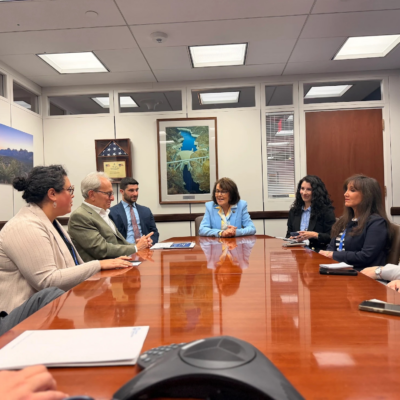
This year, Jerusalem Food Rescuers and the Jerusalem Municipality launched Jerusalem’s Urban Food Policy Forum, following Mayor Moshe Lion’s signing of the Milan Urban Food Policy Pact. The Forum brings together municipal officials, public-health professionals, researchers, civil-society organizations, food businesses and community representatives.
One of its first jobs is simply to understand the system. Where are the needs? What already exists? Where are several organizations doing the same thing? Where is nobody working? What infrastructure could be shared? And what needs to be in place before the next emergency instead of being invented during it?
There is a danger here, too. Mapping people is not the same as listening to them. People who rely on food assistance and the neighborhood organizations working alongside them need to have a say in what food is appropriate, where the gaps actually are and what would make the system work better.
Then there is a question of government responsibility. Food insecurity touches welfare, health, education, waste, emergency preparedness, transportation and neighborhood development, but responsibility is scattered across departments. It is possible for everyone to be doing their job while nobody is responsible for the whole. Better NGO coordination cannot become an excuse for the government to step away. Food aid responds to an immediate need; it cannot be the policy answer to poverty.
As we got to know more food-distribution organizations, we started noticing something else: sometimes they receive too much food, and sometimes they receive food they cannot use.
There is nothing negligent about this. Food donations are unpredictable. Organizations don’t always control what arrives or in what quantities, and they may be reluctant to turn away food from businesses they rely on, particularly if they know it might otherwise be thrown out.
Fresh produce also moves quickly. The number of people arriving for distribution changes. One organization may suddenly receive a huge quantity of one vegetable. Another may not have refrigeration. A delivery may arrive on a day when there are not enough volunteers to sort it. So, even food that has already been rescued can end up being wasted.
We also began hearing about the problem from another part of the municipality. In conversations with staff from Jerusalem’s Sanitation Division, we heard concern about edible food entering the city’s waste stream.
The two things were connected: Food that one organization cannot distribute can become municipal waste while another organization a few neighborhoods away is looking for food.
That is what led us to begin piloting what we call the Last Stop model. The idea is very simple. Before good food reaches the waste stream, we try one more time to find somewhere in the city that can use it.
Last Stop works specifically with food that has already entered the food-aid system. We are not looking for more surplus from businesses. We work with organizations that have already received donated food and, for whatever reason, cannot distribute all of it. Sometimes we can connect two organizations directly and arrange a pickup. When the food needs to be sorted, reorganized or stored temporarily, it comes through our logistics center and then goes back out through the network.
What is interesting to me is that this is not really another food-rescue program; it is shared infrastructure. A surplus in one organization and a shortage in another can exist on the same day, in the same city. Someone has to be able to connect them — a spreadsheet cannot do that by itself.
You need people who know the organizations. You need vehicles. Refrigeration. Somewhere to sort food. Somewhere to hold it temporarily. And someone whose job it is to make the connections.
Build it before the emergency
Oct. 7 taught us something else that now seems obvious: You cannot build an emergency food network during an emergency.
You can improvise one. We did; so did many others. But that is not the same thing.
The relationships, information and protocols need to exist beforehand.
A city should already know which organizations can expand quickly, who has kitchens, who has vehicles, who has refrigeration or storage, which communities different organizations can reach and where food can be redirected when one part of the system is overwhelmed. That makes coordination part of emergency preparedness, not just a way to make food aid more efficient.
If organizations work together every week, they do not have to introduce themselves to each other when the next crisis begins.
There is also an uncomfortable question here for philanthropy.
Funders understandably like paying for food. A truck of vegetables, a food package or a meal is tangible. You can count it. You can photograph it. It is much harder to photograph the person who spent the morning figuring out that one organization had three pallets of vegetables it could not use and another organization across town needed them.
But if we fund the food and not the infrastructure around it, we should not be surprised when several organizations arrive in one neighborhood while another community is missed, or when perfectly good food ends up being thrown away. We need to fund the boring parts, too: shared data, mapping, logistics, refrigeration, transportation, coordination staff, referral systems and emergency protocols. And we should stop expecting every organization to build all of those things for itself.
At the same time, efficiency is not enough. A perfectly coordinated system can still give people food they do not want, undermine community organizations, or leave people with no real choice over what they eat. We should care about whether food is nutritious and appropriate, whether people have choice, whether different communities are being reached fairly, and whether the people using the system have some power in shaping it.
The recent research published by Aron Troen, Moran Accos and Orly Tamir in Food Policy and covered in eJP gives us badly needed data about Israel’s food-aid system. It should push us to ask hard questions about duplication and effectiveness. But I would be careful about jumping from “there are many organizations” to “there are too many organizations.”
Maybe some should consolidate. Maybe some should stop doing work that another organization can do better. We should be willing to ask that. But we should also ask a different question: Have we ever actually built the infrastructure that would allow these organizations to work together?
That is what we are trying to test in Jerusalem. Not one organization running everything, and not another layer of bureaucracy, but a city that knows where food is, where it is needed, who can move it, and who already has the relationships to get it to people.
It won’t solve poverty or make food aid unnecessary. But until we get there, we are leaving food, money and capacity on the table while families are still waiting.
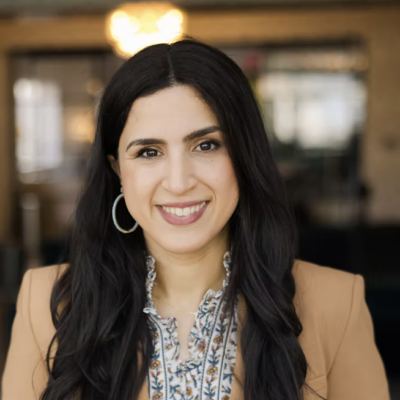
Daniella Seltzer is the co-founder and co-CEO of Jerusalem Food Rescuers.