EXCLUSIVE
Newly revamped American Friends of LIBI looks to offer alternative to FIDF for supporting Israeli soldiers
Incoming board chair of the group, Zvi Alon, played a key role in this summer's ousting of FIDF's chair and CEO, says he joined AFL to create a more efficient, impactful vehicle for helping Israeli troops
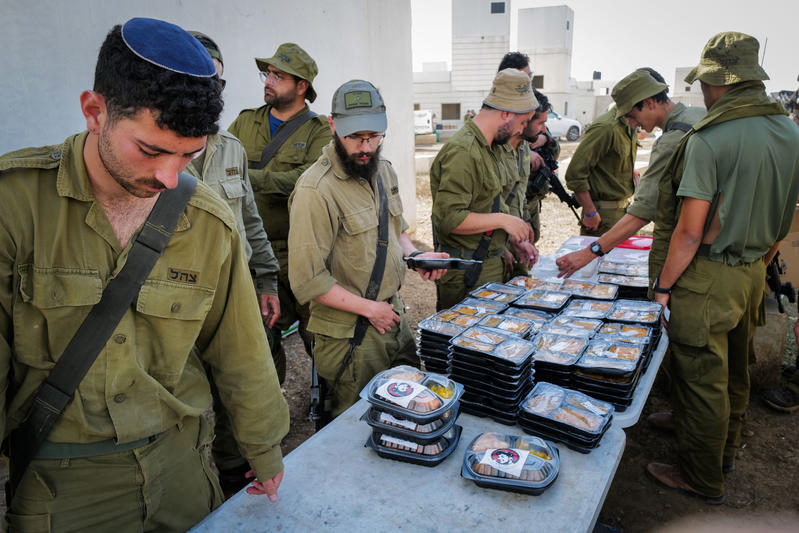
Michael Giladi/Flash90
IDF reserve soldiers receive food donations from civilians during a military exercise in the Golan Heights on Oct. 24, 2023.




 Add EJP on Google
American Friends of LIBI, a 21-year-old nonprofit that supports Israeli soldiers and veterans, is revamping and bringing on fresh leadership as it seeks to offer an alternative to the Friends of the Israel Defense Forces, following the latter group’s recent turmoil, eJewishPhilanthropy has learned.
Coming on board as the group’s new chairman is California-based American-Israeli entrepreneur Zvi Alon, who played a pivotal role in the ousting of FIDF Chair Morey Levovitz and CEO Steve Weil this summer and whose wife, Ricki Alon, previously served on the FIDF national board. Brig. Gen. (res.) Yehiel Gozal, a former top executive at FIDF and longtime fundraiser for Israeli military-related initiatives, is also joining AFL as an Israel-based liaison with the IDF.
Alon told eJP that his group’s focus will be on efficiency and transparency, with the stated goal of keeping overhead costs below 10%. (FIDF, which is a far larger organization and provides many times more funding to initiatives in Israel than AFL, has higher overhead costs, averaging roughly 20% annually, according to its most recent 990 forms.)
“At the end of the day, people who give money, they want to make sure it has the largest impact, regardless of the size of the donation. If it’s $18 or $18,000 or $180,000, that’s really what they are looking for,” Alon said.
To mark Alon’s start as chair of the AFL board, he and his wife, who will also serve on the board, are hosting a fundraising event in their Silicon Valley home on Sunday with some 50 people planning to attend, according to an AFL spokesperson.
“I have two officers for the event, one ex-Israeli Air Force officer and an infantry officer, who will be coming to speak and share their views,” said Alon, who serves as CEO and chairman of the solar energy firm Tigo Energy, Inc.
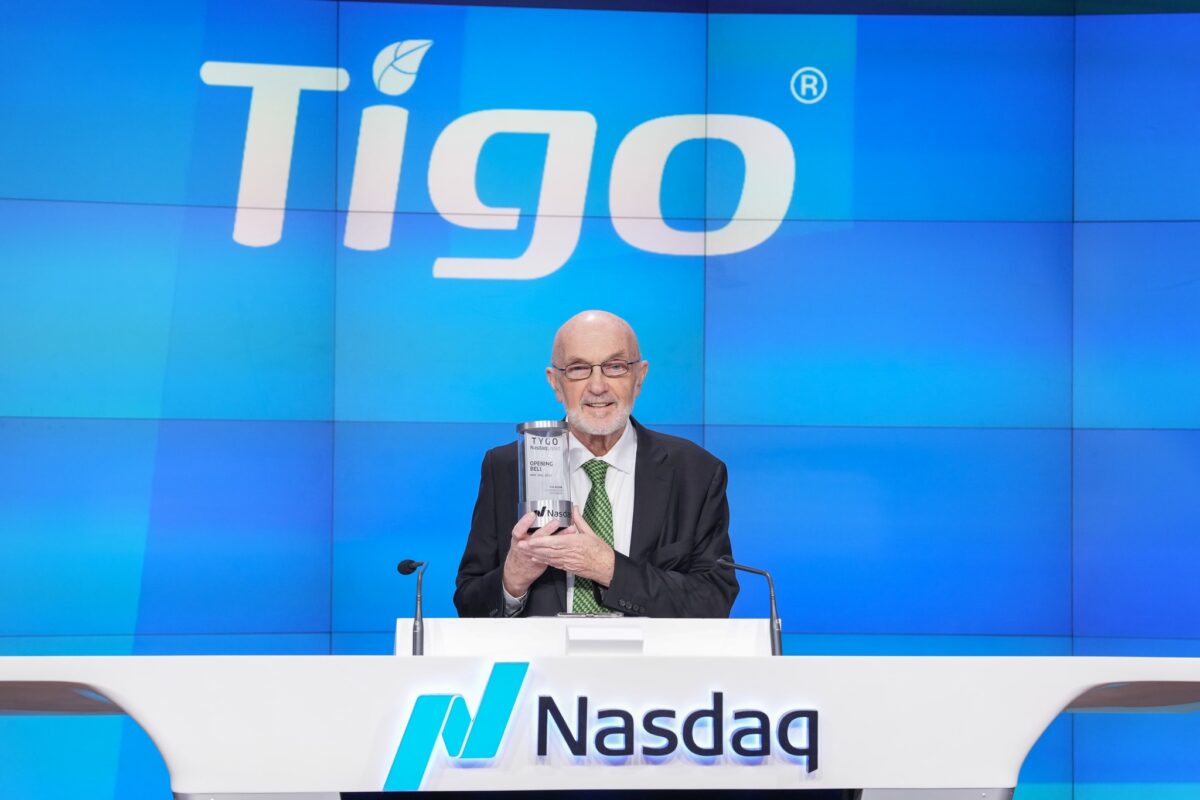
Alon’s family supported FIDF for many years, with his wife playing an active role in the local chapter until she cut ties with the group after the Bay Area chapter’s popular executive director, Amarelle Green, was fired along with her deputy following a disagreement between her and Levovitz. In March, soon after the incident, Alon — who did not have an official position at FIDF — began pushing for the FIDF national board to investigate Levovitz.
The investigatory committee that the board launched found, among other things, that Levovitz had been serving as the de facto CEO of the organization without board approval and despite Weil holding the title. Though the committee cleared Levovitz of criminal wrongdoing, it identified a number of questionable practices, including the removal of FIDF’s counsel from executive board meetings, irregular requests for travel expense compensation and a decision to employ a travel company with which Levovitz had personal history for all FIDF trips without a bidding process.
In July, weeks after the committee’s report was leaked to the press, Levovitz and Weil resigned from their positions. (Levovitz was initially allowed to remain on the FIDF board, though he later left.)
Speaking to eJP recently, Alon insisted that he did not set out to join a competitor of FIDF. He also flatly denied leaking the committee’s report, though he and Ricki did speak to media, including eJP, after it came out.
He said that he came across AFL while conducting research for his dossier earlier this year, speaking with its vice chair Shimson Erenfeld, but primarily to get a better understanding of the field. “I had conversations with Shimson Erenfeld and others, but I didn’t contemplate any change yet,” Alon said.
It was only after seeing how the board responded to the committee’s findings this summer — including keeping Levovitz on the board — that he and Ricki decided to move to AFL.
“That was the straw that broke the camel’s back. That was just too much for me, and I figured it would be a long road before they actually fix themselves. So I figured I might as well really put my energy into something else,” he said. “I really wish for the FIDF to be successful. … I believe in the cause. I am just trying to be associated with an organization that does it better, transfers more money, brings more value to the cause and lets individuals who are interested in impact have another vehicle.”
AFL launched as a 501(c)3 organization in 2004 to raise money for LIBI Fund (the acronym standing for “L’maan Bitachon Israel,” meaning “For the benefit of Israel’s security”), an Israeli charity created in 1980 by then-Israeli Prime Minister Menachem Begin and then-IDF Chief of Staff Rafael Eitan to support IDF soldiers. In 2015, LIBI merged with the Association for Israel’s Soldiers to become Yahad–United for Israel’s Soldiers. Like FIDF, AFL is a recognized partner of Israel’s Defense Ministry and the IDF.
In recent years, AFL has been largely dormant, raising a few million dollars annually. Following the Oct. 7 attacks, the group increased its activities, raising $13.4 million in 2023. In total, AFL has raised some $30 million over the past two years, according to the group. (FIDF has raised nearly 10 times as much during the same period.)
According to Alon, there is already “a fairly sizable group” of former FIDF donors who have moved to support AFL, which has just started a new fundraising campaign.
“We started with an electronic campaign. We changed the website. We created a substantial distribution list. We started by sharing up the fact that we are here and alive. And lo and behold, people started donating — from Arizona, from Florida, from New York,” he said.
Alon said that so far most of the group’s efforts have been based on word-of-mouth and personal connections. As Alon and his wife are Israeli citizens, many of their friends and acquaintances are Israeli expats as well, though he said that supporters include U.S.-born Jews as well as Christian Zionists.
“Naturally, when we go to our network, we have a large number of Israeli friends. … But it’s not like we are targeting them,” he said, noting that some of the first donors who came over to AFL after he joined as board chair were Christian.
AFL maintains a close relationship with LIBI Fund’s successor organization, Yahad–United for Israel’s Soldiers, selecting projects to support from a list produced throughout the year, Alon said.
However, AFL can provide funding to other military-related organizations besides Yahad, such as different groups that support veterans of specific IDF units, Alon noted.
“We do have the ability… to support other organizations, and we have done so,” he said.
This also allows AFL to provide non-lethal supplies directly to soldiers (something FIDF is not able to do under its charter), such as protective vests and medical equipment, without violating its mandate or the terms of its tax-exempt status. “We have the flexibility and we’ve done so, and we’re fine,” Alon said.
Ed. note: An earlier version of this report incorrectly stated that Morey Levovitz was still on the Friends of the IDF board; he was initially on the board after stepping down as chair but is no longer.
Related News

MAGICAL EXPERIENCE
Shefa launches psychedelics retreat for Jewish professionals suffering burnout

PRESIDENTIAL REBUKE
Israel’s Herzog: Mamdani ‘makes no effort’ to hide disdain for Israel, Jews must fight back
CLOSING WORDS
In AZM address, Cosgrove links communal ‘orthodoxy’ on Israel to rising anti-Zionism among young Jews
EXCLUSIVE
Detroit-based philanthropists Nancy, James Grosfeld donate $8M to renovate JDC’s Israel campus
HIGHER EDUCATION
As Jewish donors reconsider academia, Jan Koum doubles down, endowing Israel studies at Stanford