MAJOR GIFTS
Hardware magnate Daniel Jusidman pledges NIS 200M to build Israel’s largest rehab hospital
The donation will help launch a new 540-bed facility run by Reuth in tony north Tel Aviv that he tells eJP he hopes will be the country’s best
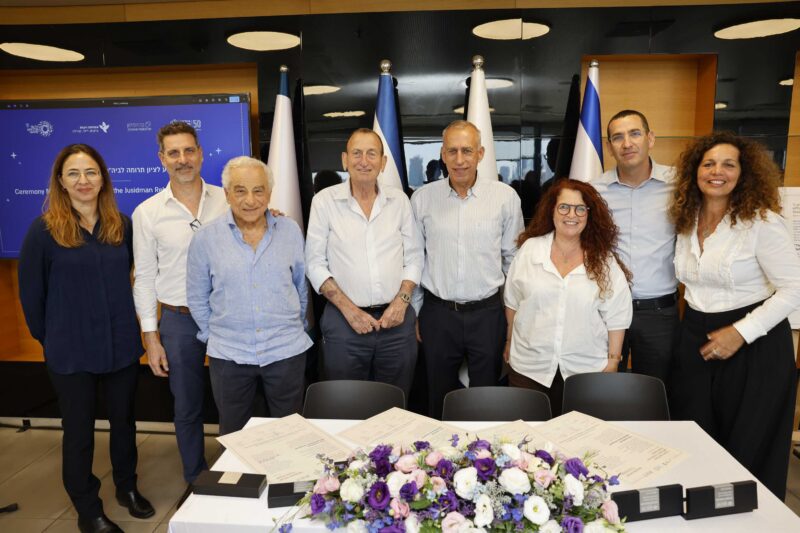
Courtesy/Guy Yechiely
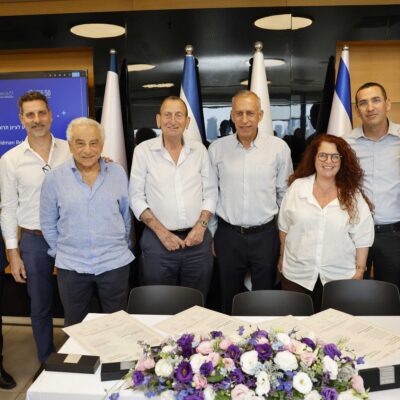
Signing ceremony to mark the donation from the Jusidman Family Charitable Foundation.




 Add EJP on Google
Daniel Jusidman, a Mexican Israeli hardware magnate, has donated NIS 200 million ($68.5 million) through his family foundation to help establish what will become Israel’s largest — and he hopes best — rehabilitation hospital, Jusidman told eJewishPhilanthropy last week ahead of the official announcement on Monday.
The Jusidman Rehabilitation Hospital, as the new facility will be called, will be run by the Reuth Association, which has maintained a public rehabilitative hospital in Tel Aviv’s Yad Eliyahu neighborhood for 65 years. As part of an arrangement with the city, the Reuth Rehabilitation Hospital, as it’s currently known, will leave its current location and move to a new area being developed on the site of the old Sde Dov airfield, just north of the Tel Aviv port.
Speaking to eJP from his home in Tel Aviv, Jusidman stressed his expectation and hope that the new facility will become Israel’s top rehabilitation hospital.
“It has to be the best rehabilitation hospital in Israel,” Jusidman said. “[Reuth] is not today… according to what we checked. But I think that Reuth, in the new environment, in the new installation, has all the elements to be by far the best. Because it’s a good hospital. They do a fantastic job. And if they go to a new center with new buildings, new atmosphere — it has all the elements to be the No. 1 rehabilitation hospital in Israel.”
Israel’s rehabilitative care infrastructure — providing the care for patients after they are out of immediate medical danger but still requiring support — has long been lacking. A 2024 report by Israel’s Health Ministry found that the country has 60% of the average number of rehabilitation hospitalization beds among OECD countries. In the wake of the Oct. 7 terror attacks and nearly three years of war, the need for greater rehabilitative care has only increased.
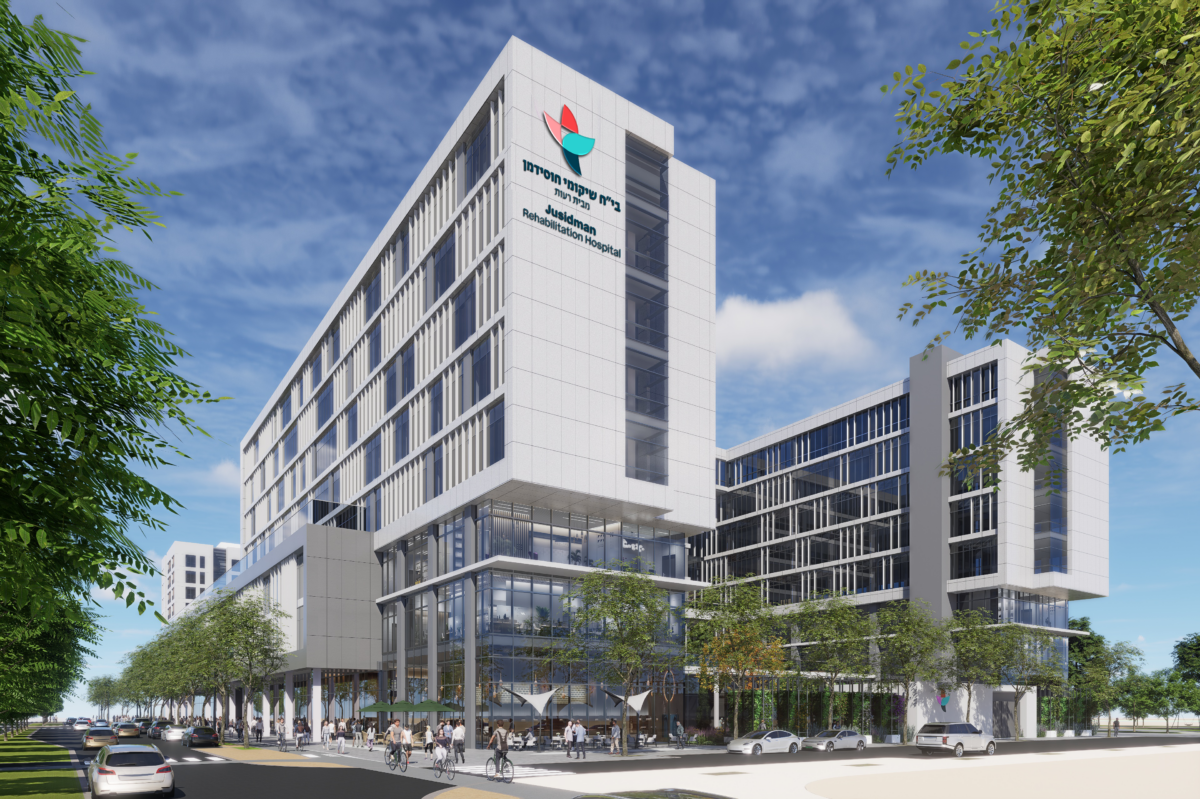
With some 540 beds and an extensive day clinic, the new hospital aims to help address this shortage while also raising the level of rehabilitative care in the country. The new facility will also boast treatment facilities, a hydrotherapy pool, a trauma clinic, various institutes and clinics, a research and development hub and parks, according to Reuth.
“I am well acquainted with the growing nationwide need for these services, especially considering recent events and an aging population,” Dr. Nachman Ash, chairman of the Reuth Association and a former director-general of Israel’s Health Ministry, said in a statement. “The hospital already serves patients from across Israel, and thanks to the generous donation of the Jusidman Family Charitable Foundation, we will be able to significantly increase the number of rehabilitation and geriatric patients treated and substantially improve hospitalization conditions.”
The donation joins a number of major donations to Israeli hospitals over the past two years, including a $200 million donation by WhatsApp co-founder Jan Koum to Jerusalem’s Shaare Zedek Medical Center last month, a $180 million donation to Rabin Medical Center by Shmuel and Anat Harlap last August and a $100 million donation to Beersheva’s Soroka Medical Center by Sylvan Adams last November.
The Jusidman family, whose members split their time between Mexico City and Tel Aviv, has supported a variety of causes in Israel for many years, funding universities, civil society initiatives and also hospitals. This includes an NIS 25 million ($8.6 million) donation in 2013 that helped create a new emergency department at Rabin Medical Center in the central Israeli city of Petah Tikva and funding the Jusidman Cancer Center at Sheba Hospital outside Tel Aviv — both of which, Jusidman noted, have been deemed the best in the country.
The NIS 200 million donation for the new hospital marks the family’s largest single donation to date, Jusidman noted.
The new hospital is projected to cost $390 million (NIS 1.1 billion) in total, with funding coming from the city of Tel Aviv through its Tel Aviv Foundation, state funding and additional private donations, according to Reuth.
“We are coordinating with the Ministries of Health and Finance to finalize the scope of government support for this important project,” Ash said.
Construction of the new hospital is expected to take approximately six years as the site of the former airport is developed. Until then, the Reuth Rehabilitation Hospital, managed by Dr. Orit Stein Reisner, will continue to operate in its current location. Once it moves to the new location, the current hospital will be turned over to the municipality for public use.
The Sde Dov Airport, named for Israeli aviation pioneer Dov Hoz, ceased operations in 2019 and was demolished the following year. Since then, work has been underway to clear the highly desirable property — located just a few blocks north of HaYarkon Park and adjacent to the tony Ramat Aviv neighborhood — and turn it into a luxury complex.
In addition to the hospital, the old Sde Dov Airport will be home to seafront apartment towers and smaller boutique buildings. The inclusion of a rehabilitation hospital in the new upmarket neighborhood is also meant to serve as a statement about the importance of the issue, according to those involved.
“For many years, rehabilitation medicine did not receive the attention it deserved within Israel’s healthcare system. It took a long and painful war to remind us of the critical role rehabilitation plays in restoring lives, dignity and independence,” Igal Jusidman, president of the Jusidman Family Charitable Foundation, said in a statement. “Through the Jusidman Rehabilitation Hospital, we hope to contribute to the recovery of those who have defended Israel and paid a heavy personal price in its service. By helping create a world-class rehabilitation facility, we seek to honor their sacrifice and support their journey toward healing. This is our way of saying: Thank you for your service.”
Tel Aviv Mayor Ron Huldai, who also serves as chairman of the Tel Aviv Foundation, said that the establishment of the largest rehabilitation hospital in Israel also serves to cement the city’s status as a national leader in the field.
“Tel Aviv-Yafo, a leading city in public health, is mobilizing to address rehabilitation needs, which have become increasingly urgent for wounded soldiers, trauma victims, and others seeking a real opportunity to return to an independent and fulfilling life. The establishment of the new Jusidman Rehabilitation Hospital is another significant step toward strengthening Israel’s rehabilitation healthcare system,” Huldai said in a statement. “Through the Tel Aviv Foundation, we are implementing a vision of health, resilience and hope that will impact the lives of Tel Aviv residents and Israeli citizens for many years to come.”
Daniel Jusidman said that the decision to make his family’s “greatest investment” in his adopted hometown was deliberate.
“For us, Tel Aviv is important, not only because we live in Tel Aviv when we are here, but because it’s the center of secular liberal Zionist life in Israel,” he said.
Jusidman, 91, who founded Truper Herramientas, the largest tool manufacturer and supplier in Latin America, has almost exclusively focused his philanthropic efforts on Israeli causes.
“We have only one project outside of Israel, which is in Auschwitz,” he said. “In Auschwitz, we are doing an art center to show pieces done by inmates while they were there and by inmates who [made them] after they left.”
Jusidman said his singular focus on Israel comes from his secular Zionist upbringing.
“I am a Zionist, and I put my money where my mouth is. This is the only option for the Jews. We can be wandering all over, but in the end, we are very lucky that after 2,000 years we are back. And we have to try to keep it,” he said.
Jusidman stressed that this focus on Israel preceded the Oct. 7 terror attacks, which he said did not significantly reshape the family’s philanthropic priorities, though he said that one of his sons now invests far more in Israeli companies and the Israeli economy than he did before as a response to the attacks.
“Obviously, Oct. 7 had an impact. I was here [in Tel Aviv when they happened] as a matter of fact. But this is not the main issue,” he said. “We are Zionists and we have our philosophy. I’m more worried about the future of Israel as a democratic society. This is more my worry.”
Asked about his goals for the NIS 200 million donation, Jusidman said that he hopes his support will put the hospital on the map for other funders and institutions.
“So far, Reuth has not been well known in the philanthropic world outside of Israel, and we expect with this new center to become as important as Sheba or Rabin or Ichilov [hospital in Tel Aviv] or Hadassah [in Jerusalem],” he said. “They are all well-known institutions in the philanthropic world, and Reuth should be part of this group today.”
Related News
MAGICAL EXPERIENCE
Shefa launches psychedelics retreat for Jewish professionals suffering burnout
EXIT INTERVIEW
Elizabeth Sokolsky, longtime EVP of Birthright Israel, to retire next year
EXCLUSIVE
Detroit-based philanthropists Nancy, James Grosfeld donate $8M to renovate JDC’s Israel campus
HIGHER EDUCATION
As Jewish donors reconsider academia, Jan Koum doubles down, endowing Israel studies at Stanford

MAJOR GIFTS
Center for Jewish History celebrates 25 years with a $25M matching grant