WOMEN'S WORK
FemForward aims to fix tech sector’s ‘broken rung,’ helping Israeli women climb to senior roles
'[We build] this mindset and the idea of [women] taking [their] career into [their] own hands, not waiting for someone else to offer a promotion or a raise,' co-founder and CEO Rachel Wagner Rosenzweig says
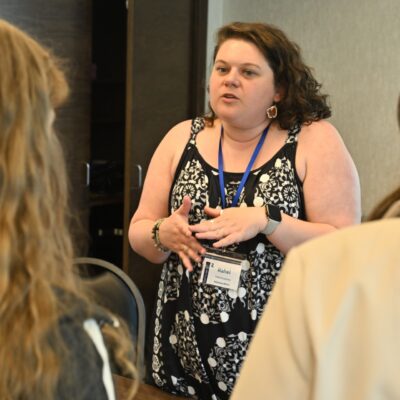
Courtesy/Inbal Shani
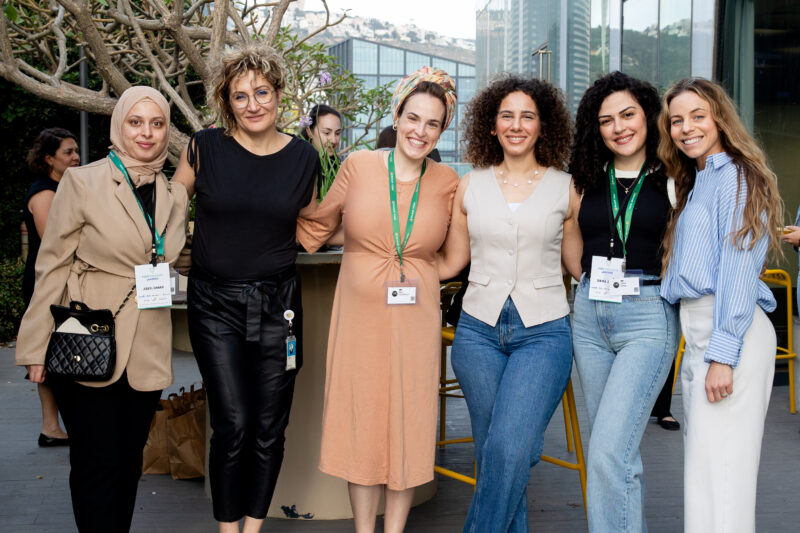
Members of FemForward's eighth cohort meet in Haifa.




 Add EJP on Google
The outbreak of the Gaza war in October 2023 not only put a hold on a promised raise for Rose Schwartz, a young Israeli mother working in the high-tech field, but it also turned her life upside down as her husband was called to reserve duty. Both were new immigrants from the United States with no family in Israel, and she found herself caring for their 6-month-old baby alone while also working full-time. Feeling overwhelmed and needing to prioritize herself, Schwartz applied for FemForward’s cohort focused on women high-tech professionals impacted by the war.
A week after completing the three-month FemForward program — which helps women in junior roles advance to first-level management — Schwartz successfully secured her significant raise. The raise also came with additional responsibilities as an investment analyst.
“One thing that was really important to me was following up on the raise that I was told I would get,” she said. “That was very hard for me and I didn’t really know how to address it. I didn’t know how to speak up about it [and] that was my ultimate goal. Along the way, I learned so much.”
But the impact of FemForward’s lessons didn’t end just with the raise: less than two years after joining FemForward, Schwartz pivoted into a tech and data-focused role at a new company with a substantial salary increase — approximately double her previous salary.
This mindset shift and proactive career management, which encourages the women participants to take their careers into their own hands rather than waiting for opportunities to come to them, is precisely why FemForward was created, said co-founder and CEO Rachel Wagner Rosenzweig.
“[We build] this mindset and the idea of [women] taking [their] career into [their] own hands, not waiting for someone else to offer a promotion or a raise,” she said. “FemForward has weekly workshops where they learn all the negotiation skills, interview skills, manager skills, communication skills, everything that will help them become a good manager and know how to advocate for themselves and prepare them for every single thing that will be thrown at them during this process.”
Established in 2020, the FemForward program addresses the “broken rung” phenomenon in tech, where women struggle to advance from junior to first-level management positions, limiting their presence in senior leadership, Wagner Rosenzweig said. The program achieves this through a blend of professional development, personal mentorship, and a strong emphasis on cross-cultural collaboration within Israel including Jewish, Muslim, Christian and Druze participants, even amid political conflict, she added.
So far 270 graduates have taken part in 10 cohorts of FemForward Leaders — including one Abraham Accords MENA cohort in May-August 2023 and one FemForward YoungLeaders cohort. The FemForward programs take place in Tel Aviv, Jerusalem, Haifa and the Galilee, while the MENA cohort took place in Casablanca, Morocco. Registration is currently open for FemForwards 11th and 12th cohorts in Jerusalem and Northern Israel.
Wagner Rosenzweig noted that the 50% of FemForward graduates have received either a job promotion or a salary raise, or both, within three months of completing the program, and 55% of alumni are now in management or senior positions.
“I think it’s also important to say that a lot of these women, unfortunately, are getting underpaid,” she said.
According to a report released by the Israel Innovation Authority earlier this month, gaps of almost 44% in pay, leadership and entrepreneurship in high tech persist even as the number of female students in high-tech fields has increased by 116% over the past decade. Significant gaps also persist at senior management levels, and women account for only about 16% of development managers and fewer than 11% of startup CEOs, the report revealed.
Though there is no current cohort because of the ongoing war with Iran, the alumni have been very supportive of each other since the outbreak of fighting, Wagner Rosenzweig said, noting that, following the outbreak of the Gaza war, there was concern about what path the program would take. However, that war actually highlighted an increased need for the program, she said, as women across all communities faced career disruptions with husbands in reserve duty, job discrimination for Arabs and general instability. FemForward became a vital support system, providing a positive space for women to focus on their futures, shared hardships, and find resilience, she said. The program continued in-person and via Zoom, navigating sirens and bomb shelters.
Tellingly, she said, the wartime challenges as well as those during COVID-19 turned out to be opportunities to grow and serve more women, as women disproportionately bear the brunt of such crises. The program during the Gaza war also attracted significant funding, and they received their largest grant following Oct. 7, 2023, from the Jewish Federations of North America, she said.
FemForward operates remotely with a team across Israel. Supported by organizations such as the Bustan Foundation, Israel Innovation Authority and JFNA’s Rebuild Israel fund, participants pay only a symbolic fee to ensure commitment, she said.
The program not only highlights successes, but also allows participants to share their vulnerabilities and acknowledge the stumbling blocks and even failures alumni have faced as a natural part of the professional world, said Wagner Rosenzweig. At cohort final events, women share about their career advancements but also personal hardships, including war and loss, fostering a deep sense of connection and mutual understanding, she said
“That’s what’s amazing about women. We don’t just talk about all the positive things. We talk about the vulnerable side,” she said. “Everyone connects on that point of hardship.”
By empowering women into leadership, FemForward aims to create a ripple effect, as research shows diverse leaders tend to hire more diverse team members, increasing representation for women and Arabs in the Israeli high-tech sector, said Wagner Rosenzweig.
“Research shows that you hire people that are similar to you. So this means that [when they step into leadership roles] they will also hire more women. They’ll hire more Arabs. We’re starting this pipeline,” she said.
Influenced by Wagner Rosenzeig’s own background in England, where religious segregation was not the norm, FemForward intentionally aims for 50% Arab women participants, she said, with recent cohorts in Haifa and the Galilee achieving over 60% Arab/Druze participation. The program aims to create a neutral space where women from diverse backgrounds, including Jewish, Muslim, Christian, Druze, secular and religious, can connect on shared professional and personal experiences, leaving politics “behind the door,” she said.
Alum Maram Awawdeh, a young mother of two from the North, said she didn’t focus on the diversity aspects of the FemForward program participants. Instead, she concentrated on the common things they shared as women and mothers in the high-tech industry with the desire to become leaders.
“It was not just to find a new job, but more to have a community and network because I felt like I was alone in a very difficult market and I needed navigation, I needed help, I needed a community that would support me, especially women. Someone who could understand my needs…not only as a woman but as a mom,” she said.
Through the confidence she gained, the lessons she learned and support from her mentor, she pursued AI job roles and learned to advocate for herself by setting clear expectations in job negotiations, Awawdeh said. She then secured a hybrid role as a tech lead at a small startup, and made it a condition that she would grow with the company without a manager being brought in above her, she added.
“I learned a lot of things, but one very important thing was setting my rules even before starting the job or taking the job,” said Awawdeh. “I will define the rules, who I am, what I want, my demands. It’s like: [These are] my demands and you can take it or leave it.”
Related News
ADVANCING A VISION
N.Y. federation donates $1M toward building shared-society center named for peace activist killed on 10/7
HIGHER EDUCATION
As Jewish donors reconsider academia, Jan Koum doubles down, endowing Israel studies at Stanford

PRESIDENTIAL REBUKE
Israel’s Herzog: Mamdani ‘makes no effort’ to hide disdain for Israel, Jews must fight back

EXCLUSIVE
Detroit-based philanthropists Nancy, James Grosfeld donate $8M to renovate JDC’s Israel campus
CLOSING WORDS
In AZM address, Cosgrove links communal ‘orthodoxy’ on Israel to rising anti-Zionism among young Jews