Opinion
TORAH FOR THIS MOMENT
A more perfect inheritance




 Add EJP on Google
In Short
Neither the Torah nor American democracy presents perfection as an accomplished fact. Both offer instead a covenant — a commitment that each generation bears responsibility for bringing lofty ideals closer to reality.
This coming Shabbat, as we celebrate the 250th anniversary of the United States, we are invited not only to look backward with gratitude, but forward with responsibility. Anniversaries are not merely moments to commemorate the past; they are opportunities to ask what kind of future we are called to build.
That question lies at the heart of Parashat Pinhas.

kovop58/Getty Images
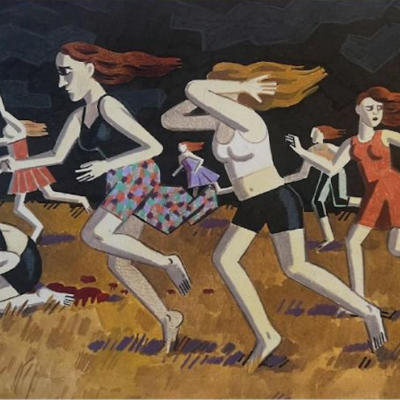
Near the end of the Israelites’ wilderness journey, five remarkable sisters — Mahlah, Noah, Hoglah, Milcah and Tirzah, the daughters of Tzelaphehad — step forward before Moses, Eleazar, the tribal leaders and the entire community. Their father has died without sons, and according to the existing law, his inheritance would disappear from the family. Respectfully but courageously, they ask a simple question: “Why should our father’s name be lost?”
What makes their story extraordinary is not merely that they challenge the law. It is what happens next.
Moses does not dismiss them. He does not defend the status quo. Instead, “Moses brought their case before the Eternal.” God responds with words that echo through Jewish history: “Ken bnot Tzelaphehad dovrot,” “The daughters of Tzelaphehad speak rightly” (Numbers, 27:7). Their plea becomes new Torah. Justice itself expands because ordinary people, motivated by fairness rather than self-interest, have the courage to raise their voices.
The Torah reminds us that revelation did not end at Sinai. Sometimes revelation continues when a community is humble enough to listen to voices it had not fully heard before.
As Americans mark 250 years since the Declaration of Independence proclaimed that “all men are created equal,” we recognize that the promise of those words has never been fulfilled all at once. The story of America has been one of continually widening the circle of liberty and justice — abolishing slavery, extending the vote, advancing civil rights and striving, generation after generation, to create what the Constitution calls “a more perfect Union.”
Like the daughters of Tzelaphehad, each generation has been challenged to ask: Who has not yet been fully seen? Whose voice has not yet been fully heard? Where does justice still require us to grow?
Neither the Torah nor American democracy presents perfection as an accomplished fact. Both offer instead a covenant — a commitment that each generation bears responsibility for bringing lofty ideals closer to reality.
There is another striking feature of this biblical episode. The daughters of Tzelaphehad are not rebels standing outside the community. They love their people. They honor their tradition. They appeal through its institutions. Their courage is rooted not in rejection, but in belonging.
That may be one of the greatest lessons for our own time.
We live in an age when disagreement too often leads to division and criticism is mistaken for disloyalty. Yet the daughters of Tzelaphehad teach that the deepest form of patriotism, and perhaps the deepest form of faith, is loving a community enough to help it become better than it is today.
The 250th anniversary of the United States invites us to celebrate extraordinary blessings: constitutional government, religious freedom, vibrant diversity and the enduring aspiration that liberty belongs to every human being. As Jews, we know how precious these gifts are. Our history has taught us never to take them for granted.
But celebration is incomplete without commitment.
May we inherit the courage of Mahlah, Noah, Hoglah, Milcah and Tirzah: the courage to speak with humility, to listen with openness and to pursue justice with hope. And may America, entering its third century, continue its unfinished journey toward the ideals it first proclaimed 250 years ago.
In the words of our tradition, “Tzedek, tzedek tirdof,” “Justice, justice shall you pursue” (Deuteronomy 16:11). The daughters of Tzelaphehad remind us that justice is never static. It is a sacred inheritance, entrusted anew to every generation.
May we prove worthy of receiving it — and of passing it on.
Happy 250th birthday to the United States of America, with love, from Israel.
Rabbi Matt Berkowitz is the president of the Schechter Institutes. Rabbi Berkowitz is on the board of the Memorial Foundation for Jewish Culture and serves as a faculty member in their Nahum Goldmann Fellowship Program. He is also a founding partner of Kol HaOt studio project in Jerusalem’s Artist Lane and is the author and illuminator of the The Lovell Haggadah.