Opinion
CRITICAL CARE
What we can offer that cannot be sent




 Add EJP on Google
In Short
Why Jewish retreating spaces can be an important part of North American Jewry's philanthropic response Oct. 7, 2023 and the years of war that have followed.
On one of the final mornings of an 11-day healing retreat, an Israeli soldier approached one of the facilitators with news.
Since the war began, he had not been able to sleep through the night. He woke regularly and needed both assistance and medication. But that morning, he told the facilitator something had changed.
“Last night, for the first time since the war began, I slept a full six hours,” he said. “And I had a dream. Not a nightmare.”
One night of sleep cannot erase what he experienced on Oct. 7, 2023, or during the combat that followed. Nor can one retreat complete the long and complicated work of healing from trauma. But that night mattered. It offered a glimpse of what can become possible when someone has access to the time, professional support, environment and sense of safety to allow his body and mind to rest.
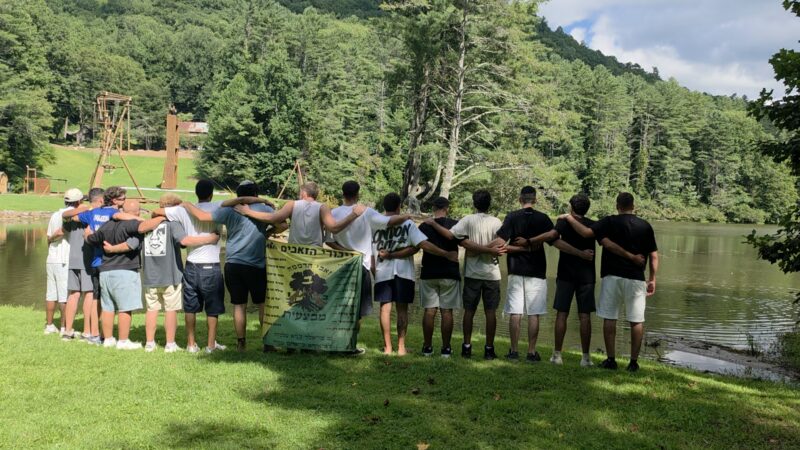
It happened at Ramah Darom, more than 6,000 miles from Israel, surrounded by the mountains of North Georgia.
Bshvil Hamachar, or “Path for Tomorrow,” has spent more than 19 years supporting IDF combat reservists as they process the emotional and psychological toll of their service. Its nature-based healing retreats bring together small groups of reservists with psychologists and trained facilitators, creating a structured environment in which participants can speak honestly, rebuild connection and begin finding a path from combat back into their lives.
The retreat model is not incidental to this work. Distance is part of the intervention.
For people living with combat-related trauma, the places and rhythms of ordinary life may carry constant reminders of what they experienced. Bshvil Hamachar holds its multi-day therapeutic retreats outside Israel to create space from those triggers, the demands of home and the hypervigilance that can make difficult experiences harder to process. Time in nature, removed from daily responsibilities and surrounded by others who understand, can lower defenses and make room for conversations and rest. Evaluations conducted in partnership with the University of Haifa have found that participants report lower post-traumatic stress symptoms and improved psychological and daily functioning following the retreats, with several improvements maintained at follow-up.
Bshvil Hamachar has traditionally held these programs for approximately 15 soldiers at a time in natural settings in Europe, which offer an essential combination of distance, quiet and privacy. This past August, however, a unique opportunity arose.
Distance as part of healing
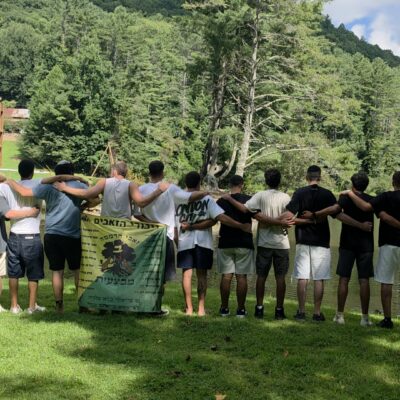
From August 16-27, 2026, approximately 100 reserve soldiers from the Golani Brigade’s 13th Battalion came to Ramah Darom for a Bshvil Hamachar retreat. Members of the battalion were stationed along the Gaza border on Oct. 7, 2023, and sustained devastating losses during the initial attacks and the combat that followed, including the death of Cpt. Dekel Swissa, a former beloved shinshin (post-high school Israeli emissary) in the Atlanta Jewish community near Ramah Darom, doing Israel education in day schools and synagogues before his army service.
Bshvil Hamachar’s psychologists and facilitators led the therapeutic work each day through their proven model of small, intimate sub-groups. Ramah Darom’s role was to provide the physical and relational container around it: a secluded natural environment, comfortable lodging, nourishing meals, gathering spaces, privacy and careful attention to participants’ diverse Jewish needs.
Vulnerable emotional work also requires physical safety. A coordinated effort among Ramah Darom, Bshvil Hamachar and local, national and Israeli security partners allowed the group to focus on healing while knowing they were protected and cared for. Jewish communal spaces understand that welcome requires attention to the safety that makes vulnerability possible.
Our collaboration did not begin with the premise that a Jewish retreat center could improve upon Bshvil Hamachar’s proven therapeutic model. Instead, it began with a question: What might become possible if participants could gain the distance they needed without leaving the embrace of the Jewish people?
Jewish retreating is often associated with camp-style joy, and appropriately so. Retreats allow people to step outside their routines, build relationships, celebrate, learn and experience Jewish life as something immersive rather than episodic. This experience reminded us that the same qualities that make retreating a powerful source of Jewish joy can also make it a powerful medium for healing.
A retreat allows facilitated work to exist alongside meals, walks, games, sleep, conversation and silence. Participants do not have to move immediately from vulnerability back into ordinary life; the environment continues to hold them.
As one participant shared, “This retreat gave us something very special. It gave us a chance to step away from everything for a moment, to breathe, to connect with one another and simply feel understood without having to explain every feeling or experience.”
For the soldier who approached his facilitator that morning, it meant sleeping for six hours and dreaming rather than reliving a nightmare.
Experiencing the Diaspora as more than a source of funding
There was another difference between this experience and a retreat held in a neutral international setting: Ramah Darom is an intentionally Jewish place.
The soldiers could leave the environment associated with their trauma without leaving Jewish community behind. Hebrew, kosher food and the rhythms of Jewish life existed alongside the unfamiliar landscape of the Blue Ridge Mountains and Southern hospitality. They were far from home without being entirely outside a sense of home.
That distinction became tangible during an evening at The Dupree, a Jewish co-working space and education center in Atlanta, where participants met members of the local Jewish community. Diaspora Jews have supported Israelis since Oct. 7, 2023, through philanthropy, advocacy, supplies, volunteerism and messages of solidarity. But support experienced from a distance is different from sitting across from another person and discovering how your life has touched theirs.
Atlanta community members communicated directly how much the soldiers’ service mattered to Jews around the world and, more importantly, how much the participants themselves mattered; not only as soldiers or symbols of Jewish resilience, but as individual human beings and members of one people.
“It was really nice to get to know all the people behind this whole crazy project,” participant Royi S. reflected. “It was very interesting to meet Jews from all over the United States and to strengthen the bond between Jews in Israel and abroad. Everyone was so nice and welcoming, making us feel right at home even though we were so far away from it.”
The evening added a kind of meaning that a neutral setting could not provide: The people supporting the participants’ healing were not abstract donors in another country, but members of a Jewish community who wanted to meet them, listen to them and welcome them personally.
Where the value lies
Holding this retreat in the United States cost nearly twice as much as Bshvil Hamachar’s typical European programs because of long-haul flights, a longer itinerary, facilitator expenses and the greater costs of lodging, food and local transportation.
We should be candid about that difference. Philanthropic resources are finite, and Bshvil Hamachar must continue reaching as many reservists as possible through its proven model. We are not arguing that every retreat should take place in North America or that a Jewish setting is necessary for therapeutic work to succeed. We are arguing that, for some cohorts — and perhaps for other forms of Jewish healing work — the additional investment creates something of distinct and significant value.
Collaboration was essential to creating that experience. Bshvil Hamachar brought a tested therapeutic model, experienced psychologists and facilitators, trusted relationships with reservists and a sophisticated understanding of combat-related trauma. Ramah Darom brought a Jewish retreating environment, hospitality and operational infrastructure, and experience creating immersive spaces for Jews with widely varied backgrounds, practices and needs. Ramah Darom also opened philanthropic doors for Bshvil Hamachar and became a fundraising partner for this initiative. The Gene and Ruth Sacks Philanthropic Fund, The Dupree, the Jewish Federation of Greater Atlanta and many members of the Jewish community helped transform Diaspora care from an abstract source of funding into a personal encounter. Bshvil Hamachar launched a fundraising campaign supported by donors in the United States and Israel. Former Golani soldiers contributed philanthropically in support of their unit, alongside funding partners including Schusterman Family Philanthropies. Together, they subsidized an experience neither organization could have created alone.
This philanthropic collaboration then brought participants into an intentionally Jewish space where they could gain distance from the setting of their trauma without leaving the Jewish people. They experienced Diaspora support physically: sleeping in rooms with mezuzot; eating kosher food prepared for them; walking through a campus filled with Jewish art and Hebrew writing; and, more than anything, meeting people who wanted to express that their lives — not only their military service — mattered.
The partnership should not be measured only by the lowest cost per participant or greatest number of people reached. Jewish philanthropy must take reach seriously, but scale is not the only measure of impact. Sometimes the depth, context and communal meaning of an experience justify a greater investment. Here, partners invested in an additional purpose: allowing Israeli reservists to experience the Jewish Diaspora itself as a source of care, belonging and healing.
What else can Diaspora Jewish spaces hold?
North American Jews often ask what we can send to Israel. Since Oct. 7, 2023, that question has mobilized extraordinary generosity and action. This experience invites us to ask another question: What can we offer here that cannot be sent?
Across North America, the Jewish community has camps and retreat centers with land, lodging, kitchens, ritual infrastructure and professionals who create intentional Jewish environments. Many are underused for significant portions of the year. They are communal assets that can be activated not only for recreation and celebration, but also for respite, resilience and healing.
For approximately 100 members of Golani’s 13th Battalion, the relationship between Israel and the Diaspora became more than money transferred across an ocean or an interaction experienced as tourists. It became a bed in which to rest, food prepared with care, mountains through which to walk, professionals given the space to do their work, old friends given the opportunity to reconnect and a Jewish community ready to welcome them.
For at least one soldier, it became six hours of uninterrupted sleep and a dream that was not a nightmare.
That is what may become possible when the Jewish community brings together therapeutic expertise, philanthropy, partnership and place, and understands all of them as essential parts of how we care for one another.
Eliana Leader is the director of the Ramah Darom Retreat Center.
Maya Talmon Chvaicer is the chief development officer of Bshvil Hamachar.