Opinion
DEJA VU
I thought I was done coming out. Then Oct. 7 happened.


 Add EJP on Google
In Short
I spent too much of my life learning how to stop hiding to start doing it again now.
As the third anniversary of the Oct. 7 attacks approached, I kept thinking about something I started doing after the attack and never entirely stopped: editing myself.
I first noticed it in conversations with friends and colleagues in progressive and queer spaces. I’d hesitate before mentioning Israel. Could I say that I loved it? Could I talk about people I knew there who were grieving or terrified? Could I talk about what the date brought up for me and my family without also acknowledging Netanyahu, the war, or Palestinian suffering? Sometimes I’d say nothing. Other times, I’d carefully choose my words, anticipating how they might be received. The feeling was familiar.
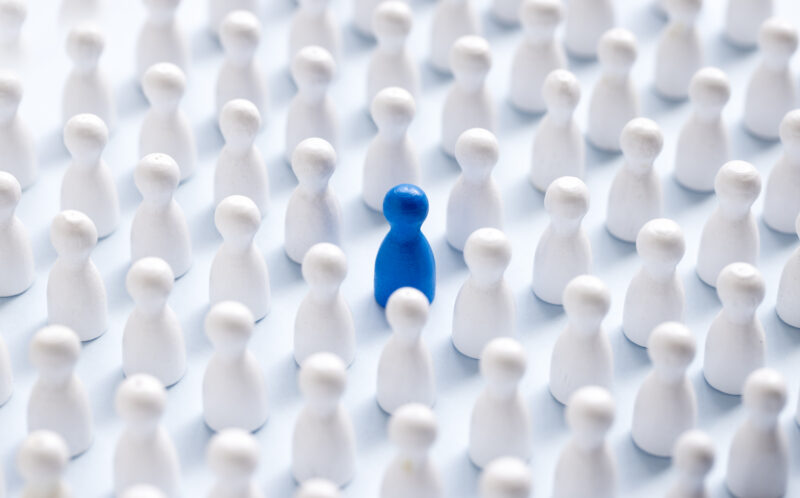
twomeows/Getty Images
I came out as gay almost 30 years ago. Like many gay men of my generation, I got very good at reading a room. You figured out who knew, who didn’t, who was safe and how much you could say. Eventually, I stopped doing that. I built a life as an openly gay man. I married my husband and later had a child with a close friend. I became a psychologist and psychoanalyst and made my home in San Francisco. The life I wasn’t sure I would ever have became ordinary to me, in the best possible way.
I thought I was done deciding which parts of myself other people could handle. There are obvious differences between coming out as gay and what I’ve experienced as a Jew since Oct. 7, 2023. I’m not suggesting they’re equivalent. But there’s something about concealment that I recognize immediately: It’s the calculation underneath it. Can I say this here? How will this person see me? Is explaining myself worth it? Maybe I’ll just let it go. After a while, you don’t realize how much energy you’re spending.
My relationship with Israel isn’t primarily ideological. My mother was born in a displaced persons camp after the Holocaust and later came to Israel as a refugee. Israel was the country that took my family in when they needed somewhere to go. My connection to Israel is personal, familial and deeply rooted in my Jewish identity. It doesn’t disappear because I disagree with an Israeli government or grieve the suffering of Palestinians in Gaza.
This has been particularly painful in queer spaces because these are the communities that taught me not to live that way. I came of age in a movement that insisted we shouldn’t have to make ourselves more palatable to earn a place in the room. We didn’t always live up to that ideal, but it mattered to me. I remember finding a community where I could finally stop worrying about how much of myself I could reveal. I never imagined I’d find myself making those calculations again, this time about being Jewish.
That’s partly why I kept thinking about what happened at San Francisco’s Trans March this past June. State Senator Scott Wiener, who is gay and Jewish, was confronted over his views on Israel and Gaza. One person told him, “You do not belong here anymore.” Another shouted, “You stopped being queer the moment you started supporting Israel.” I wasn’t at the march, and people have every right to disagree with Wiener, protest him and challenge his politics. But I wondered how a movement that fought so hard against conditional acceptance had arrived at a place where someone’s views about Israel could be used to question their queer identity.
Those words stayed with me because I’d spent so much of my life fighting against precisely that kind of thinking. Queer communities taught me that identity is complicated and that other people don’t get to reduce us to whichever part of ourselves best fits their politics. Intersectionality gave us a language for understanding that our identities overlap and can’t simply be pulled apart from one another. Yet when it comes to Jews and Israel, I’ve watched some of that complexity disappear. A connection to Israel can become shorthand for an entire set of political beliefs, whether or not we hold them.
My own Jewish identity has never fit neatly into those categories, nor have the experiences of many queer Jews I’ve come to know. In my work as a psychologist and in support groups I’ve facilitated for queer Jews since Oct. 7, 2023, I’ve heard versions of the same questions I’ve been asking myself: How much can I say? Where can I say it? What happens if I do? People have described pulling away from queer communities, losing friendships or avoiding conversations about Israel. Some are exhausted by the expectation that they explain themselves whenever their Jewish identity or connection to Israel comes up. I understand because I do my own version of it. Sometimes I simply don’t feel like having the conversation, so I stay quiet.
This is what reminds me most of being closeted. The closet wasn’t only about whether people knew I was gay. It was about organizing myself around what other people could tolerate. I knew which parts of myself could appear in which rooms, and I became remarkably good at figuring that out. One of the great reliefs of coming out was eventually not having to think about it anymore.
In some ways, the years since the Oct. 7 attacks have felt like a second coming out: not because being Jewish is new to me, but because I’ve had to decide when and where I am willing to be fully visible as a Jew, including the parts of my Jewish identity that involve Israel. And, as with coming out the first time, I’ve learned that visibility can change relationships. It can also reveal which relationships had conditions I didn’t fully understand.
I don’t think this experience is limited to queer Jews. Over the past three years, many Jews have had to renegotiate their relationships with institutions and communities they once considered home. They have had to decide when to speak, when to challenge something, when to leave and when to stay. Jewish organizations have spent enormous energy responding to antisemitism from the outside. But there is another question worth asking: What do Jews need in order to remain fully themselves in the communities and institutions that matter to them?
The answer cannot simply be retreating into Jewish spaces. Those spaces have become enormously important to me over the past three years. I’ve watched new communities and networks emerge because people needed places where they didn’t have to explain themselves. That kind of Jewish communal infrastructure matters; it gives people somewhere to bring experiences that may not be understood elsewhere and reminds them that they aren’t navigating them alone.
But Jews also belong in universities, hospitals, nonprofits, cultural institutions, political movements, LGBTQ+ organizations and every other part of civic life. The goal shouldn’t be to choose between Jewish community and the rest of the world. It should be to make it possible for Jews to participate in both without fragmenting themselves.
That presents a challenge for Jewish communal organizations as well. Supporting Jews in this moment cannot only mean creating spaces where they feel safe among other Jews, important as those spaces are. It also means helping people develop the relationships, confidence and language to remain present in the wider communities that matter to them. Sometimes the work is creating a place to retreat to. Sometimes it is helping someone find their way back into the room.
I’ve never wanted Palestinians to feel unwelcome in queer spaces, nor do I expect people to set aside their anger about Gaza. I don’t need everyone in my community to agree with me about Israel. Frankly, I wouldn’t want it. What I want is something much simpler: the ability to disagree without feeling that my Jewishness is suspect or that my place in a community depends on getting Israel right.
Almost 30 years after coming out, I sometimes catch myself making those old calculations again. Maybe don’t mention this. Maybe soften that. Maybe just let it go.
I spent too much of my life learning how to stop hiding to start doing it again now.
Joshua Simmons is a clinical psychologist and Jungian psychoanalyst in private practice in San Francisco. He serves on the advisory board of Gesher Community Care and the National Advisory Council of the Center for Combating Antisemitism. His forthcoming book chapter examines the experiences of queer and trans Jews after the Oct. 7 attacks and his writing has appeared in The Washington Post, The Forward and The Algemeiner.