NETWORK EFFECTS
As inaugural ‘guinea pig’ cohort wraps up, Voice of the People charts its course forward
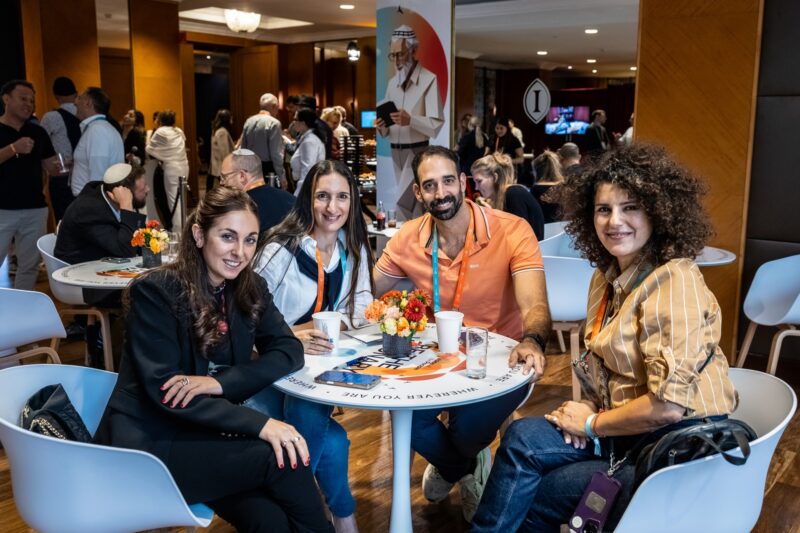
courtesy/Voice of the People
Members of the inaugural Voice of the People cohort meet in Budapest, Hungary, on Oct. 20, 2026.


 Add EJP on Google
BUDAPEST, Hungary — The inaugural cohort of Israeli President Isaac Herzog’s Voice of the People initiative spent its term in the shadow of war with Iran and deepening rifts across the Jewish world. When 89 of its 150 council members gathered here last week to close out that term, a thorny question lingered: What can a hand-picked global network achieve together, and for how long?
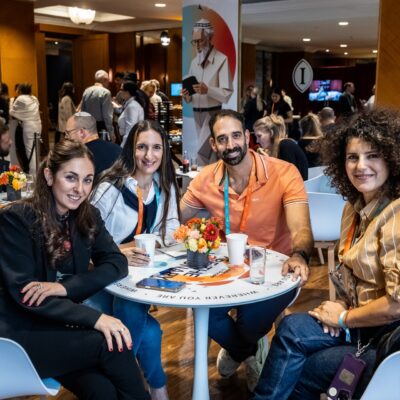
The closing convening brought together the council members and Herzog, who mingled between tables as he was trailed by his security guards at the closing gala dinner Tuesday evening.
In conversations with more than a dozen council members at the conference both on and off the record, eJP found that members built meaningful relationships with Jews around the world they would never have met otherwise. The harder part, many said, is what comes next: turning those relationships into lasting impact.
Rabbi Benji Levy, CEO of Share, called the first cohort “a laboratory for innovation.”
“The greatest asset of the Jewish People is the Jewish People, and so for me, the highlight was connecting deeply with so many from around the world around some of the most pressing issues of our day,” said Levy, who lives in Israel.
Abbey Onn, CEO and co-founder of Nevo Network who made aliyah to Israel 11 years ago, said the war has reshaped how Jews relate across borders. “In the aftermath of Oct. 7, there’s a lot of tension and there’s also a lot of challenges that may seem more unifying between Israelis and Jews in the diaspora,” said Onn. Onn said the need for “global bridges” has never been greater.
Maya Bentwich, who served as an IDF spokesperson during her reserve service and now works in high tech, called the concept “amazing.” After Oct. 7, Bentwich served as a captain in the IDF Spokesperson’s Unit, guiding foreign dignitaries through Kfar Aza and other devastated kibbutzim, which helped widen her perception and appreciation of the Jewish world. “I’m really grateful to take part in this. I think we need more initiatives like this,” she said.
She also pointed to an unresolved question at the initiative’s core.
“A decision has to be made whether it’s a global network or the initiative has a specific goal, and if so, how this goal is best being tackled,” Bentwich said.
This question was a frequent topic of conversation, participants said, both in formal sessions and in side discussions in hallways and at rooftop bars overlooking Budapest after a long day’s programming ended.
Many veteran Jewish professionals at the conference said they drew energy from new relationships with younger, less establishment and, in many ways, freer participants who neither represent organizations nor answer to boards. Whether enduring change can come from individuals working outside institutions remains an open question. Voice of the People credits much of its success to its nontraditional participants.
One veteran professional from the first cohort was less certain. “Does it have feet? Does it have teeth?” the member asked, absent an organization or serious funding behind the initiatives that emerge from the council. The initiative has awarded seed grants of up to $20,000 to 21 projects.
Barak Sella, a senior research fellow at Harvard’s Kennedy School who was part of the first cohort of Voice of the People on the antisemitism working group, said focusing on individuals can be one of the initiative’s biggest strengths, since council members who are already committed to their projects will pursue those projects with or without the council. “A lot of people do come from major Jewish organizations or major leadership roles,” he said, saying the mix was good for the council and represented an innovative model for other initiatives around the Jewish world to follow.
A senior figure in the Jewish world who is a council member, who spoke on condition of anonymity to discuss the initiative candidly, described a convening pulled in several directions at once. “Some [sessions] seem like professional development, some inspiration, some networking. All valuable — but what connects them?” the council member said. “It’s all a question of objectives. There isn’t a shortage of programs in the Jewish world. Is it [Voice of the People] a place for entrepreneurship or a place to strengthen existing orgs?”
Sella said the initiative has spent the past two years “trying to find its way, its purpose.” “What is the main value proposition?” he asked. “Is it a leadership network, a brain trust, a council of advisors? Is it an accelerator for important initiatives?”
Rabbi Stuart Weinblatt, a Conservative rabbi from Potomac, Md., and chairman of the Zionist Rabbinic Coalition, praised the council’s design. “There [are] so many problems confronting the Jewish world today,” he said. “Part of the genius of the structure of the organization was to try and say, let’s take five major issues and let’s see what we can come up with.”
“It doesn’t mean that we can solve these problems overnight,” Weinblatt added. “It’s too early to tell what the long-term impact of something like this will be.” The outcome could be that “a bunch of nice people got together and got to meet each other,” he said, “but hopefully it will go beyond that.”
Some council members expressed confusion over the inclusion of public-facing influencers and Jewish media personalities, who one participant said “were not there for the right reasons” and were chasing “clout.” Voice of the People says its selection algorithm is designed to bring together a cohort that actually represents the mosaic of the global Jewish world, beyond the obvious picks. One participant told eJP that this raised its own question: whether initiatives launched by individuals can match the reach of those driven by people who lead local, national or international organizations.
The influencer debate mirrors one playing out across the Jewish world since Oct. 7, as a new cadre of Jewish influencers and media personalities have entered the field and the conference scene. Voice of the People’s surge in applicants and the global brand it built in a short time are likely tied to their inclusion.
Another member, who also asked not to be named, said the council’s breadth cuts both ways. “The diversity [of the council members] is both a strength and a weakness,” the member said. “It’s important to have that full breadth of the Jewish community participate in this, but it’s important to make sure that people who are participating in a program like this are invested in the long-term successes and viability of the larger picture of the Jewish People.”
A third member of the council, who also requested anonymity, said the council should have leaned harder on people already doing the work on the ground. Those people “are doing incredible work for the Jewish People and they’re not here to be recognized,” the member said. The member added that members selected for their social media profiles were something the members “found personally challenging.”
Organizers have acknowledged the strain. Voice of the People CEO Shirel Dagan Levy told eJP last week that the initiative formed a task force after council members criticized its handling of heated debates over Israel and questioned its larger purpose.
Bentwich maintains that the conference was “going great” and that she “can feel there has been a lot of improvement.”
“It’s understandable that the first cohort had some growing pains and there is room for improvement, but I do feel like the team is committed to implementing those changes,” she said.
The third council member described the first cohort as “the guinea pig.” The member said the council’s value lies in placing people from different backgrounds “in rooms with people that they would’ve never thought that they were gonna be.” Members who clashed agreed to keep going, the member said: “We’re gonna work together even if we disagree.”
About 2,500 people completed applications for the second cohort, out of more than 9,000 who expressed interest.
“It’s very complicated to address these issues in the modern Jewish world, but taking action is key,” Bentwich said. “I hope to see more of that grow within and outside [Voice of the People].”
Disclosure: Voice of the People provided transportation to and lodging in Budapest for eJewishPhilanthropy.
Related News
EXIT INTERVIEW
Elizabeth Sokolsky, longtime EVP of Birthright Israel, to retire next year

MAGICAL EXPERIENCE
Shefa launches psychedelics retreat for Jewish professionals suffering burnout
ADVANCING A VISION
N.Y. federation donates $1M toward building shared-society center named for peace activist killed on 10/7
HIGHER EDUCATION
As Jewish donors reconsider academia, Jan Koum doubles down, endowing Israel studies at Stanford

EXCLUSIVE
Detroit-based philanthropists Nancy, James Grosfeld donate $8M to renovate JDC’s Israel campus