GOING, GOING, GONE
23 Shabsels’ camps sell at auction, many for well over their asking price
Many high bidders, including Warner Bros. Discovery CEO David Zaslav, missed out as private investors and current co-owners snap up properties
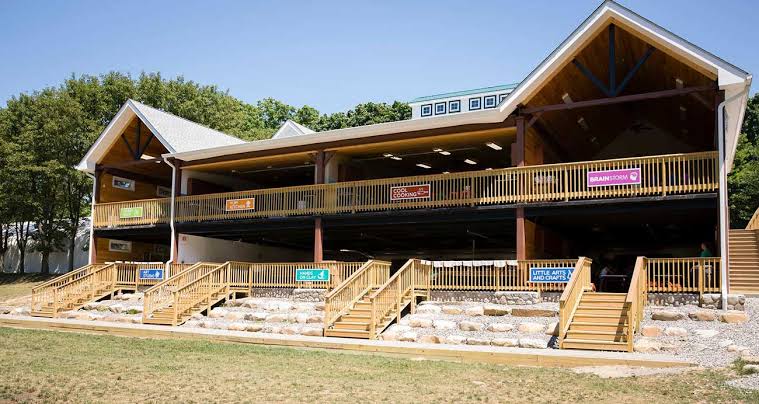
courtesy/Mohawk Day Camp
Mohawk Day Camp in Westchester County, N.Y.




 Add EJP on Google
Traditionally, the majority of American summer camps have run as community nonprofits with a small number of family-owned for-profit camps. This is especially true in the Jewish world, where more than 345 nonprofit camps fall under Foundation for Jewish Camp’s umbrella.
But in 2006, New York–based real estate investors Michael and David Shabsels began snapping up camps, amassing a portfolio of more than 30 overnight and day camps, some charging more than $17,000 per season to attend. In early June, their empire crumbled after the brothers double pledged assets and defaulted on loans, leaving the camp scene in chaos and them potentially facing criminal charges.
After the brothers declared bankruptcy two months ago, both personally and under their umbrella group, Simad Holding, the campsites went up for auction, and on Tuesday, a New Jersey bankruptcy court filed paperwork announcing the winning bidders, with 23 properties sold.
In total, the 23 campsites — some of which are home to more than one camp — sold for $368.3 million, and debtors are “still analyzing the Qualified Bids” for Camp Lavi in Pennsylvania, according to the filing. Outside of the auction, four additional properties — Camp Achim, Camp Chen-a-Wanda, Camp Mesorah and Pine Forest Camp — sold in private sales for $71.7 million, with Camp Achim and Chen-a-Wanda selling to current operators and Mesorah selling to healthcare mogul Daryl Hagler, who plans to invest $2.2 million into the camp.
Camp Lavi is rumored to be close to selling to the Jewish mental health nonprofit Ohel Children’s Home and Family Services, Inc. and there is a change.org petition to halt the prospective sale.
“A proposed sale could result in Camp Lavi being closed and replaced, permanently taking away a one-of-a-kind Jewish camp that has given generations of children lifelong friendships, confidence, belonging, and unforgettable memories,” the petition, organized by parents, alumni and community supporters, said. “We cannot let this happen.”
In a statement sent to Camp Lavi families, Camp Lavi representatives acknowledged the possible sale, saying that they are attempting to “engage with its leadership” and that “We remain hopeful that there is still a path for Ohel to work with Camp Lavi’s leadership and supporters to preserve Camp Lavi’s independent future and ensure that this extraordinary institution continues to serve generations of Jewish families.”
The auction saw some camps sell to current operators, including Camp Green Lane in southeastern Pennsylvania, which sold for just over $8 million, leaving many of the families who send children to the camps relieved to see that they wouldn’t be changing hands.
There were some unexpected moves, including Warner Bros. Discovery CEO David Zaslav’s Grandview Ventures being outbid for Mohawk Day Camp. Zaslav had made a play for his children’s summer camp, offering $68 million for the luxury camp. In the end, it went for nearly twice as much, selling for $120.8 million to FitzWalter Capital Partners, a global private investment firm.
Ohel Children’s Home and Family Services, Inc. was also expected to purchase Camp Echo for $12 million, a move that caused concern amongst parents who worried the camp wouldn’t remain in its current form, but instead it sold for $17 million to American Youth Camping Inc., which purchased five other camps.
At least one camp was purchased by a nonprofit, with Country Roads Day Camp in Manalapan, N.J., selling to the Jewish Community Center of Greater Monmouth County for $14.5 million.
The other camps sold at the auction that ended on Monday included: Banner Day Camp ($30 million), Camp Lokanda ($19,327,800), Camp Mogen Avraham ($22.4 million), Club Getaway ($13.3 million), Eagle’s Landing Day Camp ($5.2 million), Greenville Land / Malka ($8.2 million), Island Lake Camp ($13 million), Meadowbrook Country Day Camp ($12.3 million), Rolling Hills Country Day Camp ($28.5 million), Indian Acres Camp for Boys & Forest Acres Camp for Girls ($6 million), Camp Med-O-Lark ($2.3 million), Camp North Star ($6.3 million), Camp Waukeela ($1.2 million), Camp Wekeela ($9.9 million), New England Golf & Tennis Camp ($2 million), Windsor Mountain Summer Camp ($8.5 million), Blue Star Camps ($15 million), Summit Camp and Travel ($4.8 million).
The camps went up for auction after the brothers rolled the dice, double pledging assets and missing bond payments. In total, they owe over $344 million to creditors. This includes $200 million owed to Israeli investors for bond payments that the brothers defaulted on. Last week, the Department of Justice launched a criminal investigation.
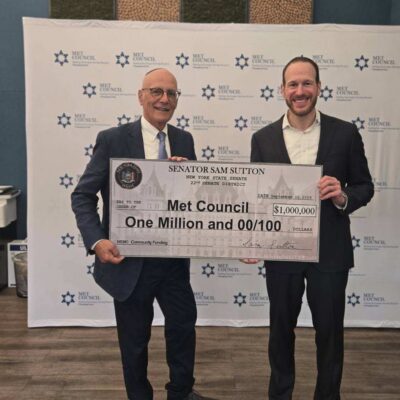
David Greenfield, CEO of the Met Council, had hoped to bring together a team of philanthropists to purchase one of the camps and run it as a nonprofit under his organization as a way to make camp more accessible to those who can’t afford it.
Greenfield told eJewishPhilanthropy that he planned to bid on two camps, which he wouldn’t name specifically, but the idea never got around to being discussed with the board. There were two things working against him, he said: the rushed time frame to sell the camps and the “passion bidders” who paid tens of millions over the asking price for “trophy” campsites that they were emotionally attached to.
“People were overpaying for some property as a result,” Greenfield told eJP. “If you’re a billionaire, an extra million dollars is not going to make or break you. That’s not a big deal. If you’re a nonprofit, an extra million dollars is the difference between whether your camp breaks even or loses money every year.”
What finally halted his plans was when he found out the current co-owners of the campsites had hoped to purchase the camps completely. He looked to a Jewish law that said a current tenant of a property is supposed to receive the opportunity to purchase the property before others. Instead, he is now considering a different camp that is not part of the Shabsels’ portfolio.
He expects that the reason the camps had to sell so quickly was that the bankruptcy court wanted to ensure that families could sign their kids up for next year. “There’s a lot of concern for a parent if you don’t sign up your kids at the end of the summer,” he said. “They would have lost a lot of kids unless there’s continuity.”
Camps are not big money makers, Greenfield said, and many of the Shabsels’ camps had been running in deficit.
“It’s not clear that the [Shabsels] business thesis ever really made sense,” he said. Investing in a camp is investing in “aging stock.” Cabin roofs are old, so are the sewer systems and the pools. “The camps are all old. So you really have to invest a lot of money and time and resources. I’m not convinced that this was ever a great business plan.”
Related News
EXCLUSIVE
Detroit-based philanthropists Nancy, James Grosfeld donate $8M to renovate JDC’s Israel campus
CLOSING WORDS
In AZM address, Cosgrove links communal ‘orthodoxy’ on Israel to rising anti-Zionism among young Jews

PRESIDENTIAL REBUKE
Israel’s Herzog: Mamdani ‘makes no effort’ to hide disdain for Israel, Jews must fight back
HIGHER EDUCATION
As Jewish donors reconsider academia, Jan Koum doubles down, endowing Israel studies at Stanford

MAGICAL EXPERIENCE
Shefa launches psychedelics retreat for Jewish professionals suffering burnout