AFTER THE 'EXIT'
Joining DAF Keshet’s board, Israeli entrepreneur Alon Arvatz hopes to recruit fellow tech founders
Growing up giving 10% of his modest salary to tzedakah, Arvatz says he first learned about modern philanthropy after his cybersecurity startup was purchased for $335 million
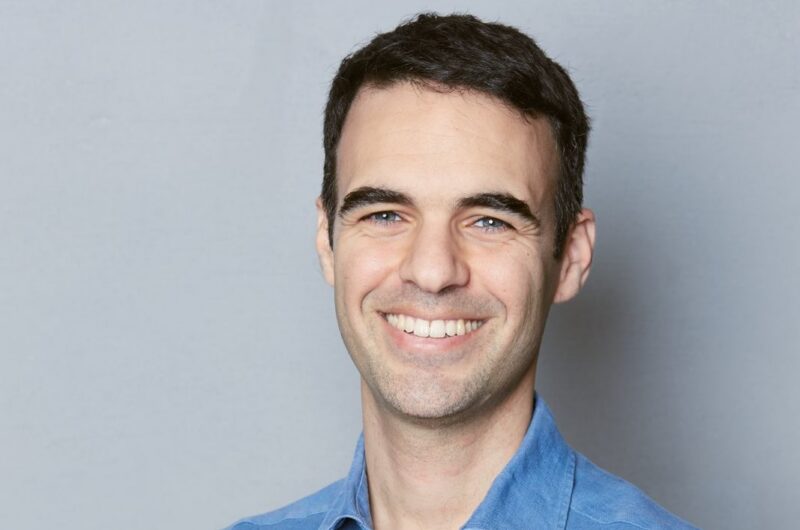
Oron Kaplan
Alon Arvatz




 Add EJP on Google
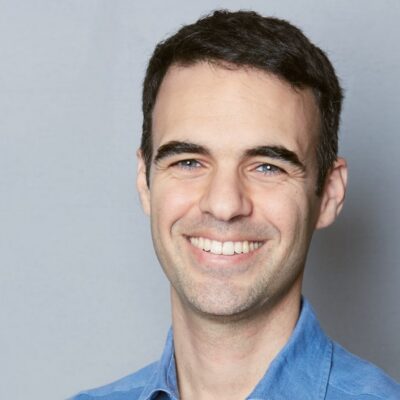
In a bustling WeWork alongside the Ayalon where his AI startup sits, Alon Arvatz looks like a typical Tel Aviv techie in a casual polo, wedding ring, jeans and even a kippa. Yet he’s chasing something bigger than his next “exit” — the sale of a startup to a larger firm. Having recently joined the board of Keshet, Israel’s first donor-advised fund, Arvatz wants to spark a new culture of tech philanthropy in Israel.
Arvatz grew up in the upper-class suburb of Raanana in central Israel and served in the Israel Defense Forces’ prestigious Unit 8200, which he credits for his tech and cybersecurity background and his turn to entrepreneurship. He co-founded IntSights, a threat-intelligence startup that tracked hackers trading information and stolen goods online, which was acquired by Rapid7 in 2021 for $335 million. His first philanthropic venture was Kanfei Kesef (meaning wings of silver or money), a financial-literacy nonprofit for teens. Arvatz now leads PointFive, an AI-powered cloud cost management company.
In a conversation with eJewishPhilanthropy’s Justin Hayet, Arvatz said his aim on the Keshet board is to “represent the next generation of Israeli entrepreneurs.”
This interview has been edited for length and clarity.
Justin Hayet: You recently joined Keshet’s board. Can you tell me more about your story and where your philanthropic journey fits into it?
Alon Arvatz: I got into it by accident, but the story of philanthropy and social impact goes back as far as I can remember. My social awareness became very strong through my time in yeshiva after high school. The idea of giving 10% of your income is something I absorbed from my parents. As a student making NIS 1,000 ($329) a month, I was donating 10%. I didn’t start when I had money. I started when I started having an income, and for me, it was always just part of what you do.
So when I sold IntSights and made a decent amount, the first thing I did was set 10% aside for donations. Then I went to all the institutions that educated me along the way — my high school, my yeshiva, my university — and said I want to donate to you first, because you helped build me.
We sold the company in July, and around September, I met with the yeshiva. I told the person responsible for donors that I wanted to move quickly before the end of the year to get the tax credit. Keshet told me there was no need to rush: I could work with Keshet, get the tax credit now and donate when I actually wanted to. That was the first time I heard about them.
Working with Keshet really changed my perspective on philanthropy and made it more strategic. Once I had that amount set aside, I had to think about how to make an impact. I was getting a lot of inbound requests, and when that happens, you have to be intentional. Keshet helped me build a strategy around how I want to give. I focus on long-term impact, which is why most of my giving goes to educational projects — either institutions making an impact in lower-socioeconomic communities, or programs educating the next generation of leaders in Israel. Those are the two main buckets.
JH: What was your initial impression of the organized philanthropic landscape in Israel?
AA: I learned very quickly that not many people are doing philanthropy at all, and even fewer are working with something like Keshet. That was a disappointment.
I think it’s partly the Israeli perception: We pay a lot of taxes and give a lot to the country through military service, so many people expect the government to handle social causes. That’s part of the culture and the perception we need to change.
It has to be a mix of a lot of things — podcasts, conferences, ambassadors — but there has to be a basic change in perception, as I said: Philanthropy is not giving money to people who need money, it’s promoting a cause you care about. That’s the biggest change you need to make to get everyone to engage.
JH: As someone who lives and breathes AI in your professional life, has AI changed how you approach your philanthropy?
AA: Honestly, I haven’t done much with it myself, but I see a big opportunity, especially in monitoring impact. AI can analyze the reports that nonprofits you support publish and give you the bottom line. Measuring impact is very important, and I think AI can enable it. There are smaller applications too, but that’s the big one.
JH: What’s one of the challenges facing Israeli philanthropy today?
AA: The fact that people make their money in “exits” is challenging for philanthropy, because an “exit” is a one-time event. You’ll donate, but it’s hard to build consistent giving on that. In the United States, you have families running businesses across generations, generating money annually and giving millions every year; that creates consistency, and social problems go on for years. That consistency is hard to create here, which is part of why giving is lower in Israel than in the United States.
Keshet has a role in changing that, helping create evergreen funds that generate returns, then building a strategy where you donate from the returns. There’s a major opportunity to build consistency.
There’s also an education piece. Today, it’s not automatic that when you make money, you give back. That should be the default for every person, and it’s a matter of education and awareness we need to build.
JH: How do you seek to bring more tech founders into the organized philanthropy world?
AA: First, there’s a place and a real opportunity for a conference for tech founders in Israel that doesn’t exist yet. The idea is to build a community of people who care and are engaged, thinking about new, innovative ways to give. A conference would be the first step.
Second, everything needs to be much more user-friendly — the platforms and service providers, with a lot more AI involved in building reports and strategies for donors.
And beyond that, we need to highlight the people already doing this. There aren’t as many as I’d like, but there’s a decent number [of tech entrepreneurs and philanthropists] who are genuinely engaged, and we should give them the stage to share their stories.
I think Keshet has an important role in changing it, bringing in the many people who’ve made money in tech and getting them involved. The key is the transition from just doing good to understanding what your priorities are and using your money to push them forward. That’s the change in perception that needs to happen in Israel, especially for the new generation of tech entrepreneurs.
JH: What’s your one piece of advice you would give philanthropists outside of Israel about how to do impactful philanthropy on the ground in Israel?
AA: Focus on something you really care about, before anything else. If you’re donating from afar, you need someone here in Israel to monitor the impact. There’s a big cultural difference, and it’s very hard to track exactly what’s being done with the money. Have someone you trust on the ground who can measure the impact your donation creates.
JH: What’s your mission on Keshet’s board?
AA: I want to represent the next generation of Israeli entrepreneurs and companies, which is the biggest engine for developing people who can give meaningfully. I want to bring their voice and help Keshet appeal to that audience and help move them toward structured and strategic philanthropy. That’s my number one mission.
Related News

MAGICAL EXPERIENCE
Shefa launches psychedelics retreat for Jewish professionals suffering burnout

EXCLUSIVE
Detroit-based philanthropists Nancy, James Grosfeld donate $8M to renovate JDC’s Israel campus
PRESIDENTIAL REBUKE
Israel’s Herzog: Mamdani ‘makes no effort’ to hide disdain for Israel, Jews must fight back
CLOSING WORDS
In AZM address, Cosgrove links communal ‘orthodoxy’ on Israel to rising anti-Zionism among young Jews
ADVANCING A VISION
N.Y. federation donates $1M toward building shared-society center named for peace activist killed on 10/7