Opinion
MEASURING IMPACT
Philanthropy’s missing metric: Did we return agency?


 Add EJP on Google
Dollars distributed. Meals delivered. Scholarships funded. Participants served. Programs expanded. Beds opened. Families reached. Philanthropy has become increasingly sophisticated at measuring what it gives. These numbers matter; without them, organizations can’t know whether they are achieving the outcomes they promised. But there is another question that is harder to place inside a dashboard: What happened to the person’s sense of agency after we helped?
I’ve been thinking about this question recently, prompted by a real world context.

mitay20/Adobe Stock
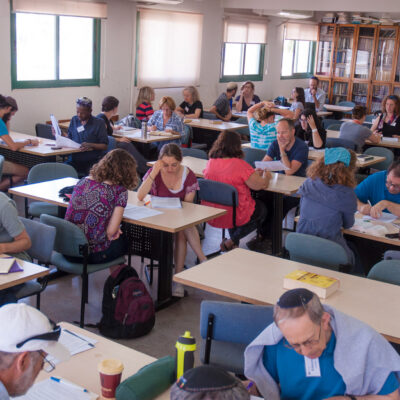
For years, I’ve been involved in an ongoing clothing distribution effort in the communities of Atlit and Megadim in Israel. Clothes arrive, they’re sorted, people take what they need; more clothes arrive, the cycle continues. The material value is obvious — coats keeps people warm, families save money, useful things don’t go to waste — but over time, I began to notice that the human quality of the encounter matters almost as much as the object being transferred. There is a difference between receiving help and being reduced to the role of a person who needs help.
Institutional philanthropy often begins, necessarily, with defining a problem, be it hunger, trauma, accessibility or something else. The problem must be named for resources must be allocated. But a human being is larger than the category through which an organization first encounters them. A person who needs food is not hunger. A family that needs financial assistance is not poverty. A child receiving a scholarship is not educational disadvantage. A wounded person is not their injury.
This sounds obvious. In practice, systems can forget it very quickly.
When that happens, something strange occurs. An intervention can be successful on paper while quietly weakening the person it was designed to support; the “need” was met and a metric turned green, but the person assisted may leave the process feeling more defined by what has happened to them, more dependent on an institution’s interpretation of their needs or less convinced that they can still shape what happens next.
This is not an argument against structured support, but rather is an argument for adding another dimension to how we think about impact. Alongside “What did we provide?” we might ask “What is this person more equipped to do after receiving our help?”
Agency is not the same as independence. People remain interdependent throughout life. We rely on families, communities, governments, professionals, donors and strangers. Jewish life itself is built on forms of mutual obligation that reject the fantasy of complete self-sufficiency.
Agency means something more modest and more important. It is the experience that my life has not become entirely authored by what happened to me, nor by the institutions now helping me respond to it. A philanthropic intervention can strengthen that experience or unintentionally weaken it.
Consider two people who receive the same support. The first is treated primarily as the holder of a problem. The process is efficient. Decisions are made around them. Their gratitude is implicitly expected. The intervention ends when the service has been provided.
The second receives the same material support, but the interaction also communicates something else:
You possess discernment and have preferences.
You have a voice — you are even allowed to disagree with us.
You are not required to perform helplessness to deserve help.
This support is part of your story, not the definition of your story.
The financial cost of these two models may be identical. The human outcome is not.
This matters especially in Israel and across Jewish communities now, after years in which emergency response has necessarily dominated so much philanthropic thinking.
In emergencies, speed matters; needs are immediate and systems must act before perfect processes can be designed. But emergency infrastructure has a way of becoming permanent infrastructure. At some point, communities must move from keeping people functioning to rebuilding human capacity. This applies to our approach to displaced families, wounded soldiers, bereaved communities, students, young adults, nonprofit professionals and leaders themselves.
This is also where Jewish philanthropic thought has something unusually valuable to contribute. Tzedakah is not merely the transfer of resources from a person who has to a person who lacks. Our tradition contains a persistent concern with dignity, responsibility and the possibility that help should eventually expand, rather than contract, a person’s capacity to stand inside their own life.
We do not need to romanticize this principle, nor should every nonprofit invent another complicated measurement framework. We could begin with three simple questions at the end of an intervention: Do you understand your choices more clearly than before? Do you feel you have more room to act than before? What can you now do that you could not do, or could not imagine doing, before?
Those questions will not replace financial or operational metrics. They reveal something those metrics cannot.
Perhaps the strongest philanthropy does more than relieve suffering, distribute opportunity or keep institutions alive. Perhaps it leaves a person with more agency than it found them with. And perhaps that is one of the hardest forms of generosity to measure, because it requires the giver to resist becoming the most important person in the story.
Eran Landau is an Israeli writer and artist and the founder of Legato. His work is currently included in the group exhibition “The Human Factor: Identity” at Ben Ami Gallery in Tel Aviv.