WHAT YOU SHOULD KNOW
Oct. 7 taught Jews they were on their own, but that’s not enough
Miriam Alster/Flash90
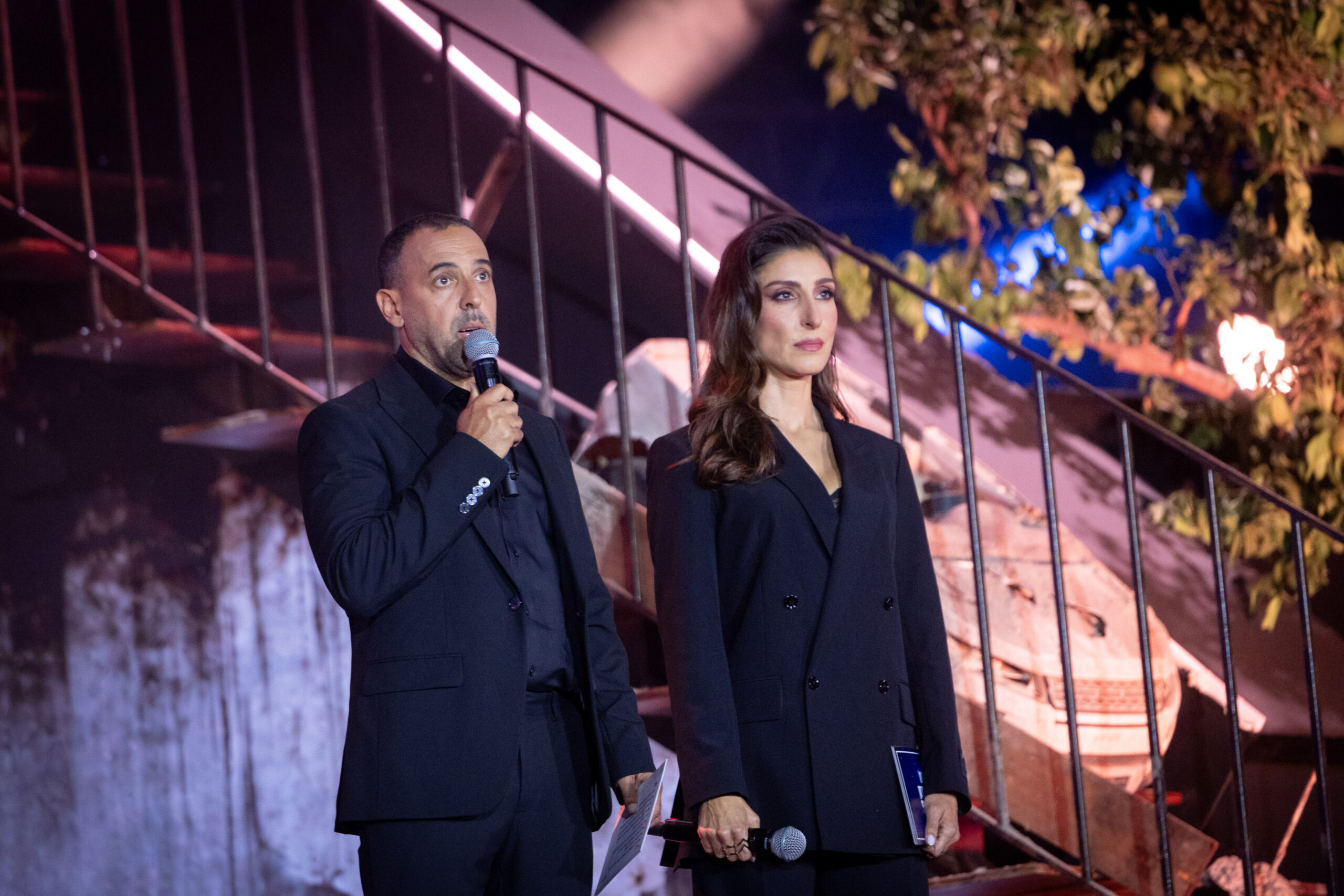
Former hostage Eli Sharabi and Israeli actress Shani Cohen host the National Memorial Ceremony of October 7 Families, marking three years since the attacks, at Yarkon Park in Tel Aviv, on Oct. 7, 2026.




 Add EJP on Google
In the outpouring of music, art and creativity that emerged from the trauma and pain of the Oct. 7 terror attacks, one song stands out — composed in that first terrible week of sorrow and uncertainty by the Israeli folk band Jane Bordeaux.
Full of pained nostalgia for kibbutzim that were destroyed “on one cursed morning” — fields that won’t be harvested, tractors and carts that won’t be decorated for festivals — the song, “Not Alone,” offers with its chorus a bittersweet determination for the future, not hope but rather a certainty of continuity: “We’ll all lend a hand/We are not alone/Partners in fate, pain and love, as one nation/We’ll weep and overcome/As before, we won’t break/We have only one another and no more/And we don’t need more.”
The haunting tune, released on Oct. 15, 2023, immediately captured the fundamental, terrible lesson that hundreds of thousands of Israelis learned eight days prior: that in their worst moment, in their time of greatest need, the government was not coming to save them. They were on their own.
More Israelis learned the same thing in the weeks and months following the attacks, as large swaths of Israel’s southern and northern border regions were evacuated amid continued attacks by Hamas and Hezbollah, respectively.
Removed from their homes and placed in hotels around the country, these displaced people found themselves alone, lacking the basic necessities and services that they needed in this frightening new reality.
Into that void, philanthropy entered. These displaced Israelis quickly became dependent upon the surrounding communities and nonprofits — some more established ones, like the American Jewish Joint Distribution Committee, Latet, Lev Echad, Brothers and Sisters in Arms, and other grassroots ventures — to get them the support that they needed. And of course, those communities and organizations were only too willing to help.
“We have only one another and no more/And we don’t need more.”
Three years later, a wide array of philanthropic initiatives and organizations have emerged and some still continue to operate not to complement and improve the services that are meant to be provided by the government but to perform them: The mental health organizations using philanthropic funds to provide treatment to Oct. 7 survivors and their families; the security groups training communities’ emergency response teams; the social lenders helping keep reservists’ small businesses afloat and helping survivors of the attacks find new homes.
At last night’s National Memorial Ceremony of October 7 Families — deliberately and pointedly organized by bereaved families and not by the government — co-host and freed hostage Eli Sharabi, whose wife, two daughters and brother were murdered in the attacks, highlighted this “do it ourselves” sentiment in his opening remarks.
“Thank you, citizens of Israel, here and around the world. Thank you for your mobilization, your support and your contribution. Because of you, we are here,” he said. “This is a ceremony of the people, which was created by the people and is held for the people. We will remember, grieve and hope together.”
Israelis were also palpably reminded of this last week as civilians on a FlyDubai flight were forced to fight and incapacitate a co-pilot who had stabbed his captain and was attempting, according to his interrogators, to crash their plane into Ben Gurion Airport. The Omani pilot, who had previously been fired for expressing extremist, Islamist views, was not identified by any of Israel’s vaunted security services as a potential threat ahead of the flight, leaving ordinary folks the responsibility of saving themselves.
Though on a far less visceral level, Jewish communities around the world have also learned a similar lesson over the past three years. In the immediate wake of the attacks, many Jews around the world, looking for comfort and acknowledgment from the organizations, movements and institutions that they had long supported, only to find silence and even rebuke.
After Oct. 7, many Diaspora Jews found that they too were on their own – in academia, in politics, in professional settings, in media. And they also have sought to provide for themselves as a result. This includes becoming more involved in Jewish life generally — as fresh data from Jewish Federations of North America shows — as well as sending more of their children to Jewish day schools, launching and supporting new Jewish nonprofits in place of the secular ones to which they once belonged, and creating employee resource groups in their businesses.
And yet, while this sentiment — that “We have only one another and no more/And we don’t need more” — is prevalent and reflects tragically lived experiences, it is also ultimately wrong.
As Israeli First Lady Michal Herzog noted in her recent interview with eJP, the scale of philanthropy is orders of magnitude smaller than that of government. “At the end of the day, there are efforts that cannot be done only by philanthropy,” Herzog said. “I am a believer that philanthropy has to complement, has to support. It shouldn’t replace [government]. It should have an added value. It should have new initiatives that maybe the state authorities cannot take the risk of trying and failing, but philanthropy can do that. It can fail and learn. But in such moments as we had after Oct. 7, thank God for philanthropy, thank God for the Jewish world coming together.”
While philanthropy and nonprofits are critical, they cannot stand in for government and its vastly larger resources, and rebuilding that trust — and pushing the government to effectively allocate those resources — will be the task of civil society for the years to come.