Opinion
COMING TOGETHER
Many voices, one assembly: What rabbis can model for a divided Jewish world


 Add EJP on Google
During the COVID-19 pandemic, after the Oct. 7 attacks and through years of rising antisemitism, rabbis have carried our communities through all of it. Most of the time, we’re the ones striving to hold everyone else. This week, hundreds of my Conservative/Masorti colleagues from around the world are gathering in Philadelphia to do something different: sustain each other.
At the convention marking the Rabbinical Assembly’s 125th anniversary, the goal is to send rabbis home better equipped for the hardest conversations in our communities — about the role of religion in democracy, mixed-faith families, antisemitism and Israel. These conversations are easier to avoid, but probably at our own peril.
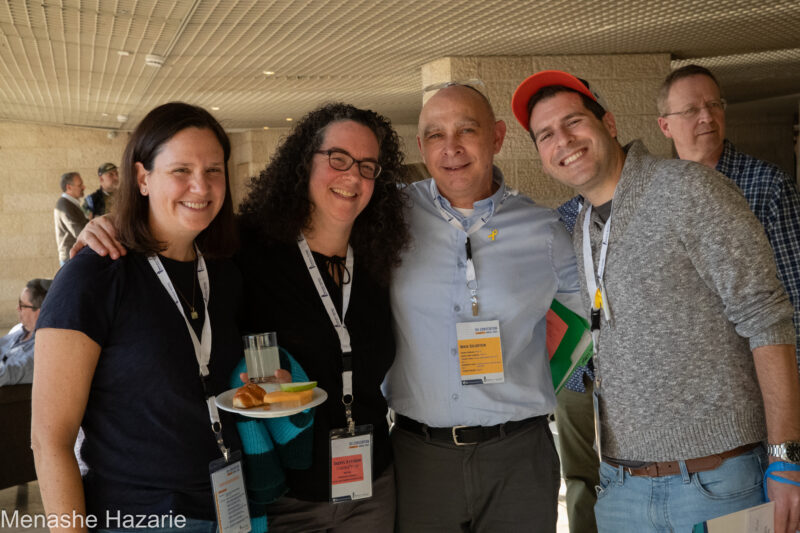
Menashe Hazarie
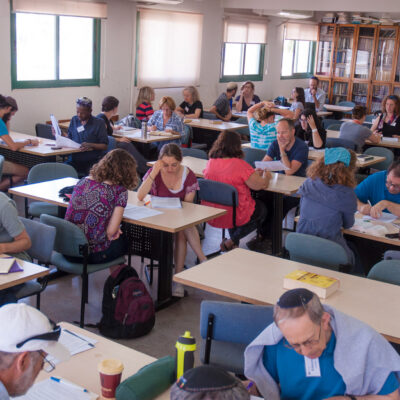
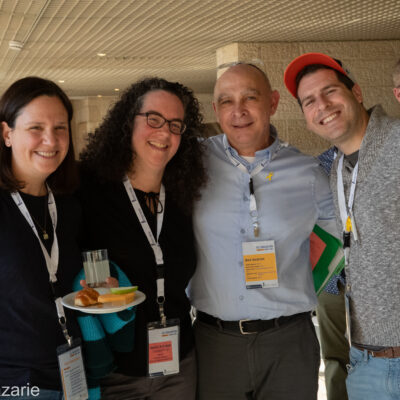
Rabbinical Assembly members at the RA's 2024 convention in Israel.
It is fitting that we meet as the country marks the 250th anniversary of its founding, in the city where it happened. This month, that city also refused to let an antisemitic restaurant boycott stand as hundreds of neighbors, Jewish and not, filled the tables and chairs instead.
The founders of the United States were not always nice to each other (just see “Hamilton“). They didn’t always agree. And yet, they were engaged in the same project: trying to create a more perfect union, an experiment in government by the consent of the governed.
Rabbis, famously, do not always agree either. Machloket l’shem shamayim, disagreement for the sake of Heaven, is a cultural value within rabbinic Judaism that we want to uphold; and we want to do it in a way that honors our shared purpose, even if we don’t agree on all of its details.
That is the heart of our convention’s theme: Many Voices, One Assembly. We are not a monolith. That is the strength of Conservative/Masorti Judaism. It is also what this moment needs.
One of the issues in our public discourse today, both in America and in Israel, is that you’re either X or Y. Left or right. Blue or red. Conservative/Masorti Judaism offers a nuanced middle path where we need not be attached to tribalistic identities and where disagreement does not have to mean division. Admittedly, the middle is the harder place to stand. There is no political tribe to retreat to. That is why the rabbis who hold it need to gather and sustain each other.
Disagreement without a proper structure is often destructive. To that end, we are proud that this year’s convention is built around practical, professional training: learn a methodology, then put it to work.
Some of the work I’m most excited about comes from colleagues who have done it in their own communities and will be presenting at the convention. For example: After Oct. 7, Temple Beth Hillel-Beth El outside Philadelphia realized its members did not all agree on Israel and its policies, so the synagogue, led by Rabbi Ethan Witkovsky, a Rabbinical Assembly member, created listening and speaking circles among people who disagree, and it has been transformative for the community. And my senior colleague, mentor and friend, Rabbi Eric Yanoff, will draw from his own experiences building relationships — from sharing space with a local Orthodox community, led by Rabbanit Leah Sarna, to working alongside a local Black pastor.
When rabbis come home with tools and insights like these, their communities gain from them, too. That’s why gatherings like this also matter to lay leaders, professional staff and partners across Jewish life. They are an investment of time, energy and collaboration in the rabbis who serve our pulpits, camps, campuses and institutions.
Some of the most important work at the convention will happen in the hotel lobby, with a colleague you just met or haven’t seen in years, talking about how the post-Oct. 7 reality has shaped your rabbinate and your own self. It will happen over a board game or a game of cornhole in the exhibit hall. Rabbis who spend their days holding everyone else need a place to “take their capes off” and go home refreshed, empowered and energized for the hard work of being a rabbi in the world today.
We will also gather at Congregation Mikveh Israel, a birthplace of Conservative Judaism, whose former spiritual leader, Rabbi Sabato Morais, helped found the Jewish Theological Seminary and then served as its first president.
After 250 years for the country, 125 for us, and our movement returns to where it began.
The founders didn’t agree on everything, and neither do we. But like them, we are engaged in a shared project. That is worth remembering, in Philadelphia and in every community our rabbis go home to.
Rabbi Andrew Markowitz is a rabbi at Adath Israel in Merion Station, Pennsylvania, and co-chair of the 2026 Rabbinical Assembly Convention.