MENTAL HEALTH
From Jerusalem to Sydney: Hadassah psychotrauma experts rush to aid Australian Jews after massacre
Israeli trauma leader Danny Brom calls for sending message of 'strength and resilience' to support healthy coping
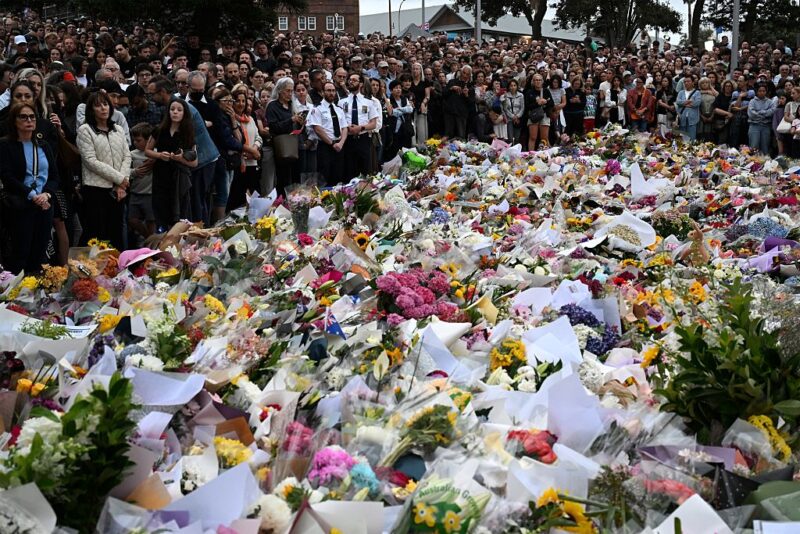
Saeed Khan/AFP via Getty Images
Mourners gather at a tribute at the Bondi Pavilion in memory of the victims of an antisemitic terror attack at Bondi Beach in Sydney, Australia, on Dec. 16, 2025.




 Add EJP on Google
Within hours of the Bondi Beach massacre on Sunday in Sydney, Australia, psychologist Amichai Ben Ari was on a Zoom call with Australian Jewish therapists, conducting an emergency webinar and sharing guidelines developed through Israel’s hard-won trauma expertise.
“Usually we’re on the receiving end from the Australian community — they’ve supported us since the Oct. 7 attacks,” Ben Ari, a rehabilitation psychologist specializing in acute trauma at Hadassah Medical Center, told eJewishPhilanthropy. (Indeed, Hadassah’s own Gandel Rehabilitation Center is named for the Australian Jewish couple that donated some $20 million for its construction.) “I said, ‘Maybe now we can support them.’ It gives such an extra sense of mission that we can now give back.”
The mass shooting at Sunday’s Hanukkah celebration killed at least 15 people and injured scores more in what Australian authorities called an Islamic State-inspired terrorist attack. Hadassah’s director general, Dr. Yoram Weiss, immediately pledged the medical center’s support, calling this a moment for “solidarity, accompaniment and the provision of a comprehensive support framework.”
The rapid response was enabled by relationships built over time, Hadassah officials said. Hadassah Australia had already worked closely with Hadassah International, bringing expertise from Jerusalem to the Australian Jewish community over the last few months as part of a response to rising antisemitism in the country over the past two years, including sending a networking delegation of trauma experts to Australia just this past August.
“Hadassah Australia has always been a fundraising organization, but we have really been cooperating in recent times in a two-way relationship where we not only fundraise, but bring expertise from Hadassah to Australia as well,” Dr. Mark Suss, chair of Hadassah Australia, told eJP. “For a philanthropic organization like ours, a crisis like this requires us to provide community leadership.”
Ben Ari’s webinar focused on guiding therapists on crisis intervention — how to support victims, families and the broader community. During the session, his team conducted a precise needs assessment and analyzed immediate response requirements. Ben Ari shared detailed guidance documents with the Forum of Jewish Therapists in Australia. These included professional guidelines for community therapists, focusing on early intervention and identification of individuals requiring acute emotional care, as well as a separate guidance document tailored for community members themselves.
On Monday, Ben Ari followed up with an online briefing for approximately 100 Australian family physicians, providing practical tools to help patients and communities cope with the attack’s aftermath. Additional support continues through individual Zoom sessions with therapists and a community meeting scheduled for Thursday, facilitated by the Hadassah Medical Organization’s chief psychologist, Shiri Ben David.
Ben Ari, who also serves in the Israel Defense Forces reserves as a combat operations commander, said the Australian Jewish community’s experience differs markedly from Israel’s repeated exposure to terrorism. “It’s different. In Israel we’ve basically become accustomed [to terror],” he said. “I think the difference is the shattering of a kind of fantasy they had that there’s security.”
Australian therapists told him something particularly striking: “We’ve been like two years behind what happened in Tel Aviv. We’re feeling this is happening everywhere and that this shared fate and fear… in such difficult times, we all remember our people, in our Diaspora, can be there for one another.”
Ben Ari noted that Israel has “unfortunately gained experience in this field of collective trauma. Shared trauma, that’s what it’s called. And all these years of terror attacks and war, so we have some knowledge that other communities don’t have.”
That expertise includes “primary interventions, strengthening resilience factors in the community,” Ben Ari said. “Providing reliable information to reduce the levels of confusion, the levels of self-blame. Often, we see post-trauma as ‘Why did I do this, why did I do that?’ We have a lot of experience here, we’ve learned how to help each other, what works, what works less well.”
Critical skills include identifying “who needs to be referred, how to identify those at risk to develop post-traumatic stress disorder, and refer them to appropriate treatment.”
Israeli organizations have committed to sustained support well beyond the immediate crisis response. “Hadassah Hospital is ready to continue support for as long as is needed,” Jeanne Vachon-Flores, deputy director of program and development at Hadassah International, told eJP.
Ben Ari echoed this commitment at the practitioner level: “I’ll be in touch… as long as needed,” he said, noting he expects to continue individual support sessions with Australian therapists and potentially expand programming based on community needs.
While Hadassah is working to provide tools and assistance to local therapists, multiple Israeli organizations are working to send teams of therapists to Australia to treat members of the Jewish community, which some in the Israeli trauma community worry may inadvertently pathologize natural resilience.
Danny Brom, founding director of Metiv, the Israel Psychotrauma Center at Herzog Hospital in Jerusalem, cautions against what he calls the “rush to help.” He notes that at least three organizations are flying teams to Australia — “even before they actually know what the situation there is, what people need.” (Disclosure: eJewishPhilanthropy Managing Editor Judah Ari Gross’ wife, Anna Harwood-Gross, is an employee of Metiv.)
“I would not think immediately about trauma treatment because the majority of people do not need treatment; they need support,” Brom told eJP. “They need maybe some information about what is normal coping and what is healthy coping and how to go about it.”
Brom argues that Israeli society has learned important lessons about resilience, but warns against problematic messaging that has emerged in recent years. “The public dialogue has mostly gone into ‘people are traumatized, and people need treatment’. And that is very problematic as a message to people,” he said, describing it as a potential self-fulfilling prophecy.
He points to an unintended consequence among Israeli combat veterans, who needlessly worry themselves with the thought that they may develop PTSD. “Really, the [vast] majority cope well with whatever trauma we go through,” Brom said.
While he acknowledged and stressed the best intentions of those involved, Brom said that instead of rushing in to provide everyone affected by the attacks with therapy, Israeli experts should emphasize that “there’s a very healthy way of coping with what people go through. And that is an interplay between reviewing, reliving part of what has happened and being able to soothe yourself, to take care of the arousal that brings on. And most people do that in a very natural way.”
His organization, Metiv, is therefore taking a different approach — checking in with Australian participants from the group’s international summer course and potentially offering a webinar, but “we’re certainly not running now to do that. We’ll see if there are needs, and we’re always willing to help.”
“I hope that the people who go there now… their message is one of strength and resilience,” Brom said. “And not only of ‘You need me because I’m a therapist.'”
Related News
HIGHER EDUCATION
As Jewish donors reconsider academia, Jan Koum doubles down, endowing Israel studies at Stanford

MAJOR GIFTS
Center for Jewish History celebrates 25 years with a $25M matching grant
ADVANCING A VISION
N.Y. federation donates $1M toward building shared-society center named for peace activist killed on 10/7

MAGICAL EXPERIENCE
Shefa launches psychedelics retreat for Jewish professionals suffering burnout
EXIT INTERVIEW
Elizabeth Sokolsky, longtime EVP of Birthright Israel, to retire next year