HELP WANTED
Current and former Israeli civil servants sound alarm on country’s public sector
'Slowly, slowly, this place will become a place that is not good to live in... because the most basic things won't be able to function,' warns former Justice Ministry director-general Emi Palmor at Taub Center confab
Yonatan Sindel/Flash90
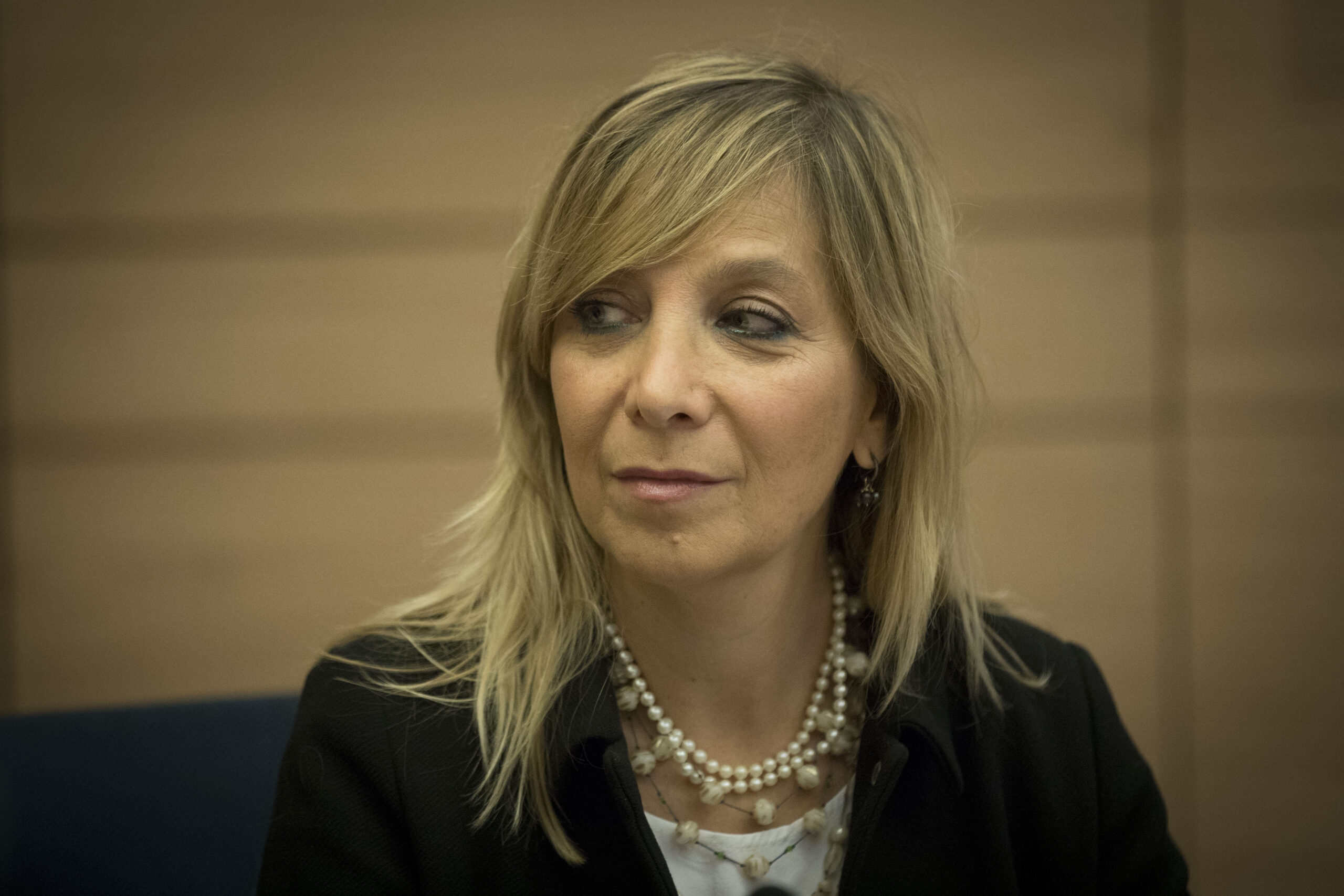
Then-Justice Ministry Director-General Emi Palmor attends a Status of Women and Gender Equality Committee meeting in the Knesset in Jerusalem on Dec. 27, 2016.




 Add EJP on Google
Current and former top Israeli civil servants sounded the alarm last week on what they described as the country’s rapidly deteriorating public sector, which they warned will affect all facets of Israeli society, from the education system to the justice system, welfare services to transportation infrastructure.
Speaking at the Taub Center social policy think tank’s annual conference in Tel Aviv, titled “The Future of Public Service in Israel: Who Will Serve the Public?,” Col. (res.) Miri Eisin, chair of the Taub Center’s board, framed the issue in terms she knows well from her military intelligence career. “After two years of war, when we speak about our national resilience, it’s not just the military or diplomatic,” she said. “Security is not just the army or diplomacy — it’s society, economics, it’s our other capacities.”
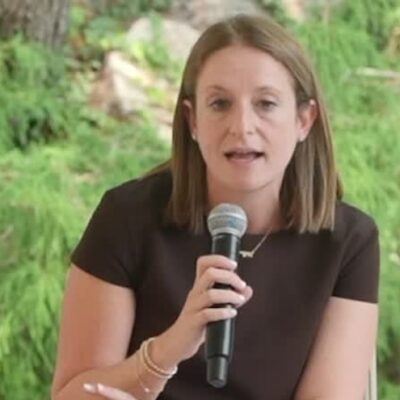
Emi Palmor, the project coordinator for the rehabilitation of Kibbutz Nir Oz and former director-general of Israel’s Justice Ministry, issued a lengthy diatribe on the subject, highlighting the country’s failure to install permanent heads of major government offices, as well as a lack of diversity among those top officials, which she said prevents young Israelis from joining the civil service in the first place. This is already affecting the quality of government services, she said, and will continue to do so into the future, potentially contributing to the country’s rising emigration.
“We’re already at advanced stages where there simply isn’t anyone to teach certain subjects. There are schools dealing with basic services they can’t provide. What’s happening on our roads today? Who’s at the Transportation Ministry planning 10-20 years ahead for this small, crowded country?” She added: “Slowly, slowly, this place will become a place that is not good to live in — not because politics annoys us, but because the most basic things won’t be able to function.”
Palmor, the fieriest speaker of the day, also took issue with the conference’s aim of exploring these issues in the civil service sector without addressing what she described as the elephant in the room: the lack of a person in charge of the field.
For nearly a year, the position of civil service commissioner has been vacant due to a political stalemate. The commissioner’s role is to act as a gatekeeper, ensuring professionalism over politicization in the hiring and employment of civil servants.
In the absence of a permanent civil service commissioner, political considerations overtake qualifications in the public sector, Palmor said.
“The civil service commissioner is essential in ensuring that senior professional positions will be excellent, that appointments are good first and foremost, but also equally available to all who deserve them,” said Palmor.
Palmor argued that while this may seem like a niche issue, without the proper oversight, Israel’s civil service cannot function properly.
“We all felt what it was like to have a government malfunctioning on Oct. 8,” she told attendees of the conference, referring to the uncoordinated displacement of tens of thousands of Israelis in the wake of the Oct. 7 attacks.
“The nomination of a civil service commissioner is the most important appointment that the next government needs to undertake,” she said. “If we don’t take to the streets when the time comes to appoint a new civil service commissioner, if this person is not capable of rehabilitating public services, is not capable of ensuring that appointments are good first and foremost, but also equally available to all who deserve them, we will be in trouble.”
The implications for philanthropy in Israel are also significant as virtually all fields — from welfare to education to culture — intersect in some way with local and national government.
Itzik Shmuli, the Israel director of UJA-Federation of New York and a former Labor MK, warned that “public service has been under threat,” pointing to recent examples involving, inter alia Justice Minister Yariv Levin, who refuses to recognize the status of Chief Justice Isaac Amit and who changed the locks on the offices of Attorney General Gali Baharav-Miara, as cases of “politicization of public service to corrupt it.”
Shmuli called for a return to fundamentals: “We need to ask ourselves how we’re fulfilling the basics of public service and surround ourselves with partners who can help make good decisions.”
Data from the Movement for Freedom of Information shows the scale of the crisis in the country’s civil service: The number of unfilled senior positions in Israel’s civil service has tripled over the past five years, from 115 vacant positions to 360 missing senior roles. These are department heads, deputy directors-general and the other most experienced professionals who manage governmental operations.
Of the 360 vacant positions, 66 are currently filled with temporary acting appointees — a practice that is often easier politically but that prevents long-term strategic planning and continuity and also removes the bureaucratic roadblocks to avoid conflicts of interest and inappropriate hirings. Promising professionals are leaving the sector because they see no future. “They understood that they had no career path,” Palmor said. “With no civil service commissioner who is capable of, at a minimum, ensuring that senior professional positions will be excellent, young upcoming professionals will not go into public service,” she warned.
Palmor pointed to the National Insurance Institute — a critical element of the Israeli civil service — as a prime example of this. Referring to a common civil protest method, Palmor said that she was flabbergasted by “the fact that we haven’t blocked the Ayalon highway over the fact that national insurance has not had a permanent director-general for four years — despite the fact that on Oct. 7, there was an acting director-general, Yarona Shalom, who did an outstanding job but did not receive a permanent appointment.”
Eyal Ram, former deputy director-general of the Ministry of Education, said in light of Israel’s high birth rate — among the highest in the Western world — the shortage of teachers is particularly worrying. Yet, with no professional director-general of the Ministry of Education to take charge of the issue, the shortage continues to increase.
“In the last 20 years, there’s been no focus on education,” she said. “But there were appointments — better ones, less good ones, but relevant ones. People like [former Education Minister] Shai Piron, [former Education Ministry Director-General] Michal Cohen, [former Education Minister] Naftali Bennett — whom, despite his politics, came from a relevant background and had managerial experience.”
In her speech, Palmor noted that a long-standing male predominance in top civil service positions has accelerated in recent years.
According to the Israel Democracy Institute, 15% of all director-general appointments from 2003 through July 2025 went to women — 38 out of 246 positions. Under the current government, the situation has reached a 20-year low: two women out of 32 have been appointed as director generals, comprising 4% of all appointments.
A similar trend has played out with Arab civil servants as well.
Approximately 90% of recent senior appointments have gone to Ashkenazi men, many with specific, relevant political and religious affiliations.
For Palmor, who during her tenure at the Justice Ministry integrated Arabs, Haredim and Ethiopian immigrants into professional roles, the issue is both institutional and symbolic. “The civil service could have been the central place, the ultimate demonstration of belonging and participation of all publics in the State of Israel,” she said. Arabs, Druze, Haredim, Ethiopian immigrants, people from the social and geographic periphery — all could see the civil service as a place for social mobility and meaningful careers, just as the IDF has been. “We were in such a process before this deterioration,” she said.
Palmor’s solution is structural and urgent. “There is no way to repair the public service sector in one fell swoop, but we can expect there to be professional appointments,” she said. “The responsibility lies on the prime minister and the civil service commissioner to nominate people who are outside of their sectoral preferences.”
She closed with a call to action: “If we want to ask what will promote security in Israel, perhaps the first thing would be the sense that public service belongs to each and every one of us, serves every one of us, and so each of us feels compelled to influence it from the inside.”
Without urgent action, conference participants warned, Israel risks not just bureaucratic dysfunction but the erosion of the institutional capacity that has helped the state weather existential challenges for 77 years.
Related News

EXIT INTERVIEW
Elizabeth Sokolsky, longtime EVP of Birthright Israel, to retire next year

MAJOR GIFTS
Center for Jewish History celebrates 25 years with a $25M matching grant

MAGICAL EXPERIENCE
Shefa launches psychedelics retreat for Jewish professionals suffering burnout

ADVANCING A VISION
N.Y. federation donates $1M toward building shared-society center named for peace activist killed on 10/7

EXCLUSIVE
Detroit-based philanthropists Nancy, James Grosfeld donate $8M to renovate JDC’s Israel campus