WHAT YOU SHOULD KNOW
As Hezbollah ramps up drone strikes, Israel’s weary North again prepares for full-fledged war
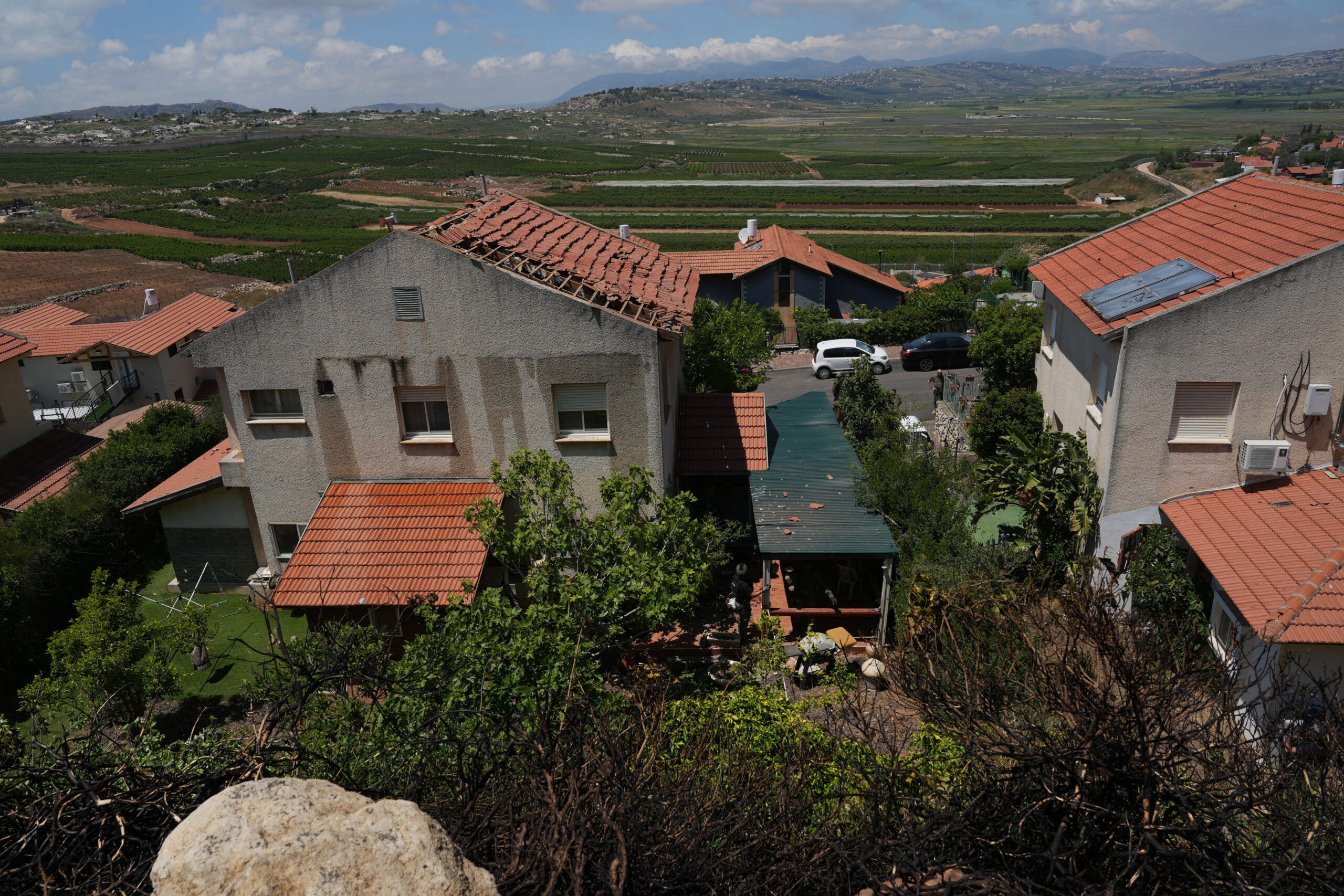
Ayal Margolin/Flash90
Israeli security forces at the scene where a house was hit by an explosive drone launched by Hezbollah from Lebanon in Metula near the Israeli-Lebanese border ?? May 25, 2026.




 Add EJP on Google
For more than a month, Israelis have lived in a state of dissonance. While the vast majority of the country has returned to some sense of routine since ceasefires were declared with Iran and Lebanon, ending the large-scale attacks, Israel’s North has remained under regular attack by a threat that the military has not been able to effectively defend against: drones.
Most of these attacks by Hezbollah have targeted Israeli troops positioned in southern Lebanon, killing at least 10 soldiers over the past month. The drones, which use fiber-optic cables to control them instead of wireless methods, have proven far more difficult to intercept as the military’s usual electromagnetic interference methods are not applicable.
Increasingly, these attacks have targeted Israeli civilians, including drone strikes yesterday on a home in the northern town of Metulla and at a school bus stop in the border-adjacent community of Shomera, neither of which caused injuries. The attacks on Israeli troops and civilians, which comes as Israeli and Lebanese officials negotiate a permanent ceasefire in Washington, are prompting growing calls in Israel, particularly from the mayors of northern towns, for Israel to renew its full-scale war against Hezbollah.
Israeli Prime Minister Benjamin Netanyahu and the military have indicated plans to do so. Yesterday, Netanyahu released a video statement in which he said he instructed the military to strike Hezbollah “decisively.” “Yes, they are attacking us with drones, cyber-enabled drones, and we have a special team working on this — and we will solve that too. But what this requires of us now is to intensify the blows, increase the force,” Netanyahu said.
Around the same time, in an indication that the conflict was expected to escalate, the Israel Defense Forces’ Home Front Command issued new security restrictions for border communities, limiting gatherings to 50 people outdoors and 200 people indoors (down from 200 and 600, respectively). Though the military did not order schools to be closed, a number of northern communities independently shuttered their educational institutions in light of the growing threats.
The rising drum beats of war come amid grave concerns about the future of Israel’s North, which has long been one of the country’s weakest regions, even before Hezbollah began firing rockets and drones at the area on Oct. 8, 2023.
Last week, the Keren Kayemeth LeIsrael-Jewish National Fund allocated NIS 115 million ($40.2 million) to Israeli communities on the Lebanon border for reconstruction and improvement projects. “The North has long ceased to be a local story and has become a national priority of the highest importance, and we at KKL-JNF are taking responsibility and standing alongside the authorities and communities there,” Eyal Ostrinsky, KKL-JNF chair said in a statement. “Today’s decisions will serve as a foundation for growth and development, for community and Zionist fulfillment, and we are proud to continue standing by the borderline communities and the communities of the Golan during this time of need, while placing them at [the] forefront of KKL-JNF’s priorities.”
Despite these allocations — and other major donations to northern Israeli causes in recent months — there is wide consensus in Israel that without addressing the severe security threats facing the North, the region will not be able to reverse emigration trends, improve the education system and boost the local economy.
As Israel prepares for a possible renewed, full-fledged war with Hezbollah, the ultimate question is if this will indeed neutralize those threats or just mark yet another bloody round of fighting in a region still struggling to rebuild after the last one.