ON THE SCENE
Old City rave fundraiser for surf therapy group HaGal Sheli gets Israeli tech sector dancing, giving
The event, which was backed by several of the country's top high-tech firms, highlighted the connection between Israel's startup scene and its military reservists, many of whom are now struggling with mental health issues
courtesy/hagal sheli
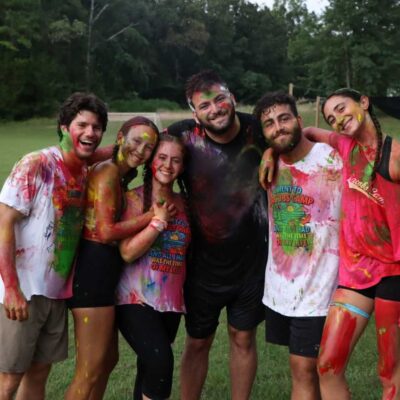
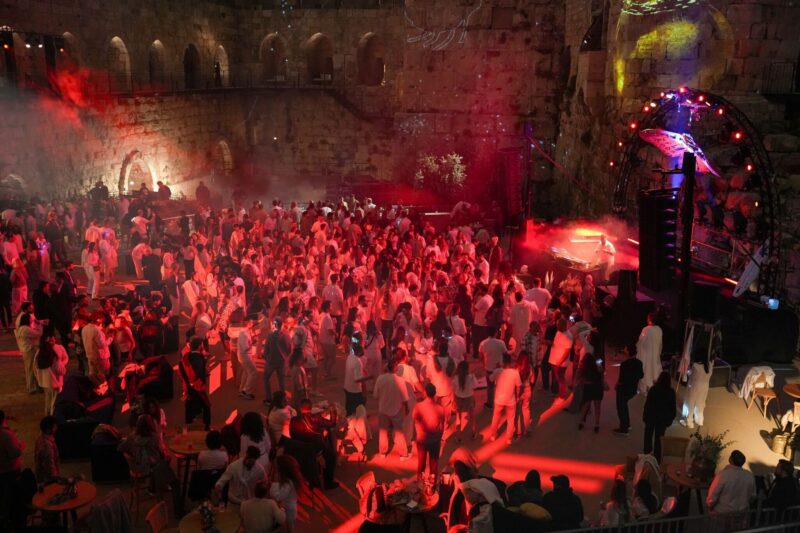
Hundreds of people participate in a rave-themed fundraiser in Jerusalem's Old City to support the surfing therapy nonprofit HaGal Sheli on May 20, 2026.




 Add EJP on Google
More than 700 Israeli business and philanthropic figures gathered on Wednesday night for a rave at Jerusalem’s Tower of David — and also to mobilize the country’s high-tech sector to address Israel’s crushing mental health crisis by raising money for HaGal Sheli, a nonprofit that uses surf therapy to treat those suffering from post-traumatic stress disorder.
Spearheaded by Idan Nurik, CEO of the cybersecurity firm Paragon Solutions, the event was backed by a coalition of key high-tech sponsors and partners, including Paragon Solutions, Papaya Global, Natural Intelligence, NFX, WalkMe, Investing[dot]com, NextGen Philanthropic Funds, Island, Clarity Group, M.M., ION Asset Management, Kela, EON, Jefferies, Ratio Energies and Hadasim Group.
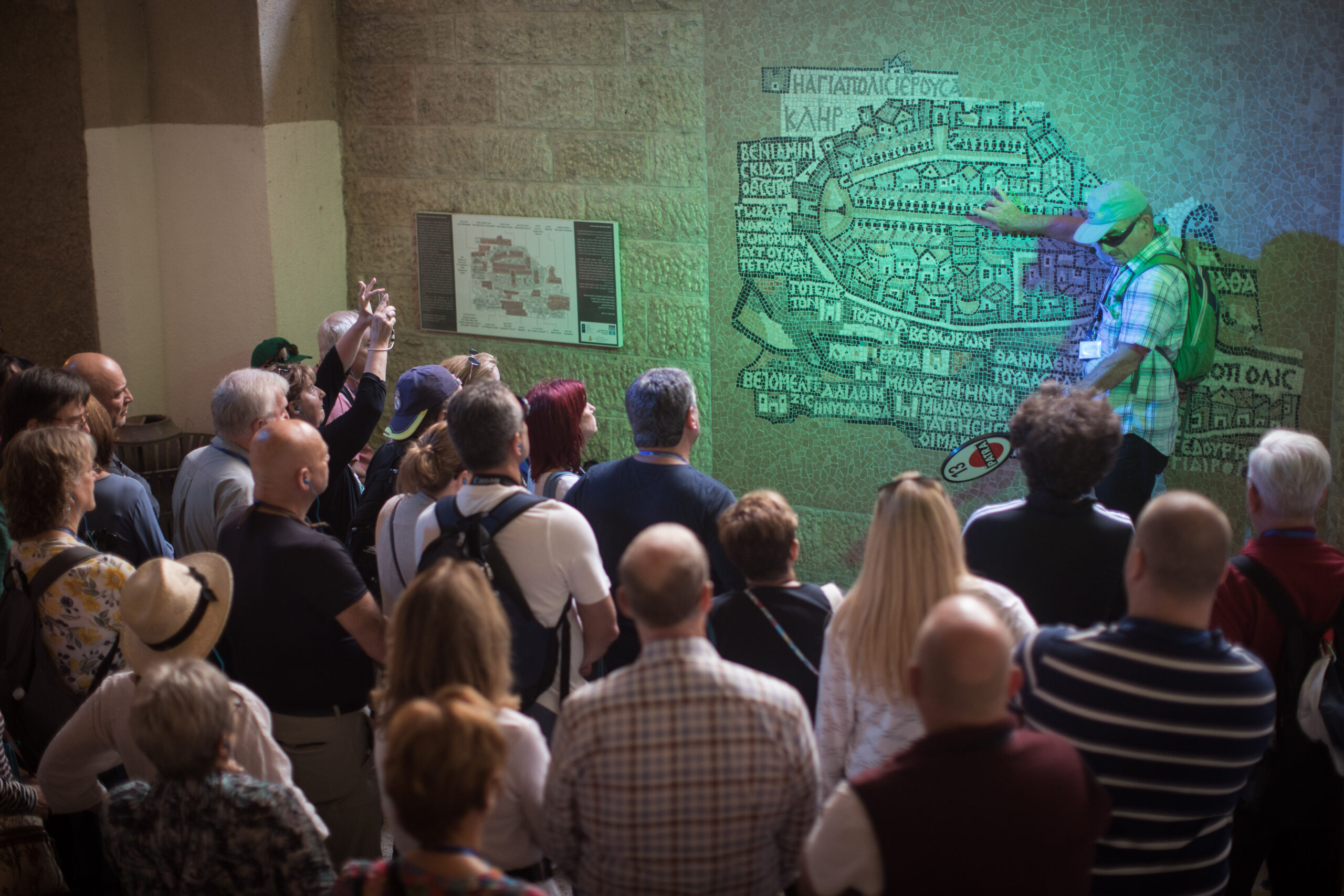
With tickets priced at NIS 2,000 ($690), the rave-themed event featured modern light installations projected onto the Tower’s ancient stones, as techno music filled the courtyard. HaGal Sheli (My Wave) did not provide an immediate tally of how much was raised at the event, but indicated that it brought in upwards of NIS 1.4 million ($480,000), not counting costs, a significant portion of which were covered by existing supporters, the organization told eJewishPhilanthropy.
As attendees danced, Noam Feller, 33, who worked with at-risk youth as a teacher before moving to working full-time for HaGal Sheli, shared his personal challenges after his first tour of reserve duty post-Oct. 7. “I didn’t feel like the same person. Everything was different,” Feller told the crowd. “This is a safe zone for me. HaGal Sheli was the only place I felt comfortable after 100 days in reserves.”
A central theme of the evening was the intersection between Israel’s high-tech sector and its military reservists. Ido Galili, who works as a project manager at Paragon and volunteers with the organization, told eJP that his professional environment reflects the needs HaGal Sheli is trying to serve. “Among my team at Paragon, 31% [of them] are in elite units and have served for hundreds of days since Oct. 7,” Galili said. “I work at Paragon, I volunteer at HaGal Sheli, and I did 200 days in reserves. We are bringing together all different colors of Israeli society because trauma doesn’t discriminate.”
A tech worker, who asked to remain anonymous and who said he has completed over 350 days of reserve duty since the war began, agreed, telling eJP, “Look at these people: reservists and techies. They are the backbone of this country. Without them, we have no country. And HaGal Sheli looks after us when we come home.”
The origins of HaGal Sheli trace back to well before Israel’s current mental health crisis. In 2013, Yaron Waksman and his co-founder, Omer Tulchinsky, quit their day jobs and took out personal loans to launch what was then a modest pilot program.
That initial vision has since grown into the one of the world’s largest surf therapy organizations, now operating 12 seafront locations in Israel in partnership with local municipalities. The organization has supported over 20,000 people since its launch. Since the start of the war, HaGal Sheli has treated IDF reservists, former hostages and their families, Nova music festival survivors and residents from the Gaza Envelope. To accommodate the growing demand, the organization has received significant grants from Boston’s Combined Jewish Philanthropy and UJA-Federation of New York’s Day After Fund, as well as from individual donors and foundations.
Despite this influx of support, the organization’s level of need continues to rise, Waksman told eJP, noting that the organization has supported 5,000 new participants this year alone.
While still raising funds abroad, the organization has fostered a strong domestic fundraising operation. With an annual budget of $7 million, 78% of funding comes from within Israel — through partnerships with government ministries, Israeli philanthropists and its partnership with the high-tech community, which has expanded significantly since Oct 7. In recent months, donations received in shekels have become increasingly valuable for nonprofits like HaGal Sheli as the dollar has weakened significantly against the shekel, down nearly 18% from a year ago.
The therapeutic framework that HaGal Sheli uses is rooted in the physiological demands of the ocean. “Trauma traps your mind and body in place — you are reliving moments of danger all over again,” Waksman said. “Surfing demands presence, breathing and balancing. It brings the mind and body back to that presence. It’s not just surfing. The sea can be flat, and it can be crazy. It confronts you with yourself over and over again. We form groups of people who have experienced similar traumas.”
The clinical results of this work were further solidified by a 2025 impact study conducted by researcher Maya Leventer-Roberts in partnership with Ben-Gurion University. The data indicate a significant clinical shift: while 20% of participants exhibited severe PTSD symptoms prior to the program, that figure fell to 5% following the intervention. Further, the program demonstrated effectiveness in notoriously difficult areas, with 74% of participants reporting a decrease in avoidance behaviors and 67% noting a reduction in the severity of intrusive thoughts.
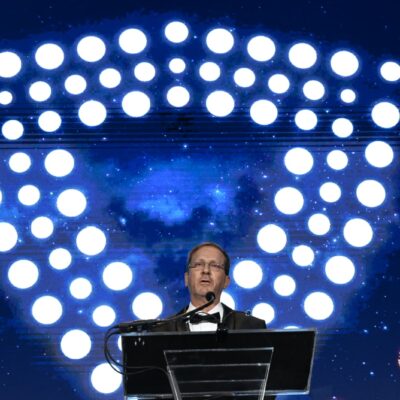
“We see miracles,” Waksman said at the event, surrounded by Israeli supporters and HaGal Sheli program alumni, with pulsing techno music and strobe lights reflecting off the Tower of David’s timeless stones. And yet, he continued, “we are in an unprecedented mental health crisis. People will need us for the long term. We don’t want to say no to anyone.”
Related News

MAGICAL EXPERIENCE
Shefa launches psychedelics retreat for Jewish professionals suffering burnout
EXCLUSIVE
Detroit-based philanthropists Nancy, James Grosfeld donate $8M to renovate JDC’s Israel campus
EXIT INTERVIEW
Elizabeth Sokolsky, longtime EVP of Birthright Israel, to retire next year

MAJOR GIFTS
Center for Jewish History celebrates 25 years with a $25M matching grant
HIGHER EDUCATION
As Jewish donors reconsider academia, Jan Koum doubles down, endowing Israel studies at Stanford