Opinion
REALITY CHECK
Donor fatigue isn’t about generosity. It’s about us.




 Add EJP on Google
In Short
Maybe the question isn't "How do we ask for more?" Maybe it’s "Have we've built the kind of relationships that make people want to stay?"
As development professionals, we’ve all felt it: the exhausted donor, the increasingly crowded event calendar, the same faces showing up year after year, looking a little more tired while being asked to do more — all against a backdrop of crisis after crisis, with no playbook in sight.
This is the all-too-familiar moment when donor fatigue stops being a concept and starts being your plateau.
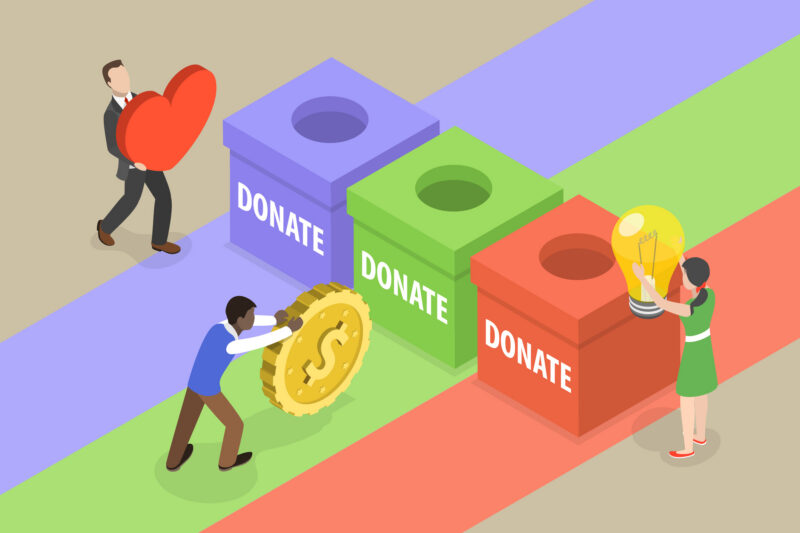
iStock
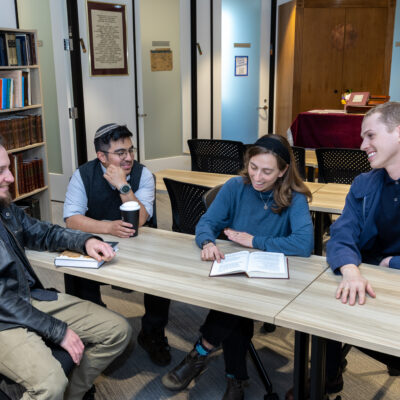
At Jewish Family and Children’s Service of Greater Philadelphia, our leadership team and board recognized it too. So, we did something about it, forming a small task force comprised of our most engaged fundraising partners (and deliberately including a donor who was not on our board).
We kept the work focused: three meetings across one summer, with a clear beginning, middle, and end to the process.
The first meeting surfaced what most already felt instinctively — that events were central to our fundraising identity — but by the second meeting, that assumption began to crack. A cost analysis that factored in not only direct expenses but also the full weight of staff time made plain that our events were producing a low return on both the financial and human resources required to run them. By the third meeting, the data had done what instinct alone couldn’t: It made the case for change undeniable.
Here’s what we learned.
Fatigue isn’t about generosity running out. It’s about a lack of true engagement, and organizations treating donors like ATMs with a loyalty program. And the worst offender? Event-driven fundraising. We found it to be enormously resource-intensive, particularly for staff, leaving development teams stretched too thin to do the work that actually matters: follow-up, relationship-building and real conversation. And yet events persist because they give board leadership an easier alternative to the uncomfortable act of asking for a monetary gift.
What made our summer task force process so powerful is that instead of the professional team pushing for change, board leadership became the catalyst, advocating for clearing the calendar to shift our focus to cultivation and stewardship. The result? Five events became two: a thank-you event for our $2,500-and-above donors in the fall, and one premier annual fundraising event in the spring.
But we didn’t just subtract — we built as well. We created Partners for Good, a giving society offering our most committed donors a real identity within the organization and a more meaningful path. For us, it offers a new entry point for donor cultivation.
The task force recommendations also led our philanthropy committee, and ultimately the full board, to take an even bolder step: a multi-year fundraising campaign and the missing ingredient that broke through our plateau.
We called it A Moment In Time, built around a confluence of events that made the timing genuinely meaningful: a post-Oct. 7 reaffirmation of our mission; the retirement of our beloved longtime CEO; and our 170th anniversary. Donors didn’t just respond; they leaned in. We stopped asking them for a gift each year and instead began to share their impact, thank them and give the relationship room to breathe. This ultimately led to more substantive conversations and real cultivation of new donors. The response exceeded anything we anticipated — and we raised $8.7 million.
We’re now moving into the next phase, The Moment Continues, this time focusing on our mid-level donors: supporters who have given consistently for years, often without the same cultivation and attention that major donors receive. This campaign has given us a new way to bring them into a deeper conversation about their giving and their connection to our mission.
None of this is revelatory. It’s what we already know from training and lived experience. When the constant asks stop, donors have the space to remember why they give. The relationship deepens. The gift grows.
So here’s my challenge to fellow development professionals: if your fundraising feels stagnant, pause and ask why. It might be donor fatigue. It might be a transactional calendar masquerading as a strategy. It might be something else entirely, or a combination. But asking the question creates a path forward.
Pia Eisenberg is the chief business and resource development officer at Jewish Family and Children’s Service of Greater Philadelphia. She is a contributing presenter at the Network of Jewish Human Service Agencies PowerNet Conference and co-chairs the NJHSA Development NetGroup.