WHAT YOU SHOULD KNOW
An Instagram post reveals cracks in the long-hailed shared society of Israeli hospitals
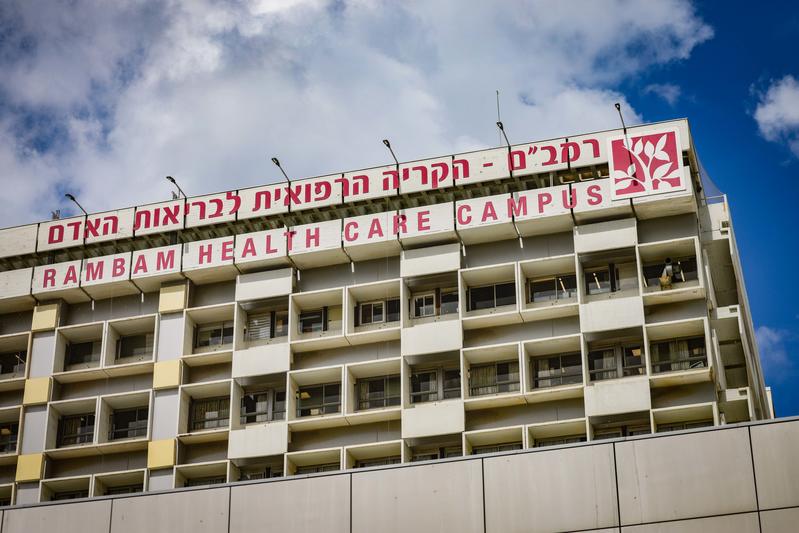
Chaim Goldberg/Flash90
View of the Rambam Hospital in Haifa, on Sept. 22, 2024.




 Add EJP on Google
It started with an Instagram post.
Last weekend, the brother of an IDF soldier wounded in Lebanon accused Arabic-speaking staff at Rambam Health Care Campus in Haifa of mistreating his siblinghis sibling and three other wounded soldiers during an overnight shift. The soldier’s brother, David Chesterman, posted the allegation on Instagram, and his uncle, Yehoshua Shani, chairman of the Gvura Forum, a right-wing group of bereaved families from the Oct. 7 terror attacks and resulting wars, shared it as well.
The post went viral, with Defense Minister Israel Katz ordering the Israel Defense Forces to investigate the alleged incident as National Security Minister Itamar Ben-Gvir called for a probe into whether the staff had acted on nationalist motives. Rambam responded, saying it had examined the claims internally and found them to be baseless, adding that it refused to disqualify staff on the basis of their ethnicity.
Israel’s healthcare system has long been hailed, internally and externally, as a beacon of shared society in Israel, with Arabs and Jews, religious and secular, men and women working together with the common goal of providing care to everyone — Arabs and Jews, religious and secular, men and women.
For many funders, both in Israel and abroad, this aspect is a particular draw for supporting hospitals and healthcare programs, seeing them not only as important in their own right but also as a way to advance a more equitable Israeli society.
“The paradigm we know is that hospitals are islands of sanity, coexistence and harmony between Jews and Arabs on all levels,” Amnon Be’eri-Sulitzeanu, co-CEO of the shared-society group The Abraham Initiatives, told eJewishPhilanthropy today.
This latest incident revealed what Be’eri-Sulitzeanu and his organization have found following extensive research into the healthcare system: the “islands of sanity, coexistence and harmony” are indeed real, but they are perilously close to crumbling.
Arab citizens make up roughly a fifth of Israel’s population, yet a 2025 study in the Israel Journal of Health Policy Research found that in 2023, they accounted for a quarter of the country’s doctors, 27% of its nurses, and nearly half of its pharmacists. “National tensions are a feature of this system. It’s not a bug, it’s a feature, because you have doctors and nurses working shoulder to shoulder, saving lives, while they belong to two nations in conflict,” Be’eri-Sulitzeanu said, referring to Arabs and Jews.
These cracks have widened since the Oct. 7 attacks. “There is a sense among many of the [Arab] hospital personnel that they are being watched, that their Jewish counterparts suspect them of not being loyal to Israel,” Be’eri-Sulitzeanu said. Many Arab citizens, he noted, have relatives in Gaza and the West Bank and feel their own pain over the war.
Once news of the incident moved beyond the Rambam campus, the pushback came fast, particularly from inside the profession itself. Mersham, an organization of medical workers, branded the campaign “racist incitement.” Dr. Hagai Levine, chairman of the Israel Association of Public Health Physicians, issued a statement condemning the allegations, calling them a “dangerous blood libel” and saying, “Incitement against the medical teams at Rambam is crossing a red line.”
Whether hospitals and clinics will remain “islands of sanity, coexistence and harmony” or become yet another sectoral battleground in Israeli society remains unclear, but Be’eri-Sulitzeanu is adamant that philanthropists can help decide if they choose to. “Is it their role to sit on the sidelines, or to push institutions to double down?” he asked.
Related News
PRESIDENTIAL REBUKE
Israel’s Herzog: Mamdani ‘makes no effort’ to hide disdain for Israel, Jews must fight back
HIGHER EDUCATION
As Jewish donors reconsider academia, Jan Koum doubles down, endowing Israel studies at Stanford
EXCLUSIVE
Detroit-based philanthropists Nancy, James Grosfeld donate $8M to renovate JDC’s Israel campus
ADVANCING A VISION
N.Y. federation donates $1M toward building shared-society center named for peace activist killed on 10/7

MAGICAL EXPERIENCE
Shefa launches psychedelics retreat for Jewish professionals suffering burnout