Your Daily Phil: Instagram post reveals rifts in Israeli hospitals’ coexistence




 Add EJP on Google
Good Thursday morning!
In today’s edition of Your Daily Phil, we examine how a recent controversy over Arab medical professionals in Israeli hospitals is threatening the long-hailed coexistence in Israel’s healthcare system. We look at the National Council of Jewish Women’s new strategic plan, which is leading some local sections to join and others to spin off, report on Rabbi Ben Berger’s appointment as president and CEO of Yeshivat Chovevei Torah, and cover an emerging grassroots political strategy in Jewish communities across the country. We feature an opinion piece by Stacie Cherner highlighting insights from a new study of Jewish young adults commissioned by the Jim Joseph Foundation, and a piece by Rabbi Ami Hersh continues our preview of essays from the latest edition of the Center for Jewish Peoplehood Education’s Peoplehood Papers series, “Cultivating Jewish Peoplehood at Camp,” produced in partnership with the Foundation for Jewish Camp. Also in this issue: Samantha and Scott Johnson, Ofir Libstein and Jack Ukeles.
Today’s Your Daily Phil was curated by eJP Managing Editor Judah Ari Gross, Opinion Editor Rachel Kohn and Israel Editor Justin Hayet. Have a tip? Email us here.
What We’re Watching
Parents, alumni and other stakeholders of Camp Lavi are continuing their efforts to prevent the camp from being sold to another organization, launching a crowdfunding campaign that has so far raised more than $2.3 million.
What You Should Know
A QUICK WORD FROM eJP’S JUSTIN HAYET
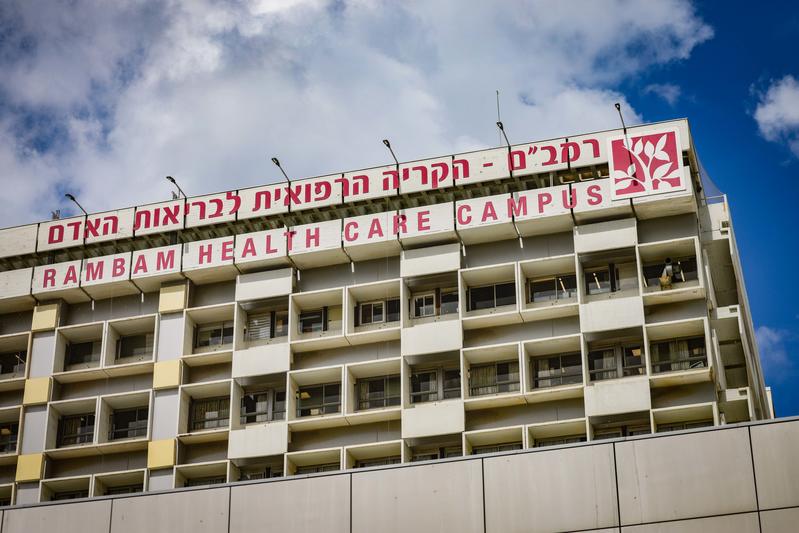
Last weekend, the brother of an IDF soldier wounded in Lebanon accused Arabic-speaking staff at Rambam Health Care Campus in Haifa of mistreating his sibling and three other wounded soldiers during an overnight shift, writing about it on Instagram. The post went viral, with Defense Minister Israel Katz ordering the Israel Defense Forces to investigate the alleged incident as National Security Minister Itamar Ben-Gvir called for a probe into whether the staff had acted on nationalist motives.
Rambam flatly denied the allegations, saying it had examined the claims internally and found them to be baseless. It added that it refused to disqualify staff on the basis of their ethnicity. Top Israeli medical professionals and public health officials decried the post, with one calling it a “dangerous blood libel.”
Israel’s healthcare system has long been hailed, internally and externally, as a beacon of shared society in Israel. “The paradigm we know is that hospitals are islands of sanity, coexistence and harmony between Jews and Arabs on all levels,” Amnon Be’eri-Sulitzeanu, co-CEO of the shared-society group The Abraham Initiatives, told eJewishPhilanthropy today. This latest incident revealed what Be’eri-Sulitzeanu and his organization have found following extensive research into the healthcare system: the “islands of sanity, coexistence and harmony” are indeed real, but they are perilously close to crumbling.
Read the rest of ‘What You Should Know’ here.
News
COME ALONG OR GO ALONE
NCJW rolls out new advocacy-focused strategic plan, inviting local sections to join or spin off
When the National Council of Jewish Women, in a bid to stay relevant in fast-changing times, presented its new strategic plan to local sections last July, it gave them three options: integrate, affiliate or disaffiliate, with the second option offered only to a select few larger sections. To continue using the NCJW name, sections needed to align with the national organization’s shift away from community service to advocacy in four core areas — reproductive rights, gender pay equity, family economic security, and combating antisemitism and hate, with an increased focus on Israel advocacy, reports eJewishPhilanthropy’s Jay Deitcher.
Who’s in, who’s out: Five sections have already disaffiliated from the national organization — many spinning off into independent organizations with new names — and two sections, NCJW Houston and NCJW Sarasota-Manatee, in Florida, shuttered. With a December 2027 deadline for sections to decide which direction to take, NCJW expects 20 to integrate and five to affiliate. The status of the others is unclear.



TRANSITIONS
Hillel’s Rabbi Ben Berger announced as president and CEO of Yeshivat Chovevei Torah
When the National Council of Jewish Women, in a bid to stay relevant in fast-changing times, presented its new strategic plan to local sections last July, it gave them three options: integrate, affiliate or disaffiliate, with the second option offered only to a select few larger sections. To continue using the NCJW name, sections needed to align with the national organization’s shift away from community service to advocacy in four core areas — reproductive rights, gender pay equity, family economic security, and combating antisemitism and hate, with an increased focus on Israel advocacy, reports eJewishPhilanthropy’s Jay Deitcher.
Who’s in, who’s out: Five sections have already disaffiliated from the national organization — many spinning off into independent organizations with new names — and two sections, NCJW Houston and NCJW Sarasota-Manatee, in Florida, shuttered. With a December 2027 deadline for sections to decide which direction to take, NCJW expects 20 to integrate and five to affiliate. The status of the others is unclear.
NEW BATTLEGROUND
Jewish leaders build up local grassroots organizing to counter radical forces in politics
Until recently, the political strategy of the American Jewish establishment could be summed up in two ways: Elect pro-Israel lawmakers to Congress and, at a much smaller scale, educate state and local officials about Jewish values and causes. But a new model of Jewish political engagement is emerging to counter growing populist angst and surging antisemitism across the political spectrum: local efforts focused on school boards and city councils and statehouses, Jewish Insider’s Gabby Deutch reports.
Door-to-door: These Jewish activists are not shying away from the messy reality of politics: They aren’t here to make friends with everyone, acknowledging that not everyone is an ally. Their goal is to offer support — through door-knocking, organizing and their checkbooks — to candidates who have stood by the Jewish community in the post-Oct. 7 political firestorm, and to try to unseat those who have not. “All of these groups are starting to pop up because we realize that the infrastructure that the community has had in the past isn’t enough and isn’t working,” said Stefanie Clarke, a political strategist in Colorado who co-founded the Colorado Jewish Action Alliance.
Opinion
DATA DIVE
We need a fuller picture of Jewish young adults
In an opinion piece for eJewishPhilanthropy, Stacie Cherner, director of research and learning at the Jim Joseph Foundation, shares what prompted the foundation to commission Project Prism, its new multi-method study of Jewish young adults ages 22 to 40, and some of the insights produced so far.
“For years, conversations about Jewish young adults have often been framed through a familiar lens. Within the Jim Joseph Foundation, we’ve referenced ‘the 30%’ who are actively served by Jewish organizations and institutions (the audiences for our Deliberate Strategy) and ‘the 70%’ who are underserved or not served at all… [But m]easuring their level of institutional participation is only one data point among many that show how they relate to Jewish life, identity, purpose and community. On its own, this data point does not provide a full picture of Jewish young adults today.”
PEOPLEHOOD PAPERS
The power of Hebrew immersion
“As an educator, there is nothing in my career that I have done that brings more pride than the development and growth of Sha’ar,” a Hebrew immersion program for young campers now in use in dozens of camps across the U.S., writes Rabbi Ami Hersh, director of Ramah Day Camp in Nyack (N.Y.) in an essay featured in the latest edition of the Center for Jewish Peoplehood Education’s Peoplehood Papers, which was produced in partnership with the Foundation for Jewish Camp and previewed exclusively in eJewishPhilanthropy.
“Hebrew is the living thread that binds the Jewish people across generations and geography, allowing us to speak to one another across time and space. The Sha’ar program gives campers in our community the ability to fluently and authentically communicate via the universal language of the Jewish people.”
Worthy Reads
No Zionists Allowed: On his Substack “The Middle Ground,” Eli Kowaz, whose family was forced out of Iraq in 1951, reflects on a controversial New York magazine cover story on Southwest Asian and North African (SWANA) culture in New York that excludes Israel and blithely categorizes Zionism as racism. “So 20 pages celebrating the SWANA diaspora in New York City. The Jews of those countries appear only if they publicly disown the state that took many of them in. … [The author] ends her piece on sumud, the Palestinian Arabic word for steadfastness, referring to a quiet refusal to disappear. She should know she has spent thousands of words asking us to do just that.”
Trust, Rest, Impact, Repeat: In Candid, David Rockefeller Foundation’s Lexi Fisher outlines how grantmakers can support nonprofit staff well-being through simplified reporting, capacity building and direct funding for rest and organizational sustainability. “Our experience has also reminded us that caring for the people doesn’t require large initiatives or highly structured programs. Many of our most meaningful interventions were relatively modest investments, informed by listening and accompanied by trust.”
Fleishig Philanthropy: In The Conversation, Leslie Lenkowsky, professor emeritus of public affairs and philanthropic studies at Indiana University, argues that Jewish philanthropist Nathan Straus’ targeted, practical “retail giving” — such as funding milk pasteurization — demonstrates that funders do not need grand, sweeping ambitions to achieve a monumental, lasting impact. “It should also show that donors do not have to aspire to “make all mankind good and happy” to make an important difference. In many ways, Nathan Straus was an old-fashioned do-gooder, responding to the needs he saw with innovative solutions. As a result, he wound up accomplishing a lot of good.”
Major Gifts
Samantha and Scott Johnson donated $1 million to Jewish Nevada — the largest security gift in the organization’s history — to fund guards and local grants, bolster statewide coordination via the Secure Community Network, and establish a $100,000 matching initiative to inspire additional community giving…
Transitions
Word on the Street
Jewish Insider interviews Andrew Gross as he enters his new role as the American Jewish Committee’s New York regional director this week, highlighting his willingness to work with Mayor Zohran Mamdani if he is willing to “tone down” his rhetoric on Israel…
Michael Morris, publisher of the Atlanta Jewish Times and stepson of the late philanthropist and GOP donor Bernie Marcus, publicly accused Sen. Jon Ossoff (D-GA) of misleading constituents by claiming to support Israel while repeatedly voting against military aid to Israel, reports Jewish Insider’s Marc Rod…
The former head of the Southern Poverty Law Center‘s Intelligence Project, Heidi Beirich, was arrested and charged with wire fraud and money laundering after federal prosecutors accused her of funneling donor money to pay hate-group informants; SPLC and its supporters have decried the investigation as politically motivated and baseless…
In a move largely seen as targeting Israel, the European Broadcasting Union announced changes to next year’s Eurovision Song Contest in which a winning country would “automatically be ineligible to host” if it was involved in an “armed conflict” or a “sensitive geopolitical situation” at the time…
Calcalist highlights a newly launched $20 million-$30 million venture fund, Ofir-SouthUp Ventures, named in memory of fallen regional leader Ofir Libstein; the fund aims to transform Israel’s war-affected Western Negev into a thriving technology hub by investing in startups that establish operations in the area…
Thrive Capital’s Josh Kushner and media executive Bob Iger bought a controlling stake in the Los Angeles Lakers for $12.5 billion, Matthew Shea reports for eJewishPhilanthropy‘s sister publication Jewish Insider…
Israeli authorities have issued a temporary gag order on details regarding the investigation into an Israeli mother and daughter missing in Vienna…
Acclaimed Israeli journalist Oren Nahari died today at 70, roughly a year after he was diagnosed with ALS…
Jack Ukeles, Jewish communal researcher and strategic consultant who was one of the first to use data and policy planning to reshape organized Jewish life, died at 88…
Jerry Katzman, former William Morris president and veteran television packager who helped bring hit shows like “The Cosby Show” and “The Fresh Prince of Bel-Air” to the screen, died at 89…
Lucien Kalfon, the former president of ORT France and former director of the country’s Commission for the Restitution of Property and the Compensation of Victims of Antisemitic Spoliations, died on Monday at 90…
Sue Zelickson, an award-winning radio host, food writer and philanthropist who helped shape Minnesota’s culinary scene, died at 91…
Pic of the Day
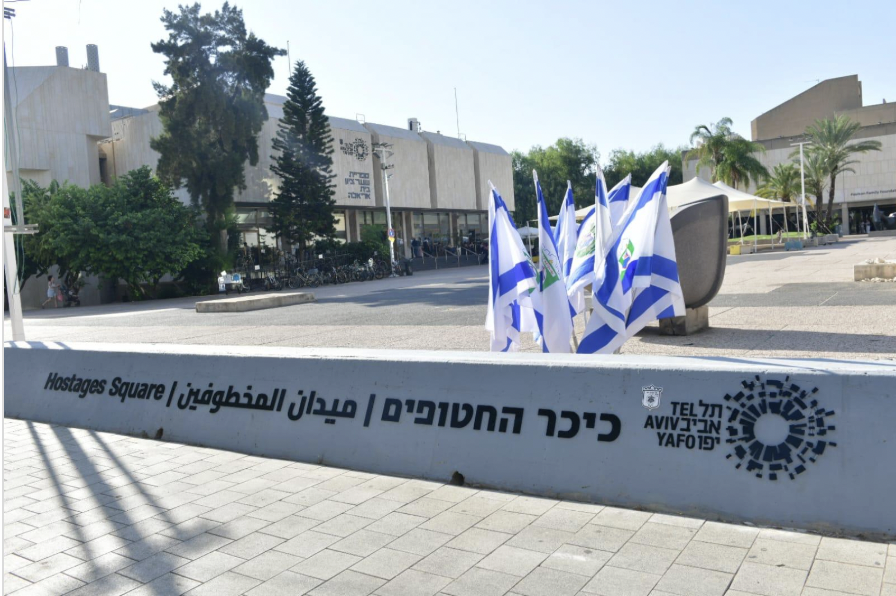
A sign is seen yesterday declaring the area outside the Tel Aviv Museum of Art to be “Hostages Square,” following an official naming ceremony on Tuesday.
In a post on Instagram, Asaf Zamir, Tel Aviv deputy mayor and Israel’s former consul general to New York, calls the demonstrations for the release of the hostages that were held in the square “the most important, brave, and significant social struggle since the establishment of the State… Every single protester turned this space into an example of hope and solidarity.”
Birthdays

Janet Yellen, treasury secretary through all four years of the Biden administration, turns 80
Audrey I. Pheffer, member of the New York State Assembly for 24 years, since then she is the county clerk of Queens County, turns 85
Morton Algaze, retired CPA and senior executive in Los Angeles, turns 83
Robert A. Cumins, documentary still photographer of the American and international Jewish communities since 1970, turns 78
Ruth Fay Kellerman, Beverly Hills, Calif., resident
James M. Spiegelman, VP and chief of staff at The Aspen Institute, turns 68
Susan Landau Finch, film producer, writer and director, turns 66
Michael Landau, founder of the Council of Orthodox Jewish Organizations of Manhattan, he is also the executive chairman of LifeHealth Network
Michael De Luca, co-chair and CEO of Warner Bros. Motion Picture Group, turns 61
Jeffrey Mark “Slash” Coleman, storyteller, producer and writer, turns 59
Maer Roshan, editor-in-chief of The Hollywood Reporter, turns 59
Jeremy B. Bash, co-founder and managing director at Beacon Global Strategies, he was chief of staff at the CIA and the Pentagon during the Obama administration, he is a graduate of CESJDS, turns 55
Dana Marlowe, president of Accessibility Partners, a Maryland firm that hires people with disabilities for tech jobs, she is also the founder of a nonprofit I Support the Girls
Merrill Marc Moses, three-time Olympian water polo player, now assistant head coach at Pepperdine University, turns 49
Eric Matthew Nelson, professor of government at Harvard University, he was the director of the Harvard Center for Jewish Studies, turns 49
Joshua Michael Blackman, professor of law at the South Texas College of Law in Houston, turns 42
Matthew Weiss, deputy general counsel and global head of contracts and litigation for Tower Research Capital, turns 40
Sara Sorcher, weekend editor for The Washington Post
Ari Polsky, management consultant at the Harold Grinspoon Foundation
Maor Tiyouri, Israeli Olympic long-distance runner, she ran the marathon for Israel at the Paris Olympics in 2024, turns 36
Nathan Jablow, counsel at CD&R
Jodie Michelle Singer, senior account supervisor at Edelman
Adam Dahan, VP of business development at Azul Hospitality Group
David Angel, head of investor relations at Israel Legacy Partners
Elaine Hall
Jonathan Gerber