Opinion
IF THESE SCROLLS COULD TALK
A Czech Torah scroll returns home — and to the heart of public life




 Add EJP on Google
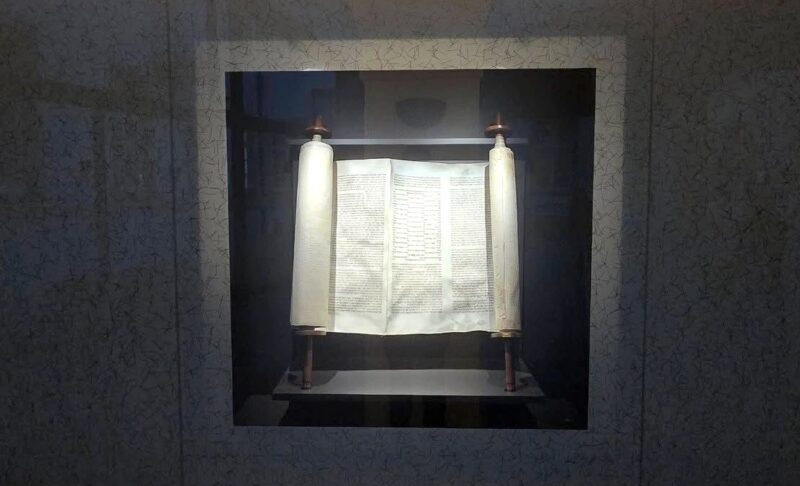
On Yom HaShoah, I stood in the Chamber of Deputies of the Parliament of the Czech Republic and watched Torah Scroll MST #41 be placed on permanent display. It was one of those rare moments when history, memory and moral responsibility converged all at once.
At the Memorial Scrolls Trust, we have the privilege of working with many communities and institutions that care deeply for the Czech scrolls in their custody. But this moment in Prague felt different. It felt deeply personal. Here was one of our scrolls — originally from Ricany, rescued from the wreckage of destroyed Jewish life, preserved through decades of upheaval and entrusted to our care — now returning not only to the country from which it came, but to a place of national significance at the center of Czech public life.
Courtesy/Andrew Keene
Torah Scroll MST #41 in its new permanent display Chamber of Deputies of the Parliament of the Czech Republic.
This installation was years in the making. Two years ago, MST #41 first returned to Prague for temporary display in Parliament. It was later shown at Prague Castle, traveled to several towns across the Czech Republic and helped tell a broader story of Czech Jewish life, loss and continuity. Its permanent installation on Yom HaShoah was not a one-time gesture, but the culmination of a journey — and of the efforts of people and partners who understood that this scroll still had something important to say.
This project was a model of meaningful remembrance at its best. It brought together the Memorial Scrolls Trust, Rabbi David Maxa and Ec Chajim Prague, the Chamber of Deputies, the Federation of Jewish Communities in the Czech Republic, the World Union for Progressive Judaism, parliamentary chaplains and generous supporters who helped create a dignified permanent home for the scroll. At the heart of that coalition was Ec Chajim, whose leadership reflects its broader role in revitalizing Progressive and Reform Jewish life in Prague — a tradition that once flourished across the Czech lands before the Holocaust shattered that world.
In helping bring this installation to life, Ec Chajim demonstrated not only religious leadership but civic leadership: the ability to build a coalition that transcended religion and politics. That spirit was visible in the room itself, with Orthodox and Reform Jews, politicians from multiple parties and representatives of multiple faith communities — including the new Archbishop of Prague — all present to mark the moment. It was a reminder that safeguarding Jewish memory and affirming Jewish life need not be partisan acts but can express a shared democratic and moral commitment.
The 1,564 Czech Torah and other scrolls in our care are among the most remarkable surviving witnesses to the destruction of Jewish communities across Bohemia and Moravia. Removed from synagogues during the Nazi occupation and brought to Prague after their communities were dismantled and their members deported, murdered or dispersed, they remained after the war in a kind of historical limbo, as Jewish life was constrained for decades under communism.
Then, in 1964, through the efforts of Ralph Yablon z”l, they were brought to Westminster Synagogue in London, where the Memorial Scrolls Trust was later established as an independent charity to care for them. From there, the scrolls began a new chapter. They were not sold or dispersed as collectibles. They were placed on permanent loan with Jewish communities and organizations around the world, where they could serve as vessels of memory, continuity and education.
Today, approximately 1,400 of the 1,564 scrolls are in communities and organizations around the world — in synagogues, schools, universities, museums and Jewish institutions across continents. Some have been restored and are used for ritual purposes. Others, too damaged to be used liturgically, serve as educational and commemorative scrolls. All of them are silent witnesses to the Shoah.
That phrase — “silent witnesses” — is one we use often at the Memorial Scrolls Trust. But standing in the Czech Parliament on Yom HaShoah, I was struck by how much these scrolls speak, even in silence.
MST #41 speaks of the Jewish community of Ricany and of the generations who once read from it. It speaks of the Nazis’ attempt not only to murder Jews, but to sever Jewish continuity. It speaks of the uneasy afterlife of Jewish property and memory under communism. And now, in its permanent home in Parliament, it speaks of a democratic society choosing to make Jewish memory part of its moral and civic framework.
The ceremony concluded with one of the last child survivors of Terezín, Michaela Vidláková, singing the Terezín Anthem. Its lyrics speak for themselves:
We shall overcome if we truly desire,
Hand in hand, one heart.
Even in difficult times,
Laughter still prevails in our hearts.
From place to place,
We continue to wander daily,
Only thirty words
Are we allowed to write.
But the day is approaching, my friends,
When we will be free,
We will pack up our belongings
And return home.
We shall overcome if we truly desire,
Hand in hand, one heart.
Someday, we will laugh together.
Over the ruins of the ghetto.
For those of us entrusted with the care of these scrolls, that was the message of the day. MST #41 now stands in the Czech Parliament not only as a memorial to a destroyed world, but as a challenge to the living: to remember not passively, but actively; not only with ceremony, but with responsibility.
A scroll once torn from Jewish communal life now stands at the heart of Czech public life. In that act, there is both remembrance and renewal: remembrance of the communities that were lost, and renewal of the obligation to ensure that Jewish life, Jewish memory and Jewish moral witness remain visible in the society those communities helped shape. May MST #41 continue to speak in its silence, and may all of us prove worthy of what it asks us to carry forward.
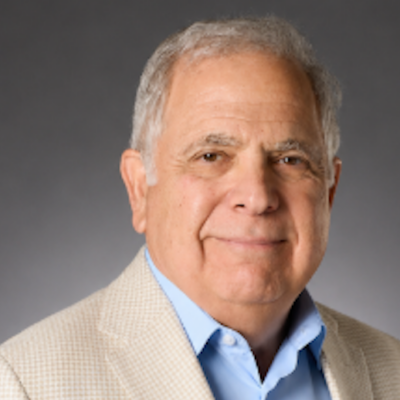
Andrew Keene serves as vice chair and trustee of the Memorial Scrolls Trust